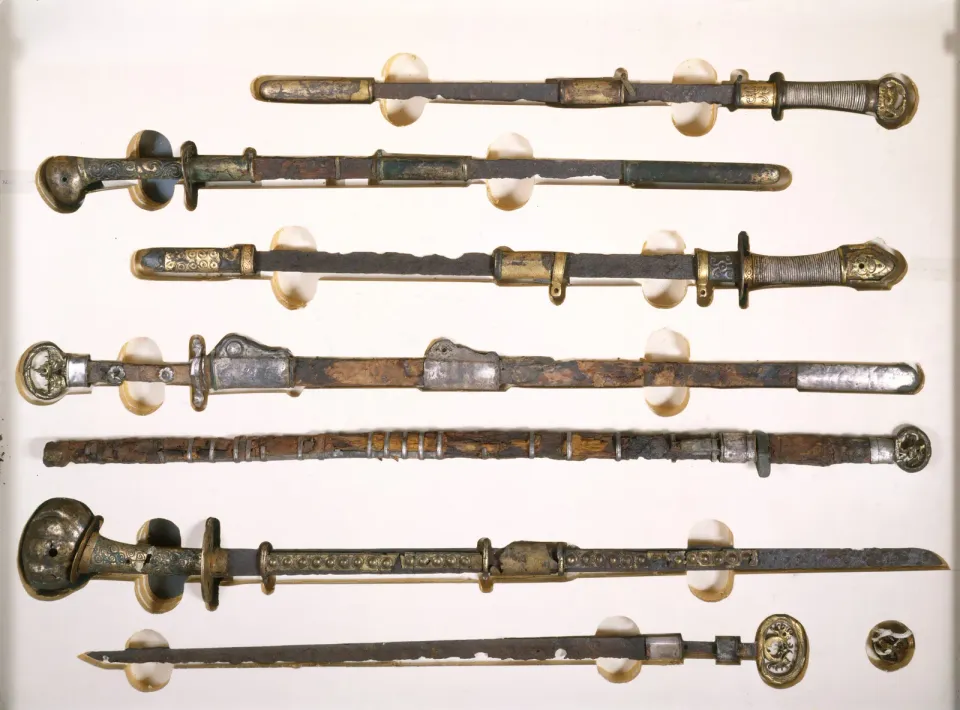
Japanese
Kusanagi-no-Tsurugi
草薙剣 (Kusanagi-no-Tsurugi)
Cuts the grass by itself and turns back fire.
WeaponFirst recorded 712
Loading artifact…
Photograph: A mounting for a slung sword (itomaki-tachi koshirae) from Edo-period Japan, seventeenth–nineteenth century. The hilt and the upper scabbard are wrapped in silk braid, and the long scabbard, lacquered gold with round crests, carries hanging cords and crest-engraved fittings.
Focus the photograph, then use the arrow keys to pan and the plus and minus keys to zoom. The buttons at the lower left also move it. Press a numbered button on the photograph to zoom to that note.
鬼丸國綱
When its rust was polished away, it toppled over by itself and cut down the little demon tormenting its master.
According to the Taiheiki, Hōjō Tokimasa, the first regent of the Kamakura shogunate, fell ill, tormented every night by a little demon that appeared in his dreams. One day an old man appeared to him in a dream and said that he was the sword of Kunitsuna, so rusted that he could not leave his scabbard, and asked to have his body cleaned.
When Tokimasa had the sword polished and stood it up, it fell over by itself and cut off the silver demon ornament on the stand of the brazier beside it. From then on Tokimasa's illness vanished as if washed away. For this the sword was called Onimaru, the 'demon sword.'
Onimaru is a tachi forged in the Kamakura period by Kunitsuna, a swordsmith of Awataguchi in Kyoto. After the fall of the Hōjō it passed through the hands of many warlords. Today it is kept by the Japanese imperial household.
The photograph shows Mounting for a Slung Sword (Itomaki-tachi Koshirae) with Storage Box(Japanese, ca. 1615–1868; storage box, ca. 1932), a real museum object that evokes the legendary artifact.
草薙剣 (Kusanagi-no-Tsurugi)
Cuts the grass by itself and turns back fire.
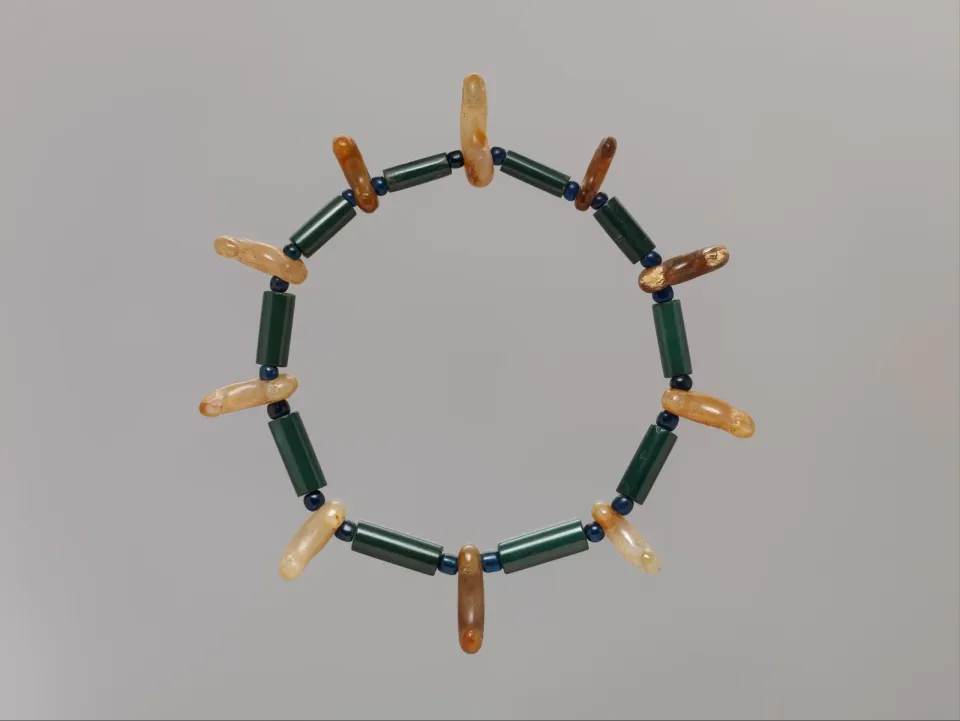
八尺瓊勾玉
One of the three sacred treasures, holding the spirit of the gods and the legitimacy of the imperial line.
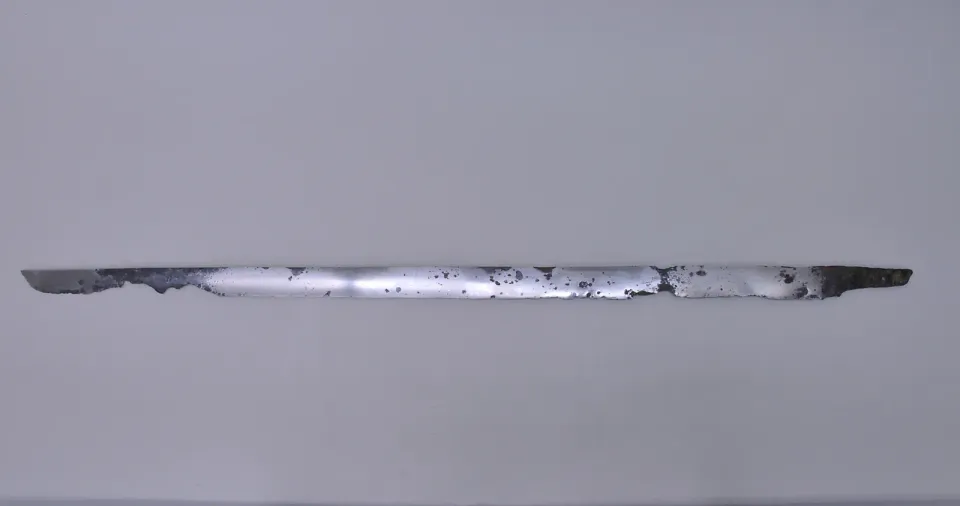
十拳剣
A great sword ten fists long, which cut the eight-headed serpent to pieces.
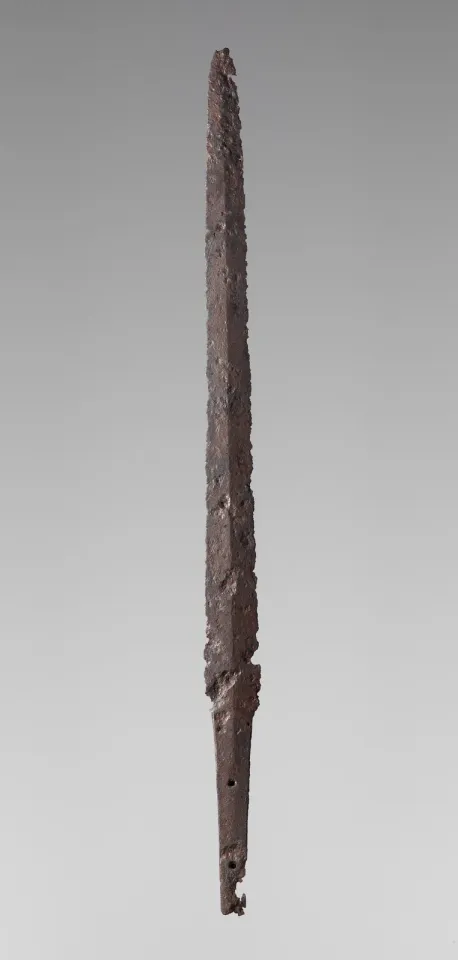
布都御魂
A single stroke revived soldiers felled by poisonous vapors.