Indian
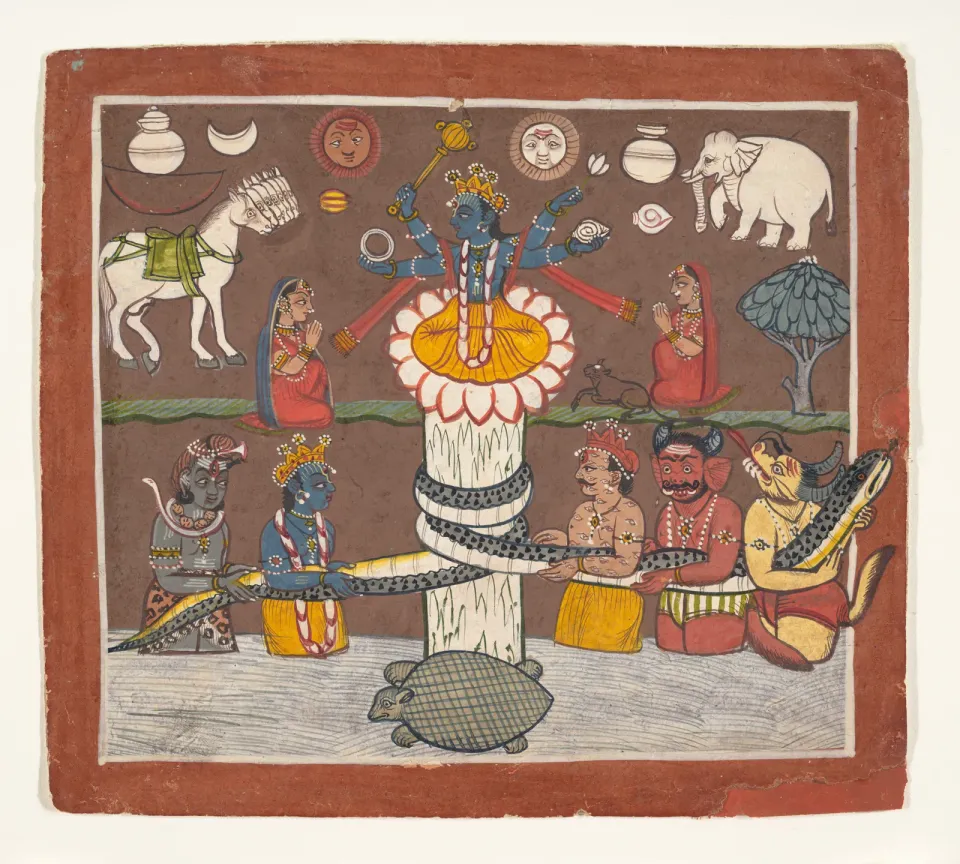
Soma
Soma
The hymns sing that whoever drinks it is filled with strength and inspiration and becomes immortal.
ElixirFirst recorded c. 1200 BCE
Loading artifact…
Photograph: A ritual conch shell from the Khmer kingdom of Cambodia, twelfth century. The pointed conch is sheathed in carved bronze and stands on a three-legged stand decorated with serpent deities.
Focus the photograph, then use the arrow keys to pan and the plus and minus keys to zoom. The buttons at the lower left also move it. Press a numbered button on the photograph to zoom to that note.
Pāñcajanya
When blown, its sound shakes sky and earth and tears the hearts of the enemy.
As boys, Krishna and his brother Balarama studied under the teacher Sandipani. When they finished and offered to repay him, the teacher asked for the return of his son, who had drowned in the sea. Krishna went down beneath the waves, defeated the demon Panchajana, who lived in a conch shell, and brought back the conch. Since the boy was in the realm of the dead, Krishna retrieved him from Yama, god of death, and returned him to his teacher.
That conch is Panchajanya, named after the demon. At the opening of the Bhagavad Gita, as the battle of Kurukshetra begins, Krishna blows Panchajanya and Arjuna blows Devadatta. The sound, it is said, echoed through sky and earth and tore the hearts of the enemy.
In Hinduism the conch is still blown to begin rituals. A conch that spirals to the right is especially rare and prized as belonging to Vishnu.
The photograph shows Conch Shell with a Figure of Hevajra(Cambodia, Khmer, Angkor Period, 12th-13th Century, 1100s), a real museum object that evokes the legendary artifact.
Soma
The hymns sing that whoever drinks it is filled with strength and inspiration and becomes immortal.
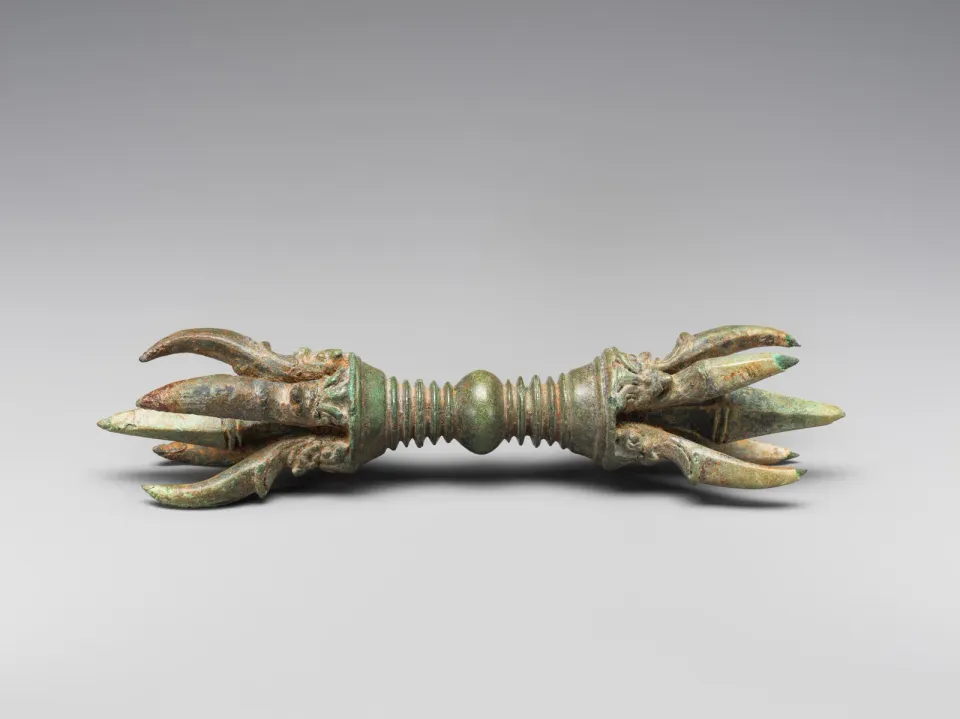
Vajra (वज्र)
Unbreakable as diamond and striking like lightning. It slew Vritra, the serpent of drought.
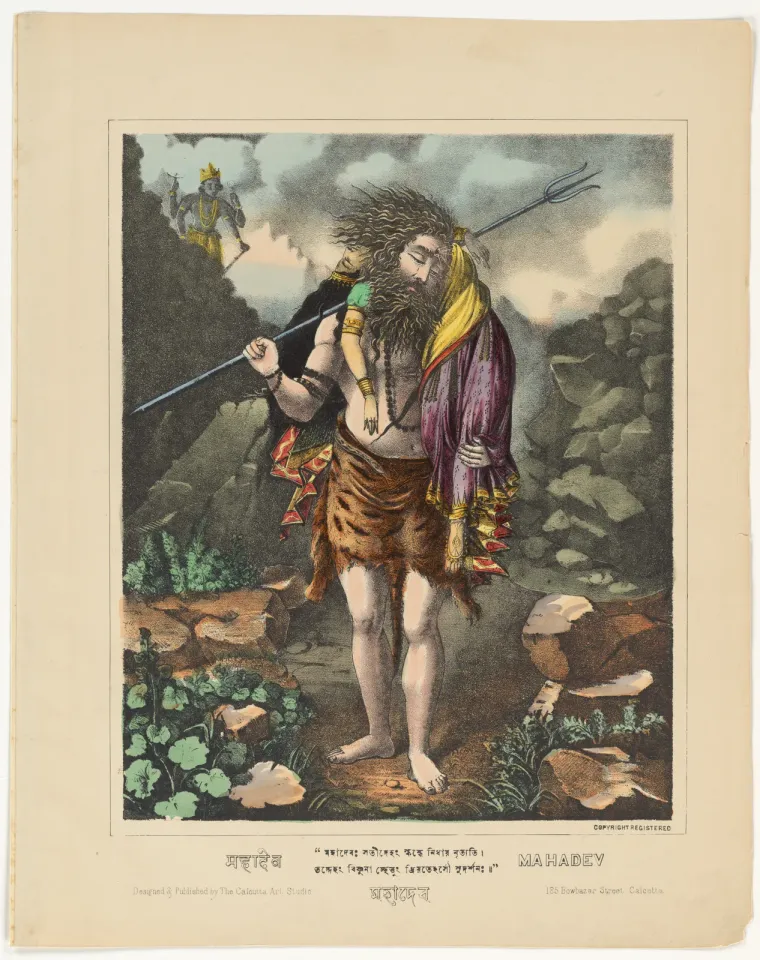
Trishula (त्रिशूल)
Its three prongs govern creation, preservation and destruction, or past, present and future.