Arthurian & Chivalric
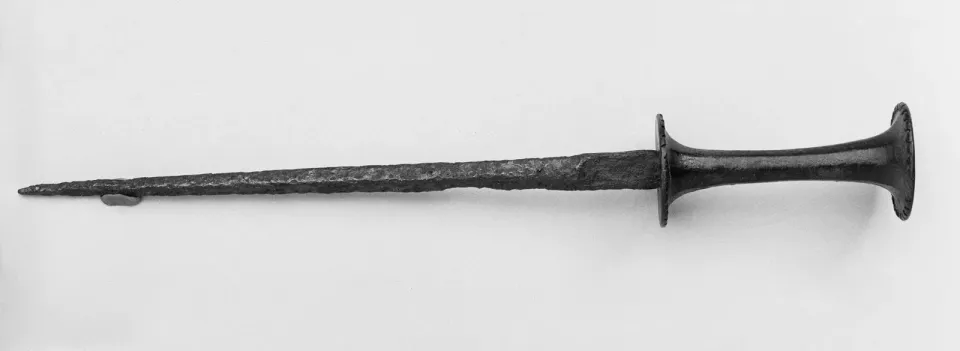
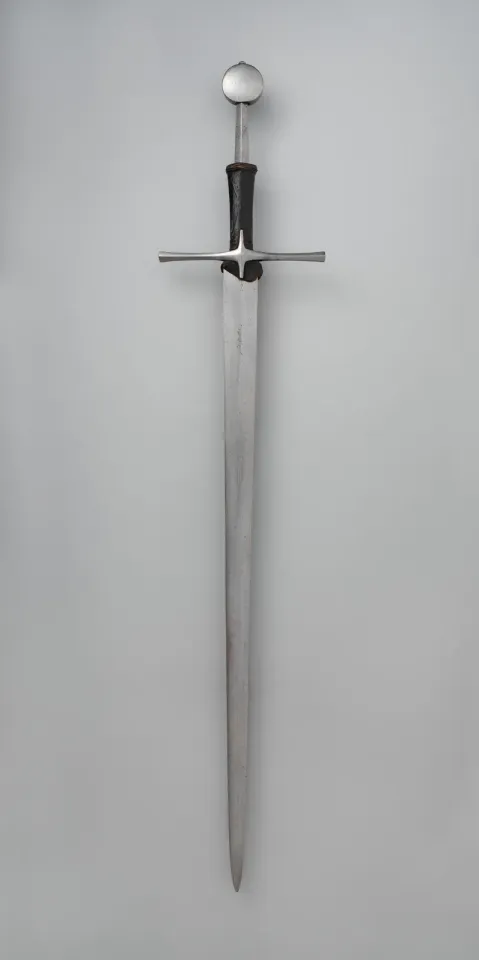
Excalibur
Excalibur
Cuts through enemy armor, and whoever wears its scabbard does not bleed.
WeaponFirst recorded 1136
Loading artifact…
Photograph: A German gold ring of the tenth to eleventh century. A plaque with a flower in green cloisonne enamel crowns a tall stepped setting decorated with gold granules and small arches.
Focus the photograph, then use the arrow keys to pan and the plus and minus keys to zoom. The buttons at the lower left also move it. Press a numbered button on the photograph to zoom to that note.
Ring of Lunete
Turn the stone toward the palm and close the hand, and no one can see the wearer.
Yvain, a knight of the Round Table, fought the knight who guarded a magic spring and dealt him a mortal wound. As he chased his fleeing enemy into the castle, iron portcullises came down before and behind him, and Yvain was trapped between the two gates.
He was saved by Lunete, a maid of the castle. Remembering that at Arthur's court only Yvain had treated her courteously, she gave him a ring. If he turned its stone toward his palm and closed his hand, no one could see him. The castle's people searched everywhere with clubs for their lord's killer, but they never found Yvain.
Watching from hiding, Yvain fell in love at first sight with the lord's widow, Laudine, and through Lunete's cleverness he married her. The same story survives in the Welsh Mabinogion as "Owain, or the Lady of the Fountain," where the maid who gives him the ring is called Luned.
The photograph shows Ring(German, 10th–11th century), a real museum object that evokes the legendary artifact.
Excalibur
Cuts through enemy armor, and whoever wears its scabbard does not bleed.
Holy Grail
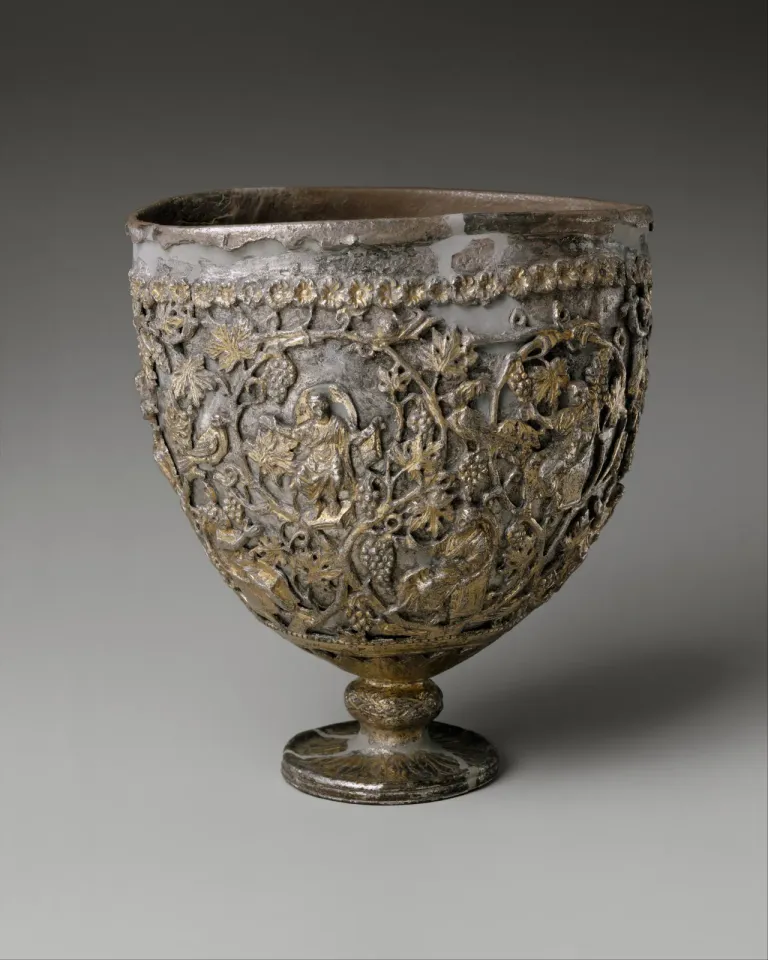
Grants those who see it the food they desire, and shows itself only to the pure knight.
Rhongomyniad
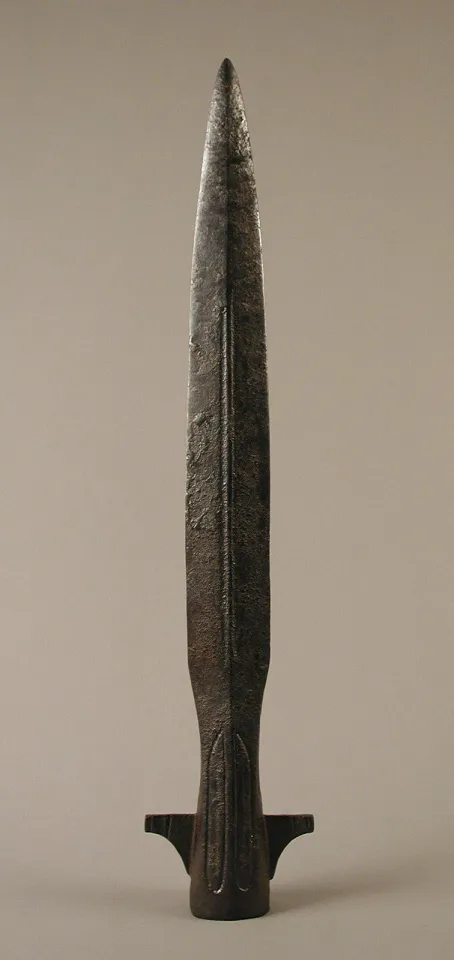
Long and broad-bladed, said to thirst for enemy blood.