Arthurian & Chivalric
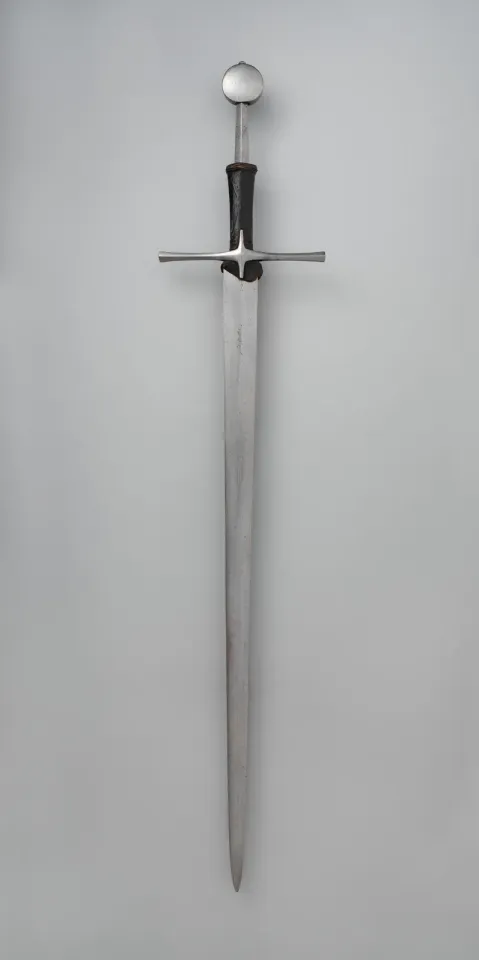
Excalibur
Excalibur
Cuts through enemy armor, and whoever wears its scabbard does not bleed.
WeaponFirst recorded 1136
Loading artifact…
Photograph: Daniel Hopfer's etching Three Worthy Christians, about 1516. Charlemagne, King Arthur and Godfrey of Bouillon stand side by side in armor, with their names inscribed above.
Focus the photograph, then use the arrow keys to pan and the plus and minus keys to zoom. The buttons at the lower left also move it. Press a numbered button on the photograph to zoom to that note.
The Round Table
With no high or low place, every knight seated around it sits as an equal.
In his Roman de Brut of 1155, the Norman poet Wace first wrote that Arthur had a round table made. It was a table at which no one sat higher or lower than anyone else, so that the barons would not quarrel over the place of honor. Some decades later Layamon added that after a quarrel over precedence at a Christmas feast turned bloody, a Cornish carpenter made a table that could seat sixteen hundred and still be carried about.
Robert de Boron told how Merlin made the Round Table for Arthur's father Uther. It was the third table, after the table of the Last Supper and the Grail table of Joseph of Arimathea, and it had an empty seat, the Siege Perilous, kept for the one knight who would achieve the Grail. Any unworthy man who sat there came to harm, and the seat finally went to Galahad.
In the great hall of Winchester Castle in England hangs an oak round table 5.5 meters across. It was made in the thirteenth century, and under Henry VIII it was painted with the Tudor rose and King Arthur on his throne.
The photograph shows Three Worthy Christians: Charlemagne, King Arthur, and Geoffrey of Bouillon(Daniel Hopfer, ca. 1516), a real museum object that evokes the legendary artifact.
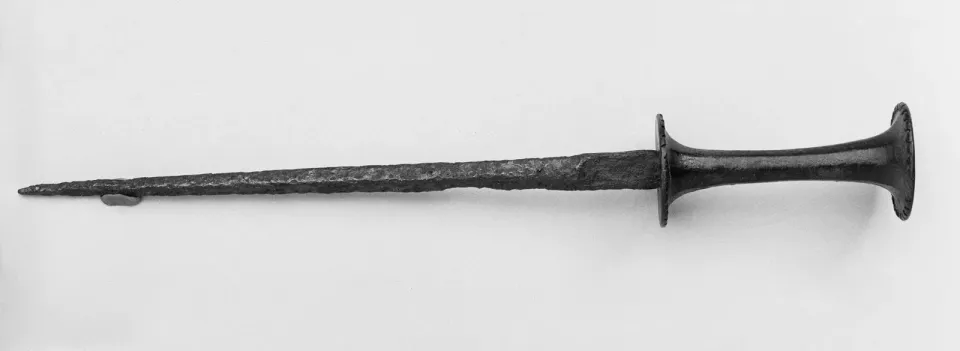
Excalibur
Cuts through enemy armor, and whoever wears its scabbard does not bleed.
Holy Grail
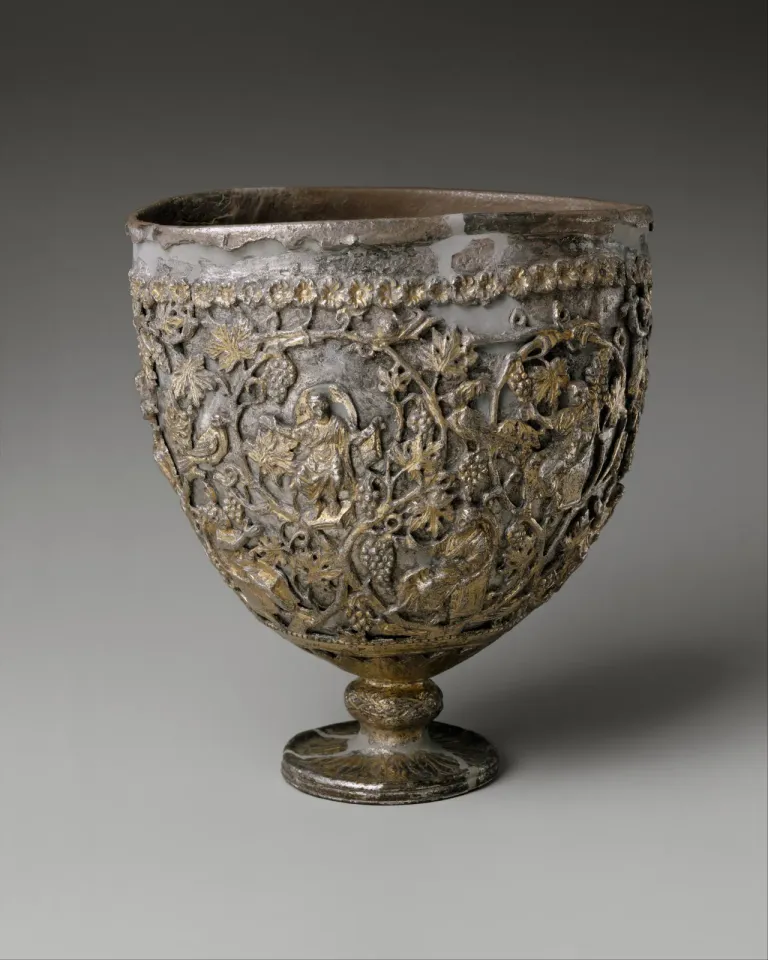
Grants those who see it the food they desire, and shows itself only to the pure knight.
Rhongomyniad
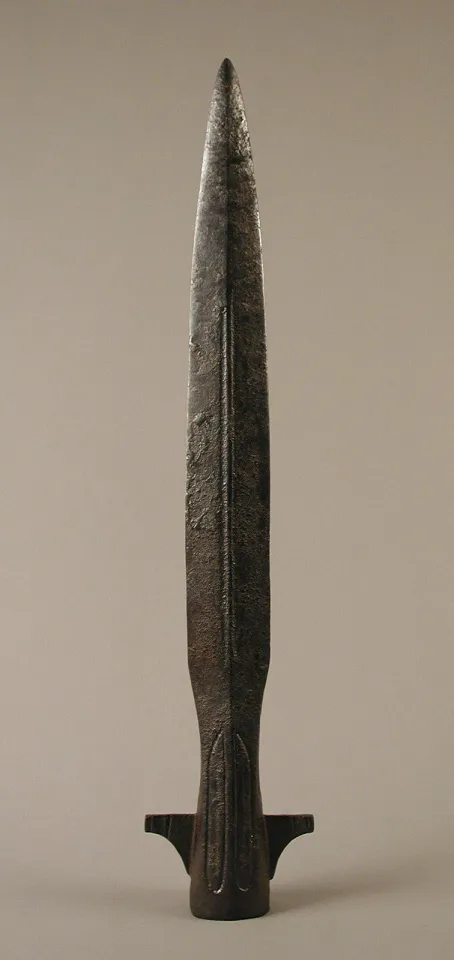
Long and broad-bladed, said to thirst for enemy blood.