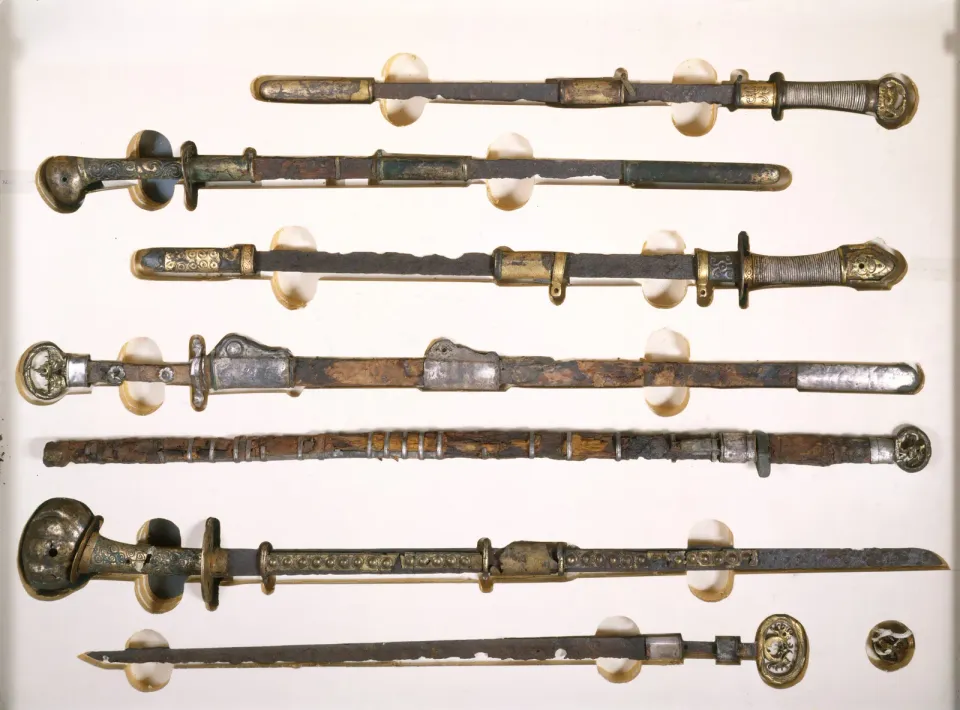
Japanese
Kusanagi-no-Tsurugi
草薙剣 (Kusanagi-no-Tsurugi)
Cuts the grass by itself and turns back fire.
WeaponFirst recorded 712
Loading artifact…
Photograph: A surimono print by Yashima Gakutei, Japan, late 1820s: the warrior Miura-no-suke confronts the court lady Tamamo-no-Mae as she turns into a nine-tailed fox. Fox tails bloom behind the lady at left; at right a warrior with bow and arrows draws his sword. Verses fill the background.
Focus the photograph, then use the arrow keys to pan and the plus and minus keys to zoom. The buttons at the lower left also move it. Press a numbered button on the photograph to zoom to that note.
殺生石
It breathed out poison that killed the birds and beasts that came near.
In Japanese legend, Tamamo-no-Mae is a beautiful and learned lady who served a retired emperor at the end of the Heian period. When the retired emperor fell ill with a mysterious sickness, the yin-yang diviner Abe no Yasunari revealed that she was in truth a nine-tailed fox that had brought ruin on the royal houses of India and China.
The fox fled to the plain of Nasu in Shimotsuke, and the warriors Miura-no-suke and Kazusa-no-suke led an army there and struck it down. The dead fox became a great stone that breathed out poison and killed any bird or beast that came near. People called it Sessho-seki, the 'killing stone.'
In the Noh play Sessho-seki, the monk Gennō, passing over the plain of Nasu, meets the spirit of the fox dwelling in the stone and, through the Buddhist law, pacifies it so that it attains buddhahood. A performance of this play is recorded in 1503. Matsuo Bashō visited the place in 1689 and wrote that the stone's poison still lingered, with dead bees and butterflies lying in heaps. In 2022 the stone split in two of its own accord.
The photograph shows The Warrior Miura-no-suke Confronting the Court Lady Tamamo-no-mae as She Turns into an Evil Fox with Nine Tails(Japan, late 1820s), a real museum object that evokes the legendary artifact.
草薙剣 (Kusanagi-no-Tsurugi)
Cuts the grass by itself and turns back fire.
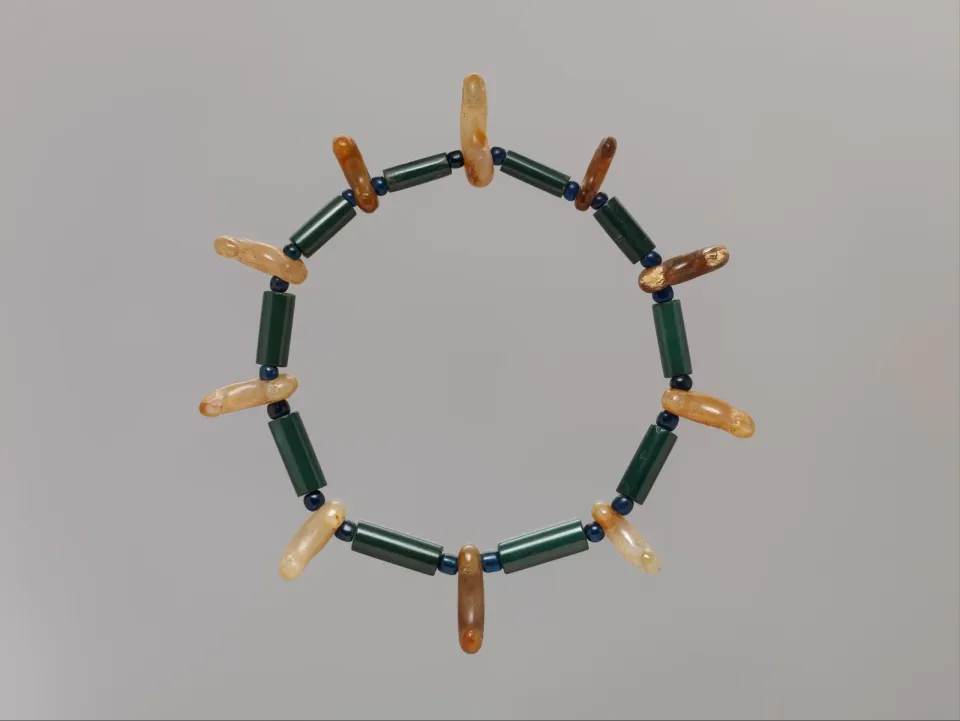
八尺瓊勾玉
One of the three sacred treasures, holding the spirit of the gods and the legitimacy of the imperial line.
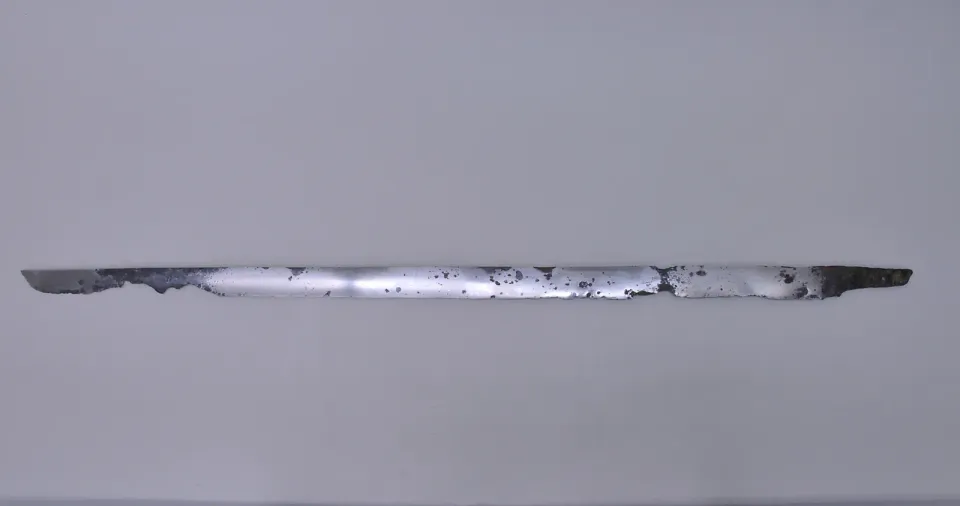
十拳剣
A great sword ten fists long, which cut the eight-headed serpent to pieces.
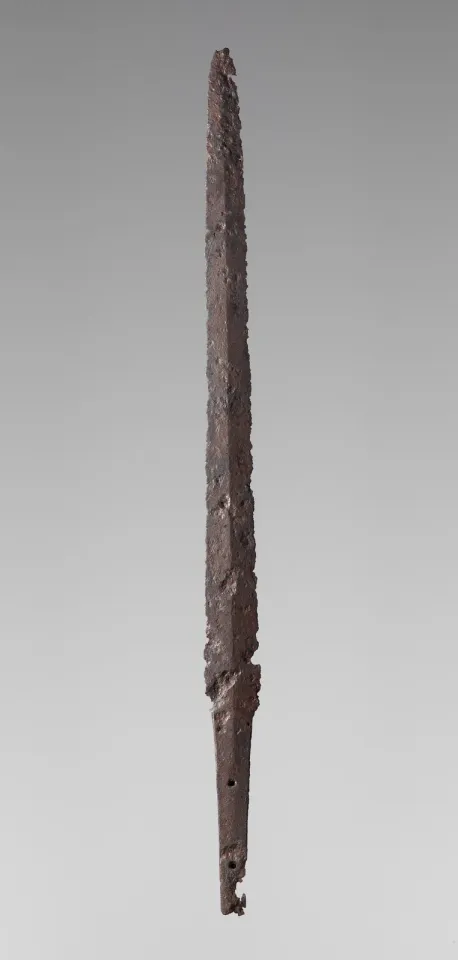
布都御魂
A single stroke revived soldiers felled by poisonous vapors.