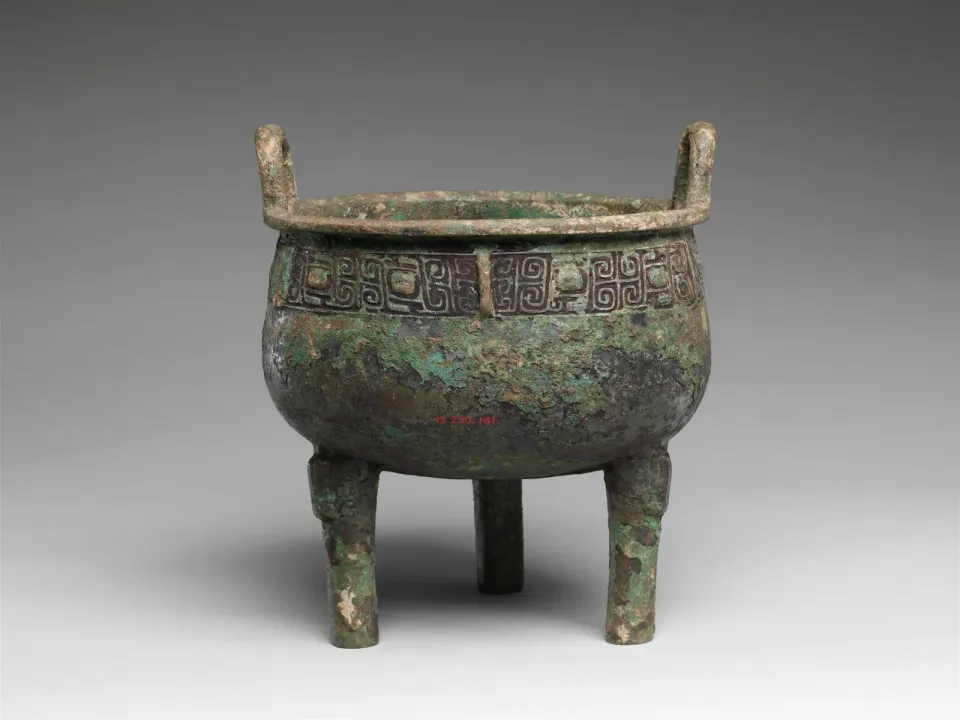
Chinese
Nine Tripod Cauldrons
九鼎
The legitimacy to rule all under heaven. They rest with dynasties of virtue.
VesselFirst recorded c. 400 BCE
Loading artifact…
Photograph: A rectangular inkstone of Duan stone made in Qing-dynasty China, eighteenth–nineteenth century. The grinding surface is cut low, and within it Su Wu herding sheep is engraved in fine lines.
Focus the photograph, then use the arrow keys to pan and the plus and minus keys to zoom. The buttons at the lower left also move it. Press a numbered button on the photograph to zoom to that note.
蘇武漢節
The token proving him the emperor's envoy; Su Wu never let it go for nineteen years.
According to the Biography of Su Wu in Ban Gu's Book of Han, Emperor Wu of Han sent Su Wu as envoy to the Xiongnu in 100 BCE. But a plot within the embassy to harm the Xiongnu royal house came to light, and Su Wu was taken captive. The Xiongnu chanyu tried to make him surrender, but he never yielded.
The chanyu sent him to the shore of the Northern Sea (today's Lake Baikal) to herd rams, saying he would let him go home when the rams bore lambs. Su Wu survived by digging up the grass seeds wild rats had stored, and he herded the sheep with the Han envoy's staff as his crook. Waking or sleeping, he held the staff, until all its tassels had fallen off.
Nineteen years later, when the Han and the Xiongnu made peace, a Han envoy claimed that the emperor had shot a wild goose while hunting and found a letter from Su Wu tied to its foot, and asked for his return. At last Su Wu came home to Chang'an. Su Wu herding sheep became a model of unbending loyalty, often depicted in the painting and crafts of China and Korea.
The photograph shows Inkstone with Su Wu(China, 18th–19th century), a real museum object that evokes the legendary artifact.
九鼎
The legitimacy to rule all under heaven. They rest with dynasties of virtue.
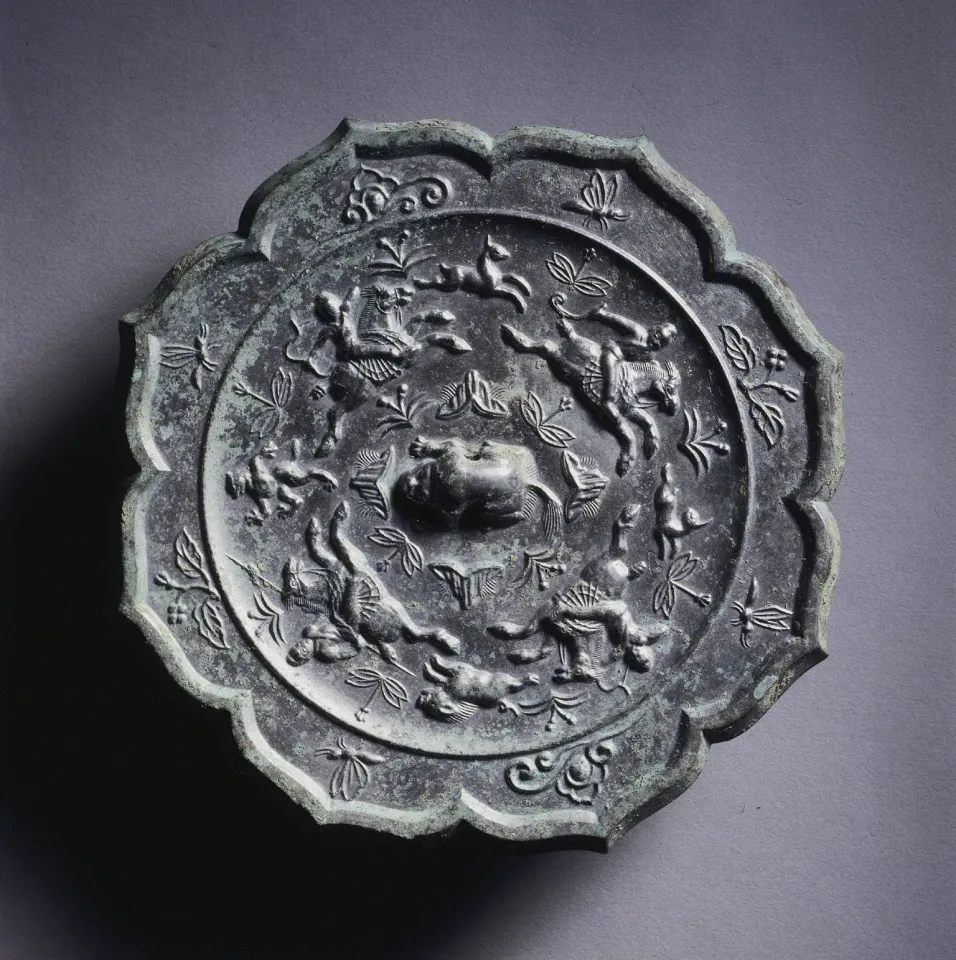
彤弓 (羿)
A red bow strong enough to shoot suns out of the sky.
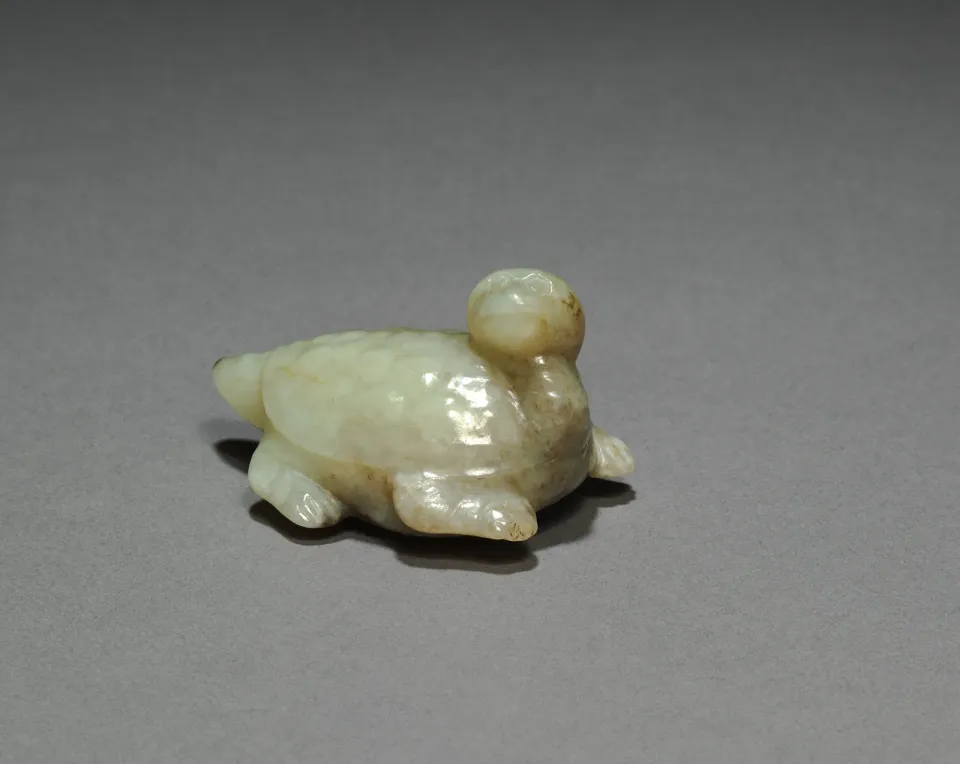
河圖洛書
From the dot patterns on their backs came the eight trigrams and the nine great laws of government.
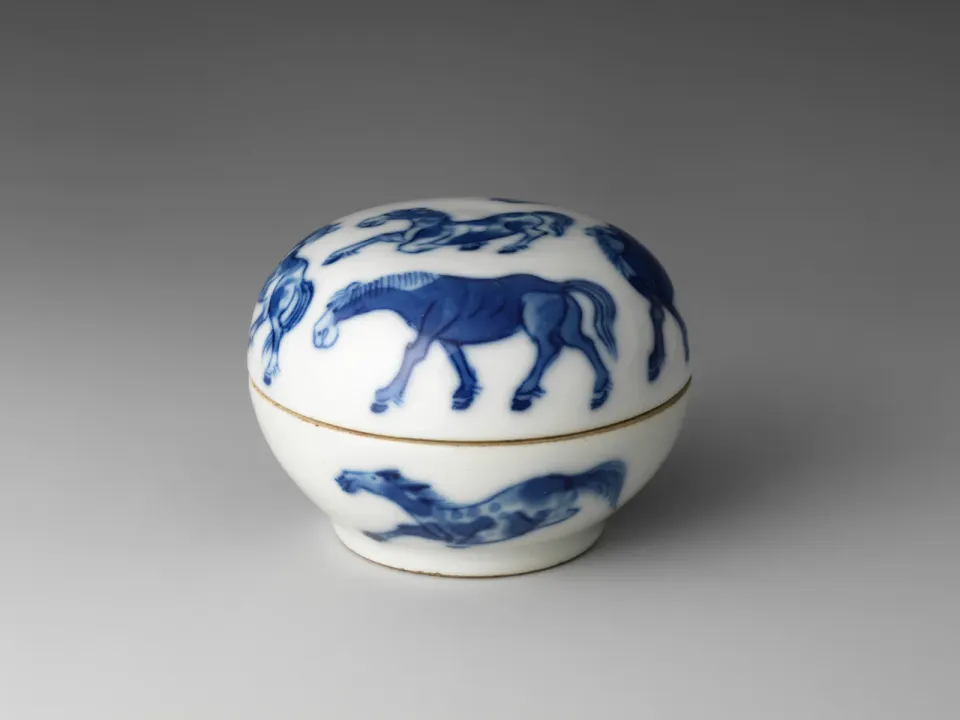
穆王八駿
Eight fine horses that ran a thousand li a day and carried King Mu to the far west.