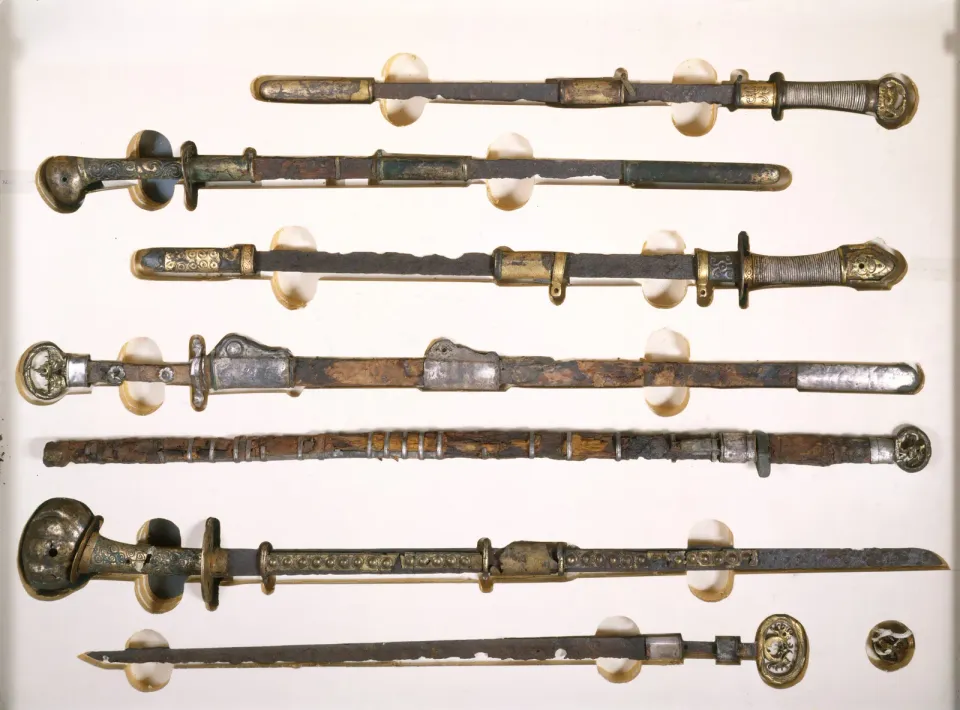
Japanese
Kusanagi-no-Tsurugi
草薙剣 (Kusanagi-no-Tsurugi)
Cuts the grass by itself and turns back fire.
WeaponFirst recorded 712
Loading artifact…
Photograph: Calligraphy with Willow and Swallows, a hanging scroll written in ink on paper by the Zen monk Ikkyū in Muromachi-period Japan, fifteenth century. Behind the verse written in flowing vertical lines, willow branches and swallows painted in pale ink show through.
Focus the photograph, then use the arrow keys to pan and the plus and minus keys to zoom. The buttons at the lower left also move it. Press a numbered button on the photograph to zoom to that note.
燕の子安貝
A shell swallows were said to hold when laying eggs, believed to make childbirth easy.
In The Tale of the Bamboo Cutter, Princess Kaguya told the Middle Counselor Isonokami no Marotari to bring her the koyasu-gai, the easy-birth shell that swallows hold. The koyasu-gai was a cowry shell, believed to make childbirth easy.
Hearing that many swallows nested under the roof of the palace kitchen, Marotari followed a plan based on the idea that swallows bring out the shell when they lay their eggs: he was hauled up in a basket and groped in a nest. Just as he thought he had grasped something, the rope broke and he fell onto a great cauldron.
What he held in his hand was dried swallow droppings. Badly injured, Marotari sickened in shame and died, and Princess Kaguya, pitying him, sent him a poem. The tale says that the word kainashi, 'without a shell,' meaning a fruitless effort, came from this.
The photograph shows Calligraphy with Willow and Swallows(Japan, Muromachi period (1392–1573), 1400s), a real museum object that evokes the legendary artifact.
草薙剣 (Kusanagi-no-Tsurugi)
Cuts the grass by itself and turns back fire.
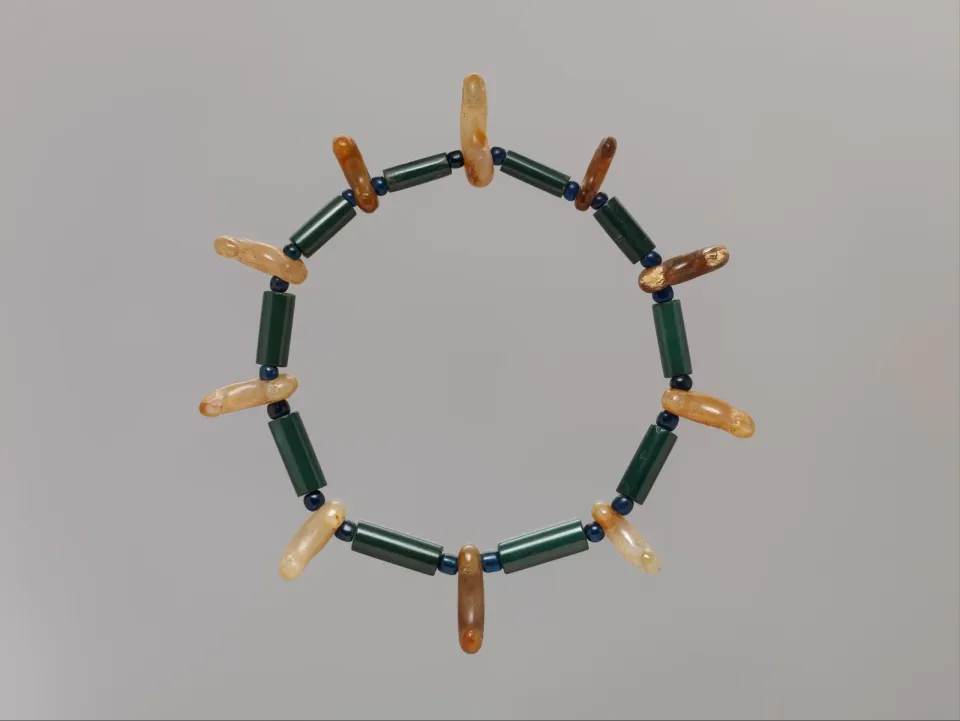
八尺瓊勾玉
One of the three sacred treasures, holding the spirit of the gods and the legitimacy of the imperial line.
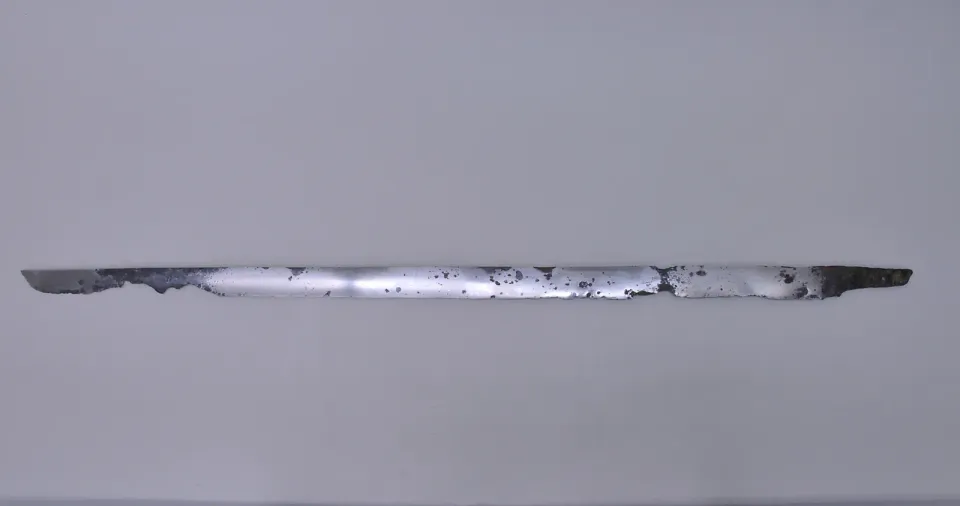
十拳剣
A great sword ten fists long, which cut the eight-headed serpent to pieces.
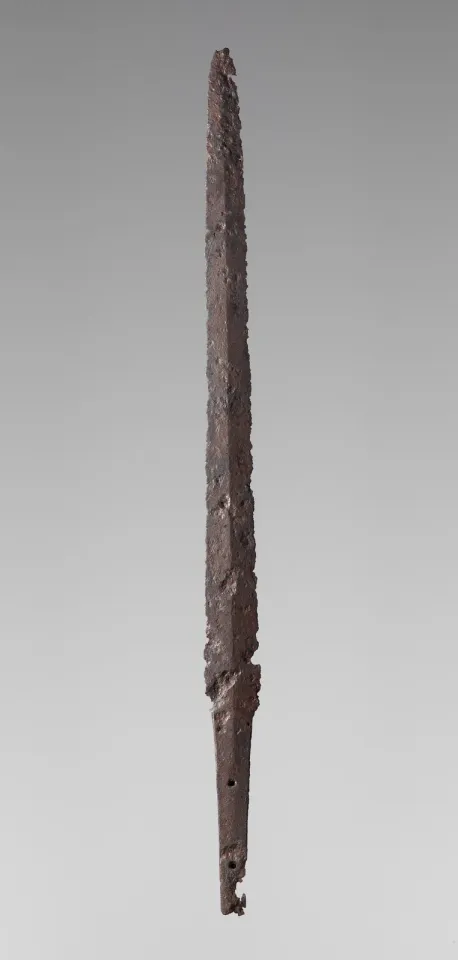
布都御魂
A single stroke revived soldiers felled by poisonous vapors.