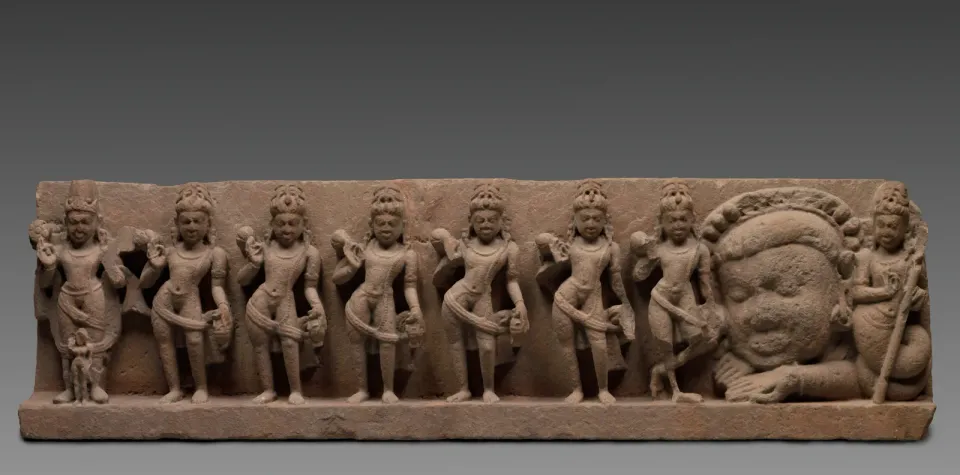
Indian
Soma
Soma
The hymns sing that whoever drinks it is filled with strength and inspiration and becomes immortal.
ElixirFirst recorded c. 1200 BCE
Loading artifact…
Photograph: Akrura and Kritavarma Flee Dvaraka, a page from the "Large Basohli" Bhagavata Purana painted in the Pahari region of northern India about 1760–65. Two men gallop on horseback across fields of overlapping green hills.
Focus the photograph, then use the arrow keys to pan and the plus and minus keys to zoom. The buttons at the lower left also move it. Press a numbered button on the photograph to zoom to that note.
Syamantaka
It produces gold every day, and the land where it is kept knows neither drought nor sickness.
Satrajit, a devotee of Surya, the sun god, received the jewel Syamantaka from the god. It shone like the sun, so that when he entered Dvaraka wearing it, people thought the sun god himself was coming. The jewel produced gold every day, and the land where it was kept knew neither drought nor sickness.
Satrajit's brother Prasena went hunting wearing the jewel and was killed by a lion; the lion was killed by Jambavan, king of the bears, and the jewel went into Jambavan's cave. People whispered that Krishna, who had coveted the jewel, had killed Prasena. To clear his name Krishna went into the forest, fought Jambavan for twenty-eight days and won back the jewel, and Jambavan, recognizing him as an avatar of Vishnu, gave him his daughter Jambavati in marriage.
Krishna returned the jewel to Satrajit, and the ashamed Satrajit gave his daughter Satyabhama to Krishna. But the strife over the jewel did not end, and Satrajit was killed by men who wanted it. In India there is still a saying that whoever looks at the moon on the night of the Ganesha festival will, like Krishna, be falsely accused.
The photograph shows Akrura and Kritavarma flee Dvaraka, page from the "Large Basohli" Bhagavata Purana(Northern India, Pahari kingdoms, c. 1760–65), a real museum object that evokes the legendary artifact.
Soma
The hymns sing that whoever drinks it is filled with strength and inspiration and becomes immortal.
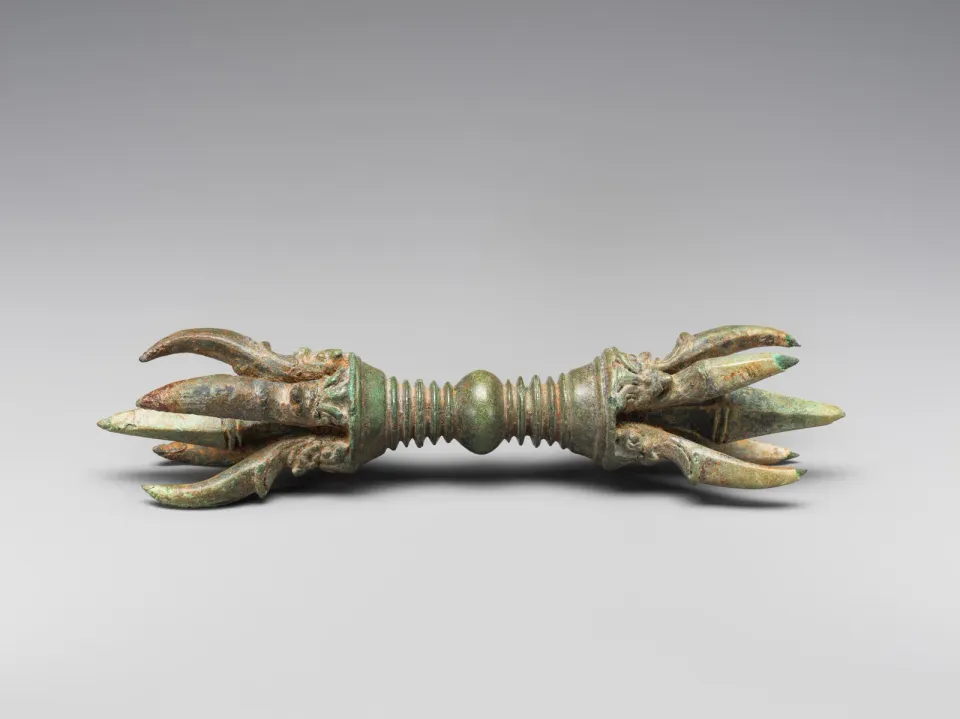
Vajra (वज्र)
Unbreakable as diamond and striking like lightning. It slew Vritra, the serpent of drought.
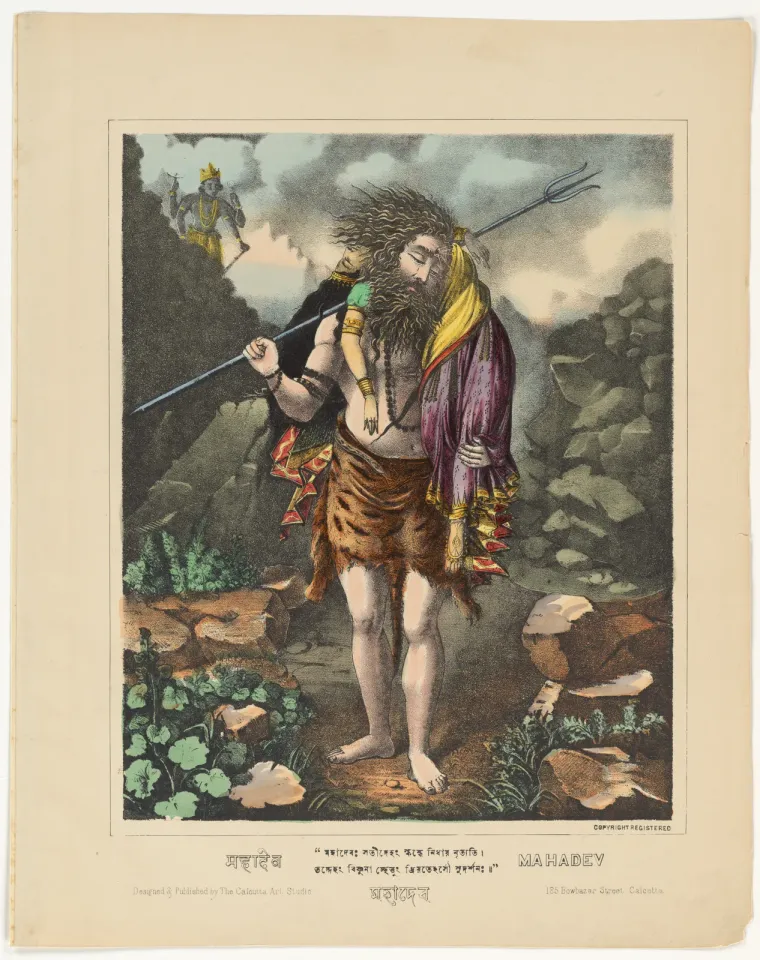
Trishula (त्रिशूल)
Its three prongs govern creation, preservation and destruction, or past, present and future.