Sacred Relics
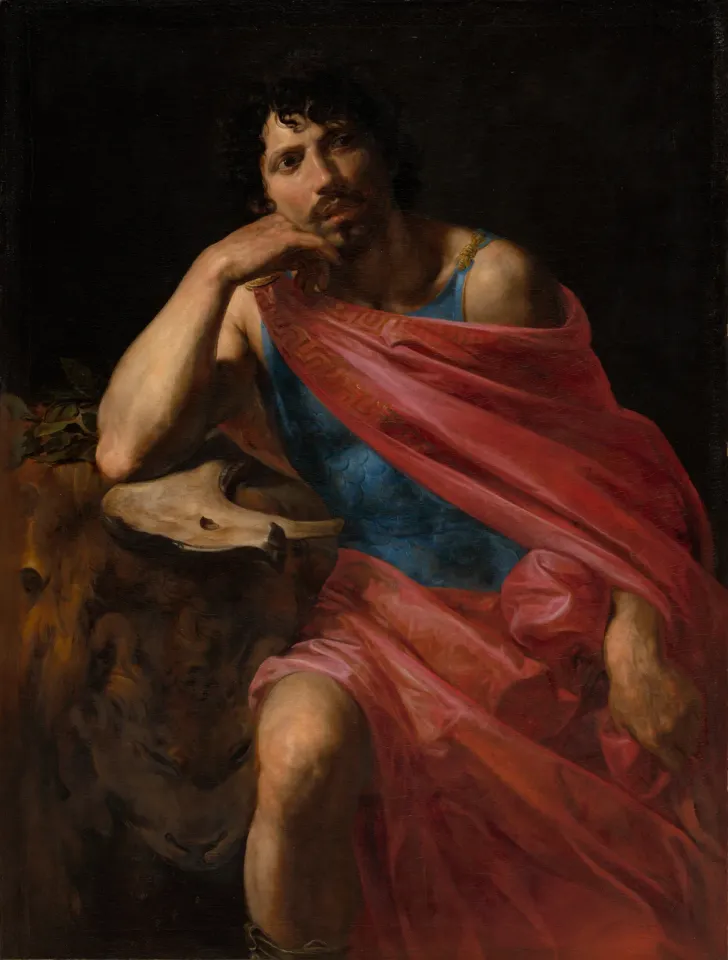
Jawbone of Samson
Jawbone of an Ass
With the jawbone of a newly dead donkey he struck down a thousand Philistines.
WeaponFirst recorded c. 600 BCE
Loading artifact…
Photograph: A reliquary of the True Cross. A double-armed cross from the Kingdom of Jerusalem, about 1214, is set in a thirteenth-century gilt-silver panel from the Rhine-Meuse region, amid rows of almond shapes pierced with quatrefoils and within a Latin inscription.
Focus the photograph, then use the arrow keys to pan and the plus and minus keys to zoom. The buttons at the lower left also move it. Press a numbered button on the photograph to zoom to that note.
The True Cross
When no one knew which was Christ's cross, it is said that a dying woman rose up when it touched her.
In the fourth century, Bishop Cyril of Jerusalem wrote that the wood of the cross on which Christ was crucified had been divided into fragments and spread throughout the world. A little later, Bishop Ambrose of Milan told how Helena, mother of Emperor Constantine, had found that cross in Jerusalem.
According to legend, Helena dug at Golgotha and found three crosses. Since no one could tell which was Christ's, they touched each one to a dying woman, and the moment the third cross touched her, she rose up. On that spot Constantine built the Church of the Holy Sepulchre.
In 614 a Persian army took Jerusalem and carried off the cross, and the Byzantine emperor Heraclius brought it back in 630. Fragments of the cross were placed in cross-shaped reliquaries adorned with gold and gems and kept in churches throughout Europe.
The photograph shows Reliquary of the True Cross(Cross: Latin Kingdom of Jerusalem; Panel: Rhine-Meuse region, Gothic period, 13th century, c. 1214), a real museum object that evokes the legendary artifact.
Jawbone of an Ass
With the jawbone of a newly dead donkey he struck down a thousand Philistines.
Rod of Moses
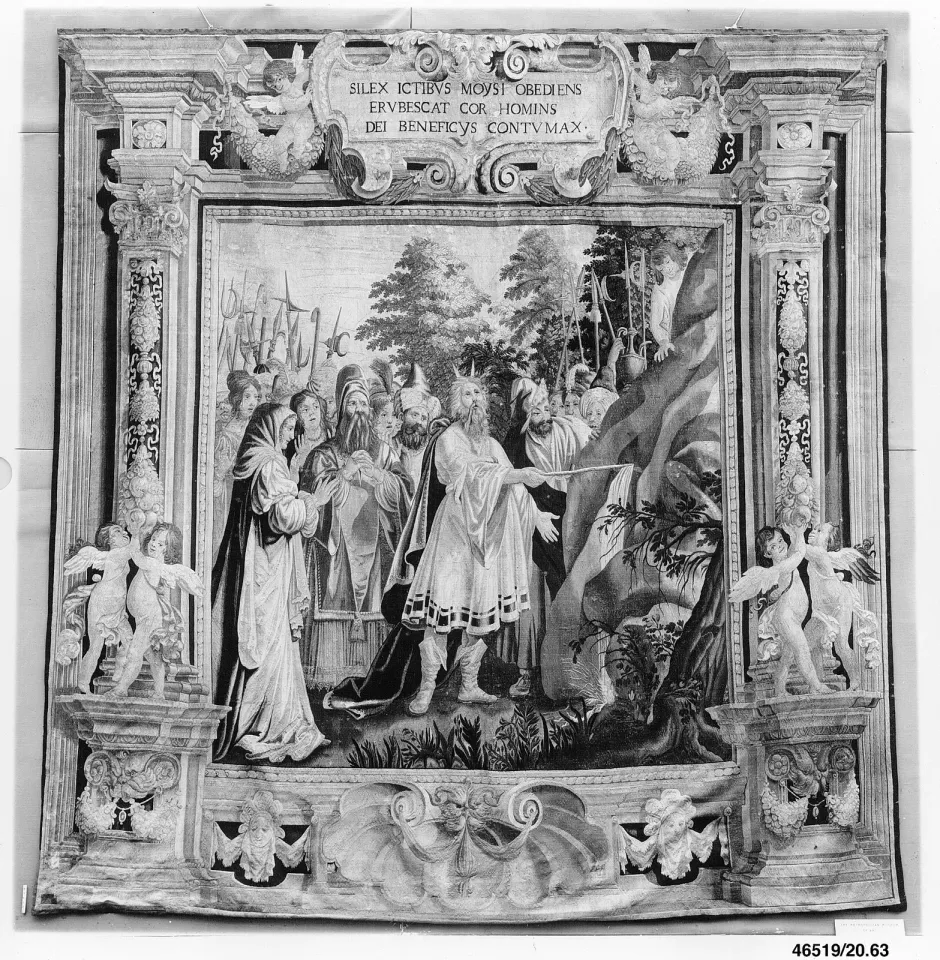
Thrown down it becomes a serpent; stretched over the sea it parts the waters; struck against a rock it brings forth water.
Ark of the Covenant
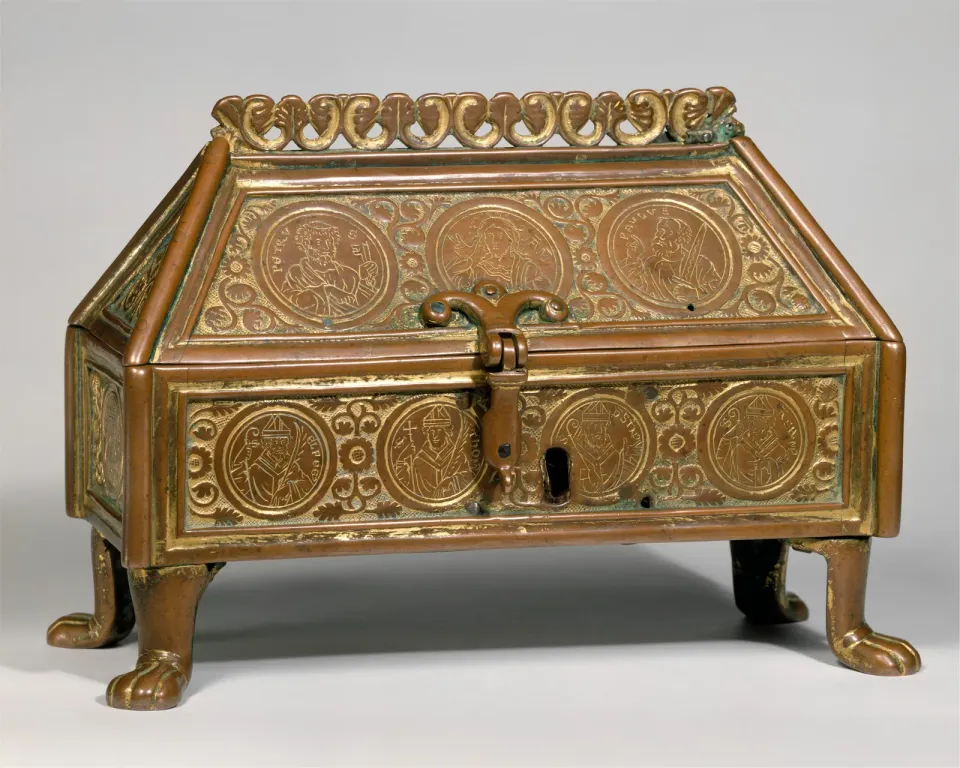
The seat of God's presence. Carried before the people, it parted the Jordan and brought down the walls of Jericho.
Sling of David
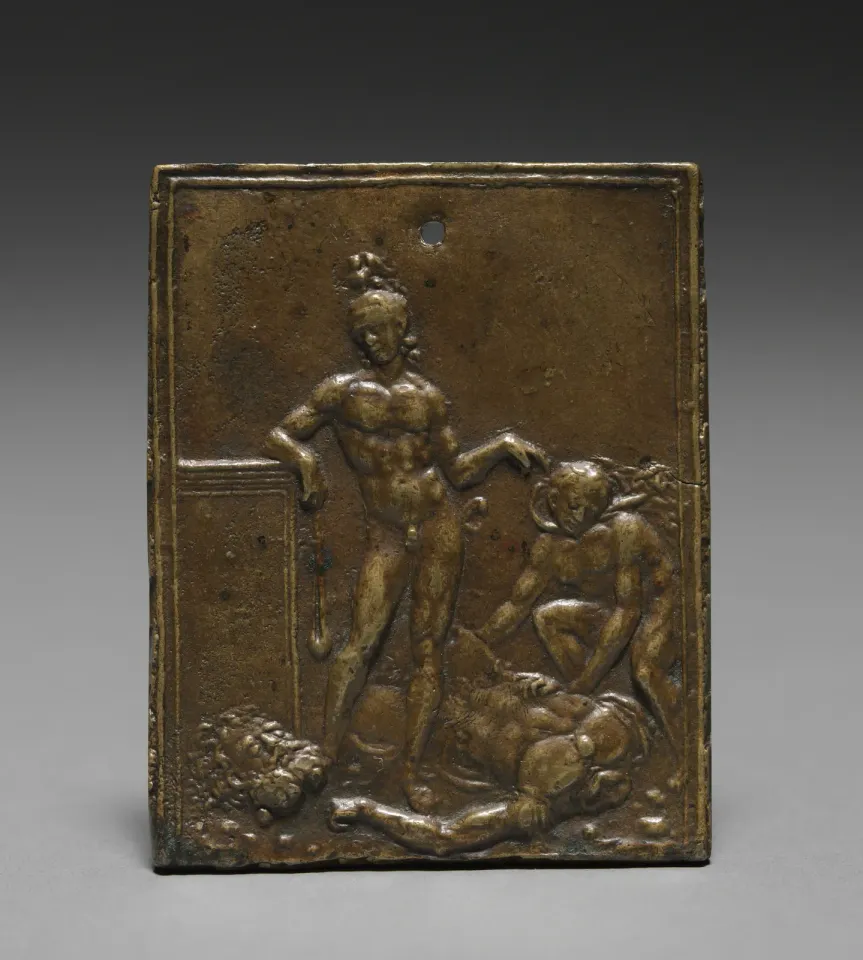
With one smooth stone chosen from a brook, it brought down the giant Goliath.