Arthurian & Chivalric
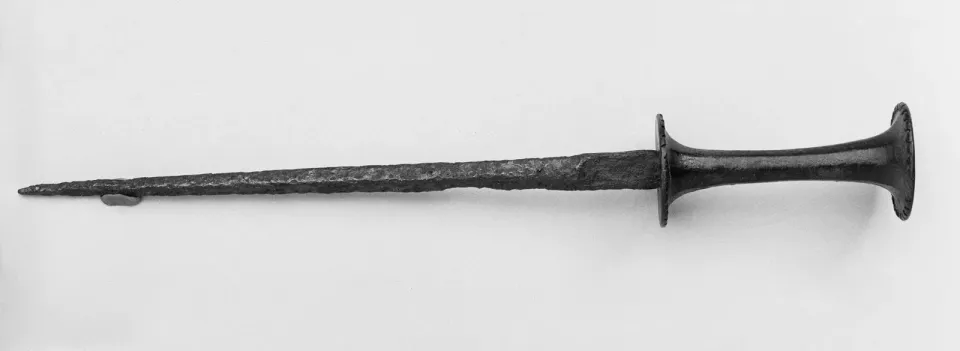
Excalibur
Excalibur
Cuts through enemy armor, and whoever wears its scabbard does not bleed.
WeaponFirst recorded 1136
Loading artifact…
Photograph: A woodcut printed on blue-washed paper by the German artist Hans Burgkmair in 1508, Equestrian Portrait of the Emperor Maximilian. Under an arch, the emperor in armor and a plumed helmet rides a horse in a patterned caparison toward the left, with a double-headed eagle banner behind.
Focus the photograph, then use the arrow keys to pan and the plus and minus keys to zoom. The buttons at the lower left also move it. Press a numbered button on the photograph to zoom to that note.
Veillantif
Roland's warhorse, which carried him into the heart of the Saracen host.
In The Song of Roland every knight's sword and horse has a name. If Roland's sword is Durendal, the warhorse he rides is Veillantif. When the vast Saracen army pours into the pass of Roncevaux, Roland mounts Veillantif, ties a white pennon with golden fringes to his lance, and rides up and down before the Frankish knights to rouse them.
The name is read as coming from the Old French word for 'to be awake.' The poem sings again and again of Roland driving Veillantif through the enemy ranks and striking down their champions with Durendal. In the chansons de geste a horse was the knight's companion in his deeds.
The battle of Roncevaux rests on a real event of 778, when Charlemagne's rearguard was ambushed by Basques in the Pyrenees. In a poem written some three hundred years later the enemy became a Saracen army, and Roland and Veillantif became the model of a knight and horse who never gave ground.
The photograph shows Equestrian Portrait of the Emperor Maximilian(Germany, 1508), a real museum object that evokes the legendary artifact.
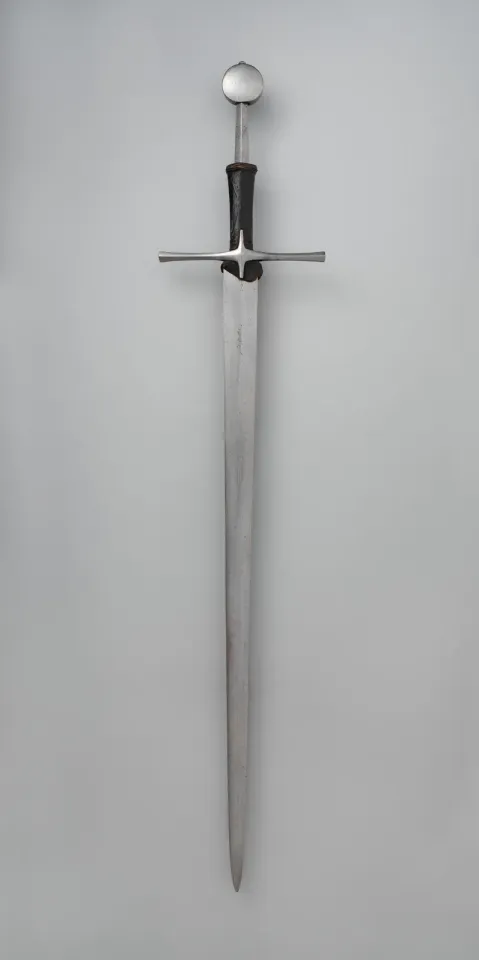
Excalibur
Cuts through enemy armor, and whoever wears its scabbard does not bleed.
Holy Grail
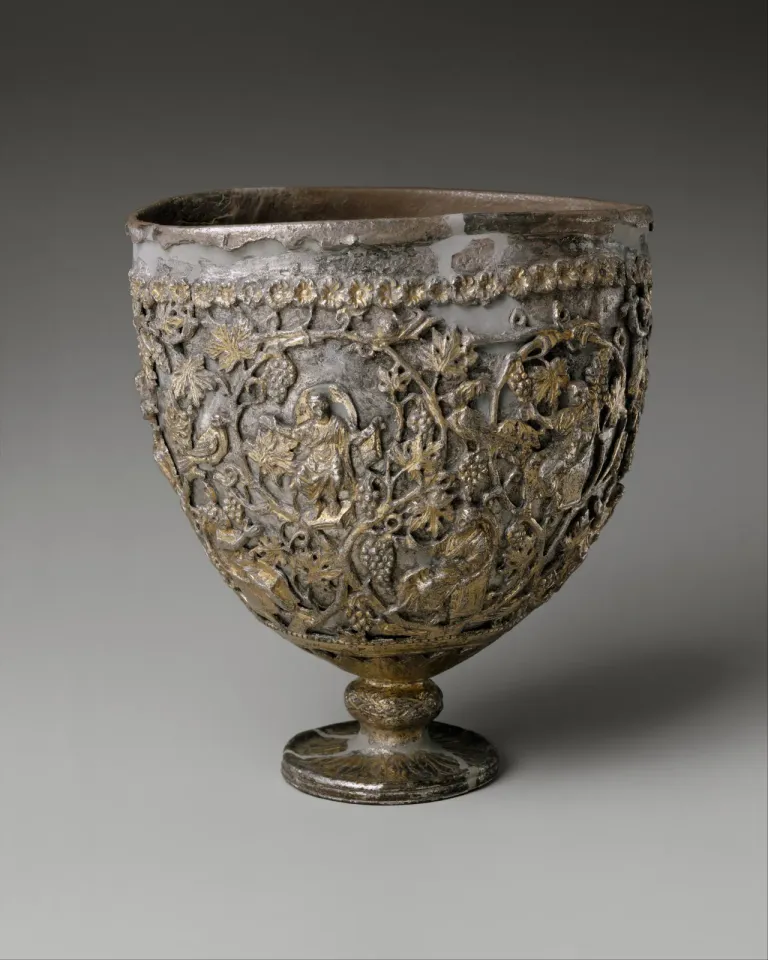
Grants those who see it the food they desire, and shows itself only to the pure knight.
Rhongomyniad
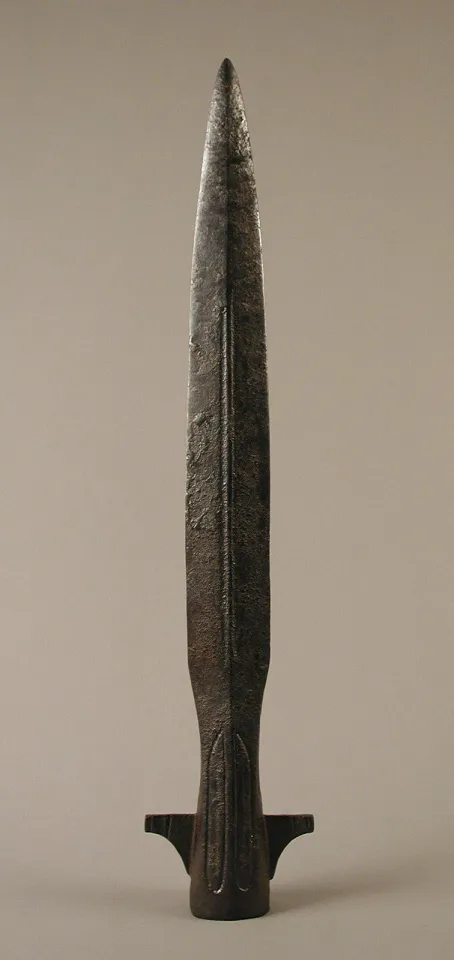
Long and broad-bladed, said to thirst for enemy blood.