Greek
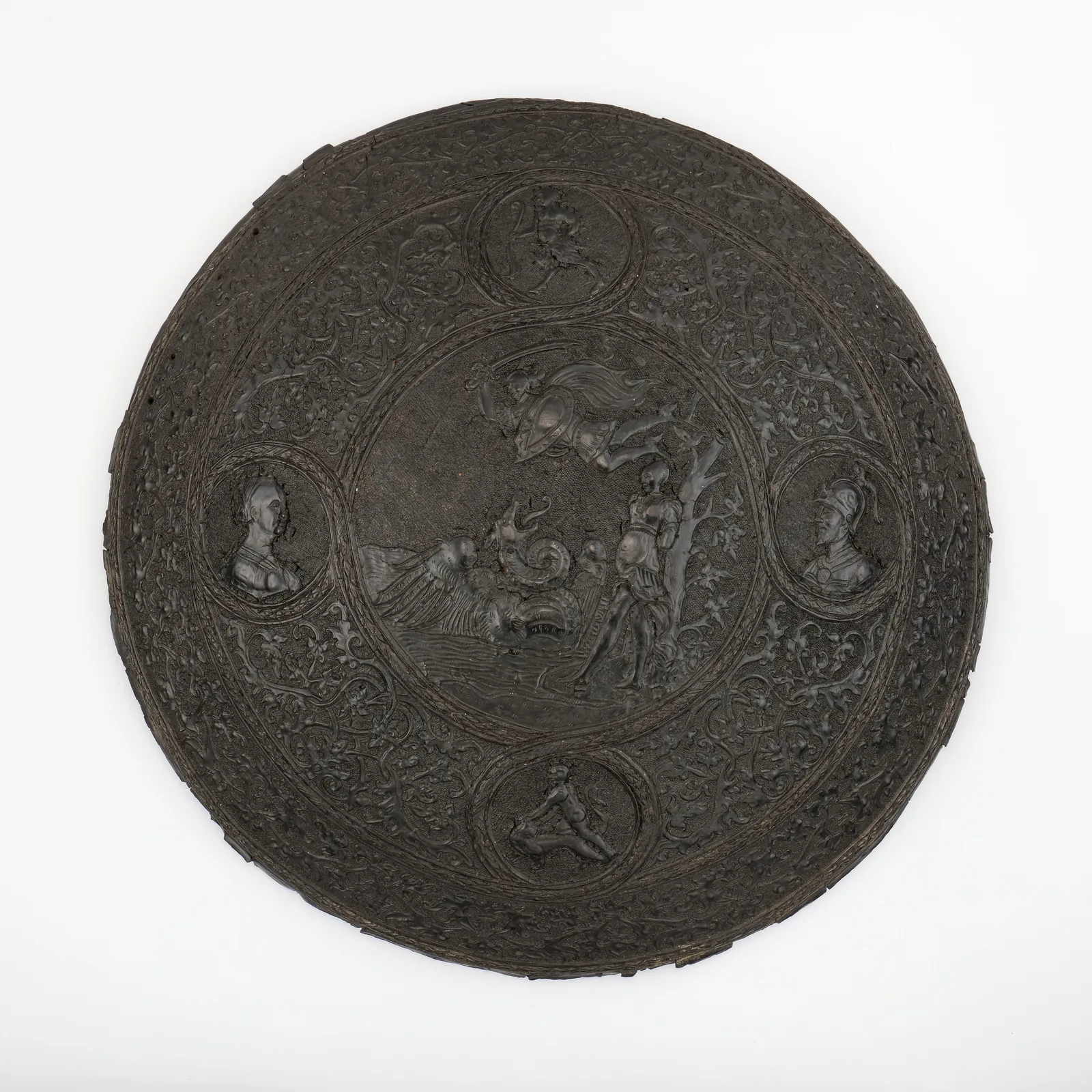
Aegis
Aegis (Αἰγίς)
Shaken, it raises storms and sends enemy armies fleeing in terror.
ArmorFirst recorded c. 750 BCE
Loading artifact…
Photograph: A Cypriot footed cup (kylix) of about 750–600 BCE, with scrolls and geometric designs in red and black on a pale ground.
Focus the photograph, then use the arrow keys to pan and the plus and minus keys to zoom. The buttons at the lower left also move it. Press a numbered button on the photograph to zoom to that note.
Ambrosia & Nectar
Keeps the gods ageless and deathless.
In Homer's epics the gods eat ambrosia and drink nectar rather than human bread and wine. The word ambrosia means "not dying," and ichor flows in the gods' veins instead of blood.
The Odyssey sings that doves bring ambrosia to Zeus from the ends of the earth. The gods also rub it on like perfumed oil; Hera washes and adorns herself with it.
Mortals who tried to steal it suffered greatly. Tantalus, for stealing the food of the gods and sharing it with people, was condemned to eternal hunger and thirst.
The photograph shows Kylix(Cypriot, ca. 750–600 BCE), a real museum object that evokes the legendary artifact.
Aegis (Αἰγίς)
Shaken, it raises storms and sends enemy armies fleeing in terror.
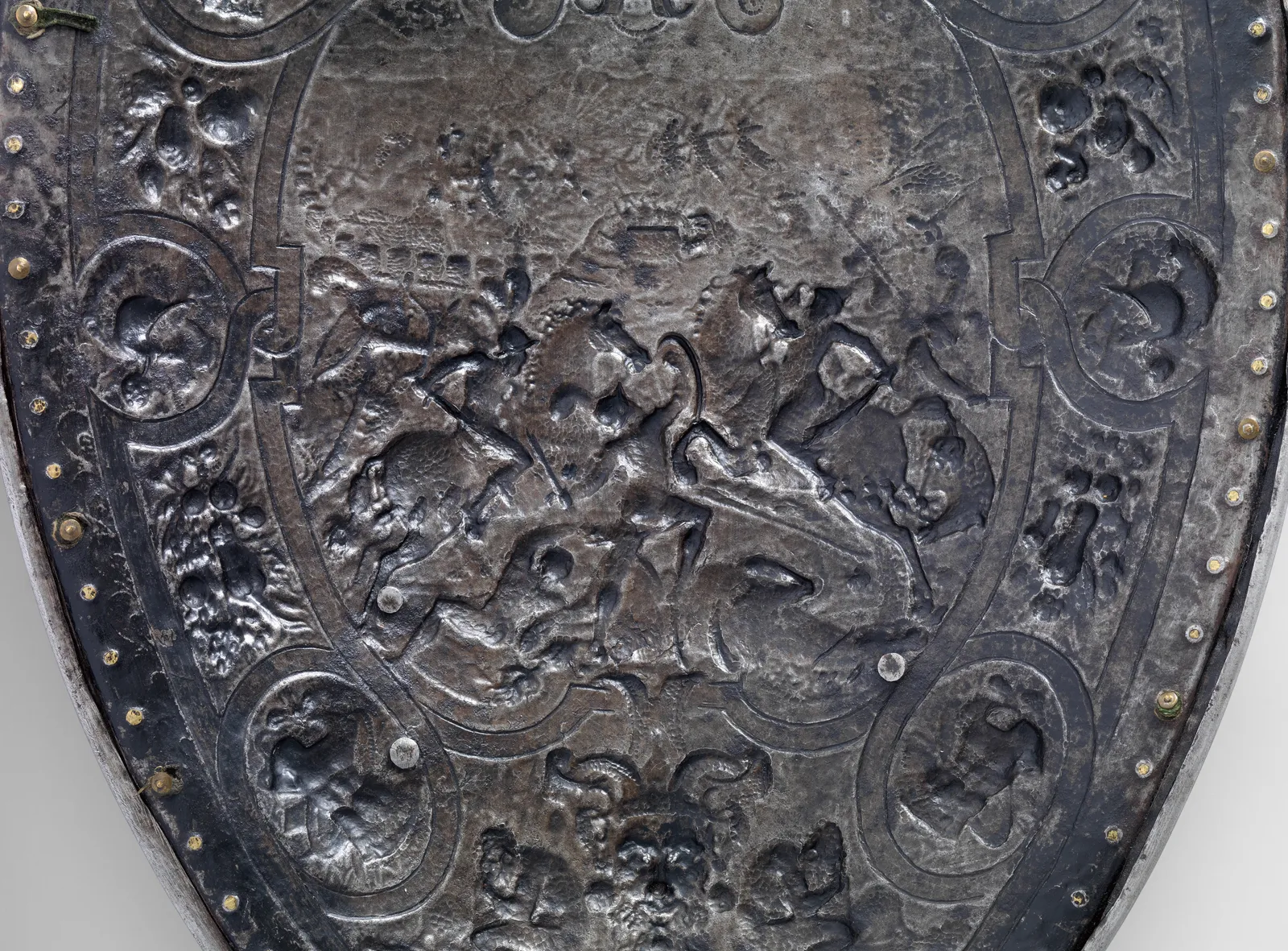
Shield of Achilles
A shield of five layers forged by a god, with the whole world engraved on its face.
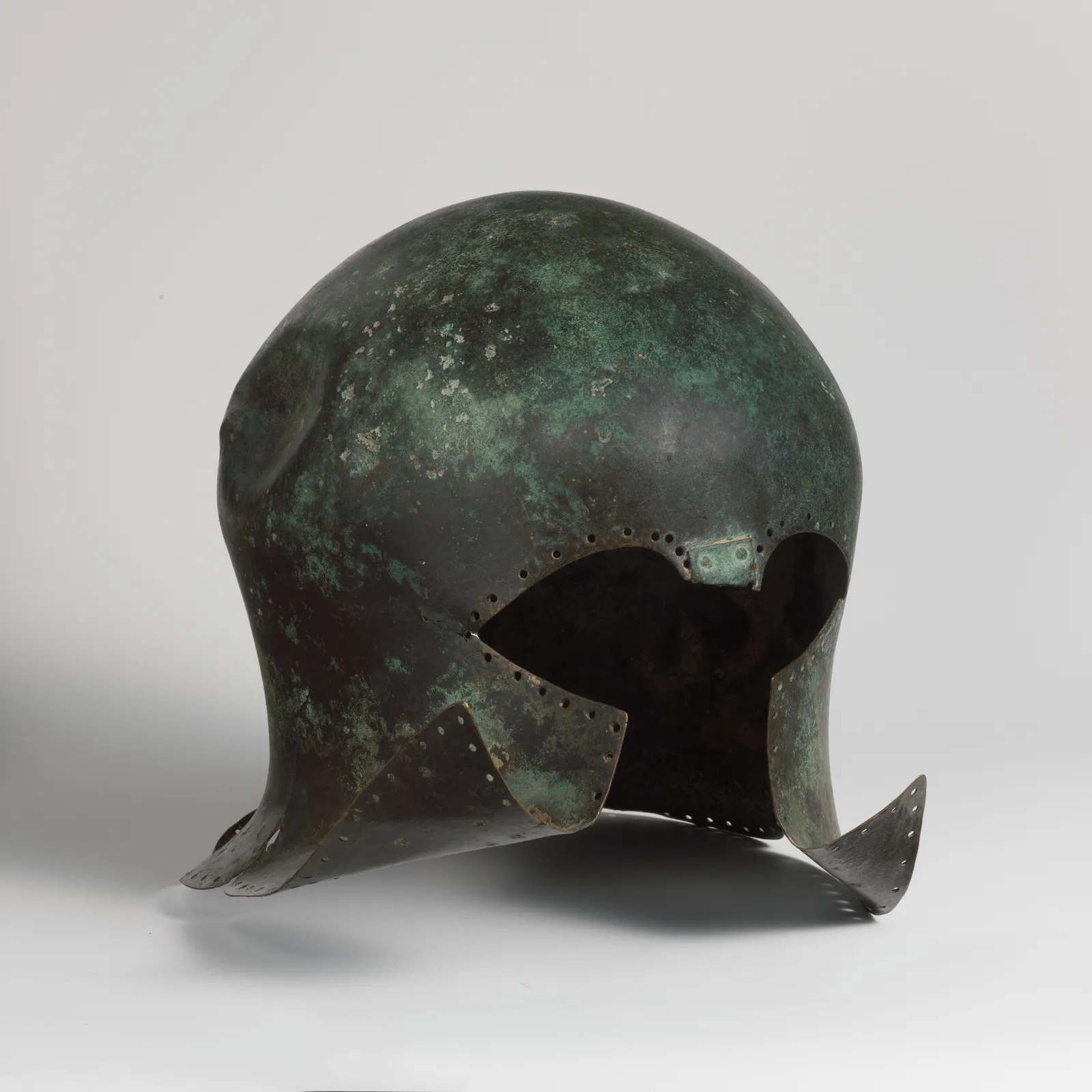
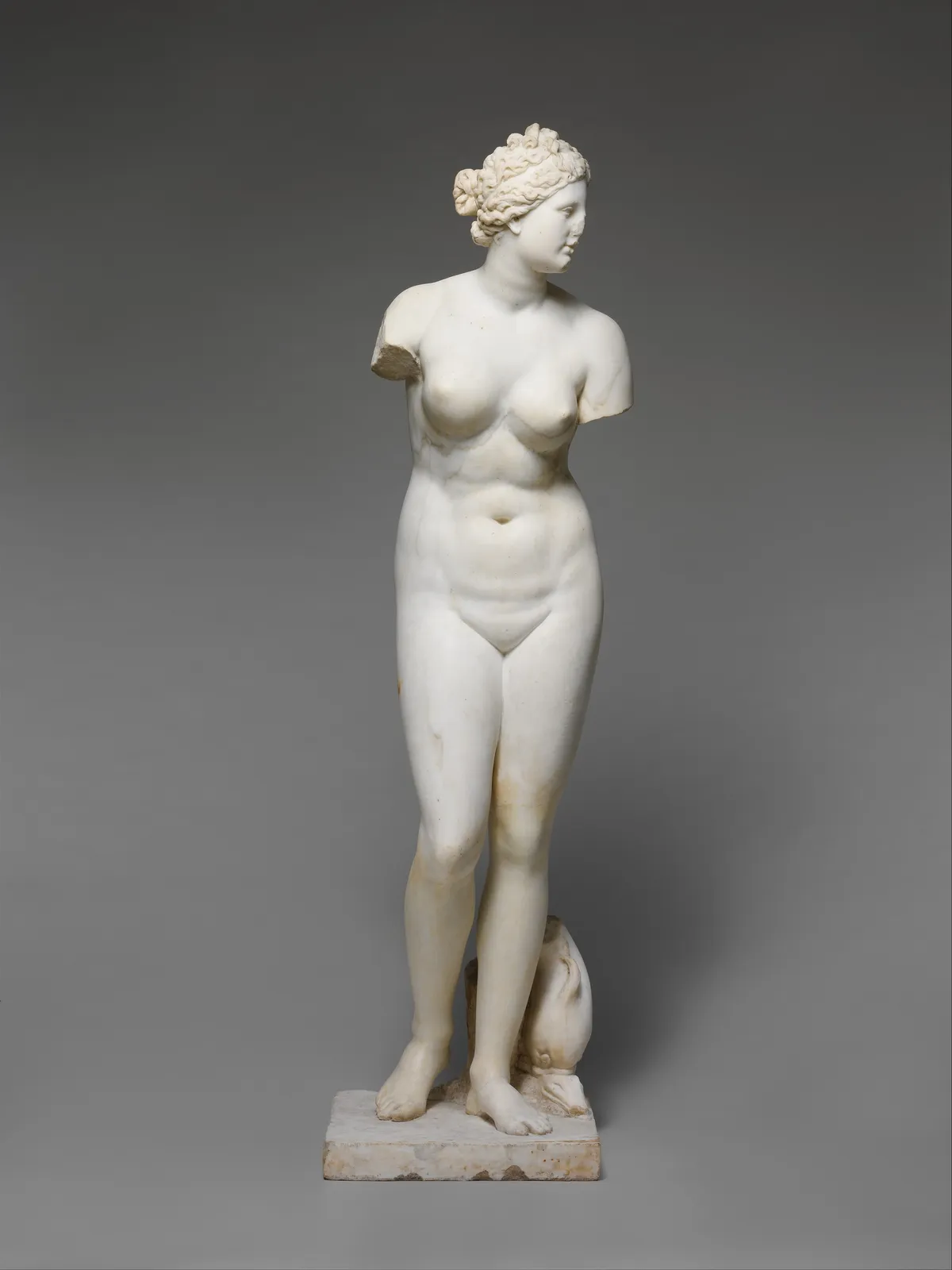
Kestos Himas (Κεστὸς ἱμάς)
Embroidered with love, longing and beguiling words, it makes anyone fall in love.