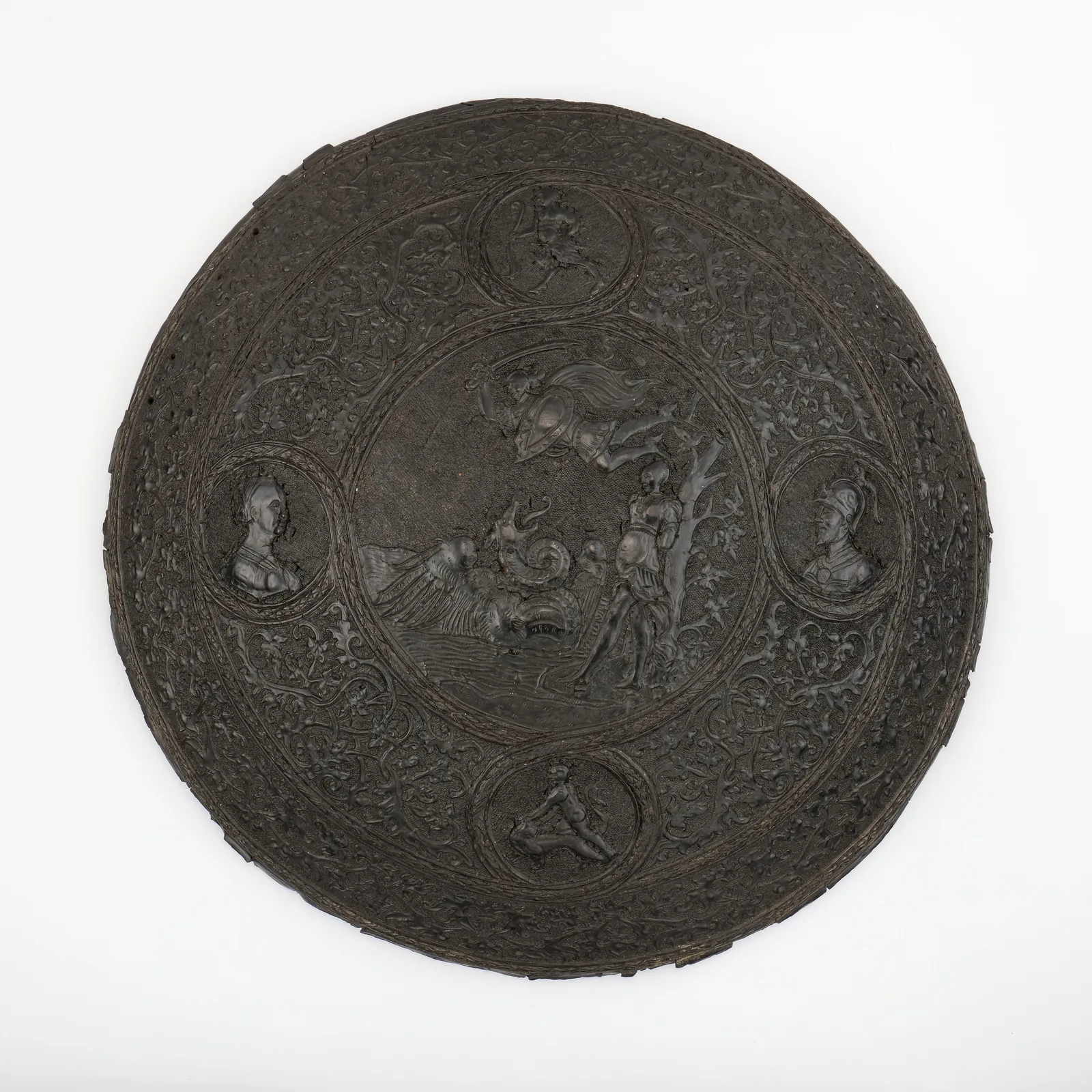
Greek
Aegis
Aegis (Αἰγίς)
Shaken, it raises storms and sends enemy armies fleeing in terror.
ArmorFirst recorded c. 750 BCE
Loading artifact…
Photograph: A Roman marble statue of Aphrodite of the first to second century CE. The nude goddess, with hair tied up, stands with both arms broken away.
Focus the photograph, then use the arrow keys to pan and the plus and minus keys to zoom. The buttons at the lower left also move it. Press a numbered button on the photograph to zoom to that note.
Kestos Himas (Κεστὸς ἱμάς)
Embroidered with love, longing and beguiling words, it makes anyone fall in love.
In Book 14 of the Iliad, Hera schemes to distract Zeus, who favors the Trojans. She goes to Aphrodite, pretending she wishes to reconcile an estranged old couple, and borrows her embroidered band.
Homer sings that this band was stitched with love, longing and sweet words that steal even a wise man's mind.
Seeing Hera wearing it, Zeus was stirred as when he first fell in love. While he slept with the help of the god of Sleep, Poseidon aided the Greeks and turned the tide of battle.
The photograph shows Marble statue of Aphrodite(Roman, 1st or 2nd century CE), a real museum object that evokes the legendary artifact.
Aegis (Αἰγίς)
Shaken, it raises storms and sends enemy armies fleeing in terror.
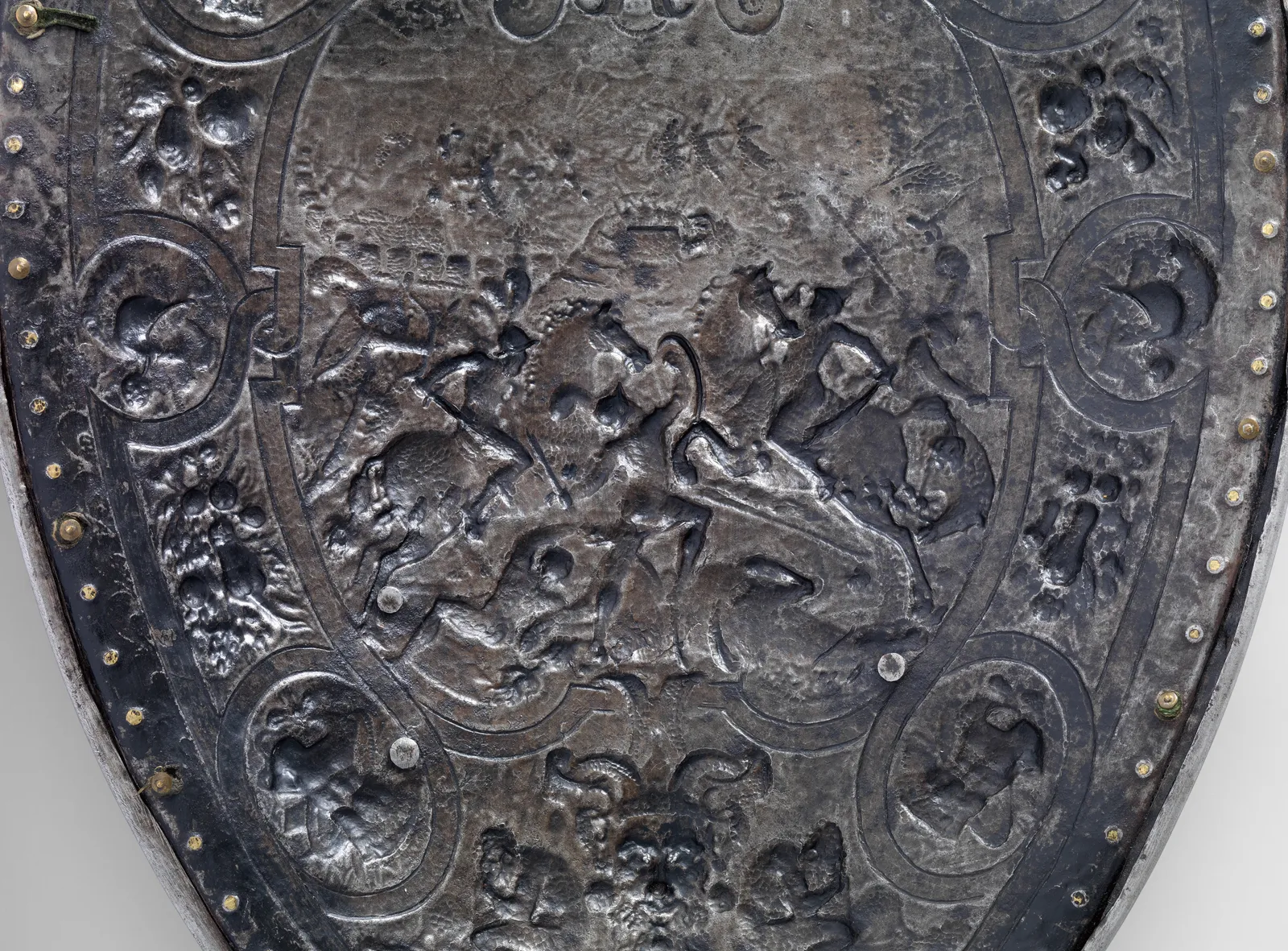
Shield of Achilles
A shield of five layers forged by a god, with the whole world engraved on its face.
Ambrosia & Nectar
Keeps the gods ageless and deathless.