Egypt & Near East
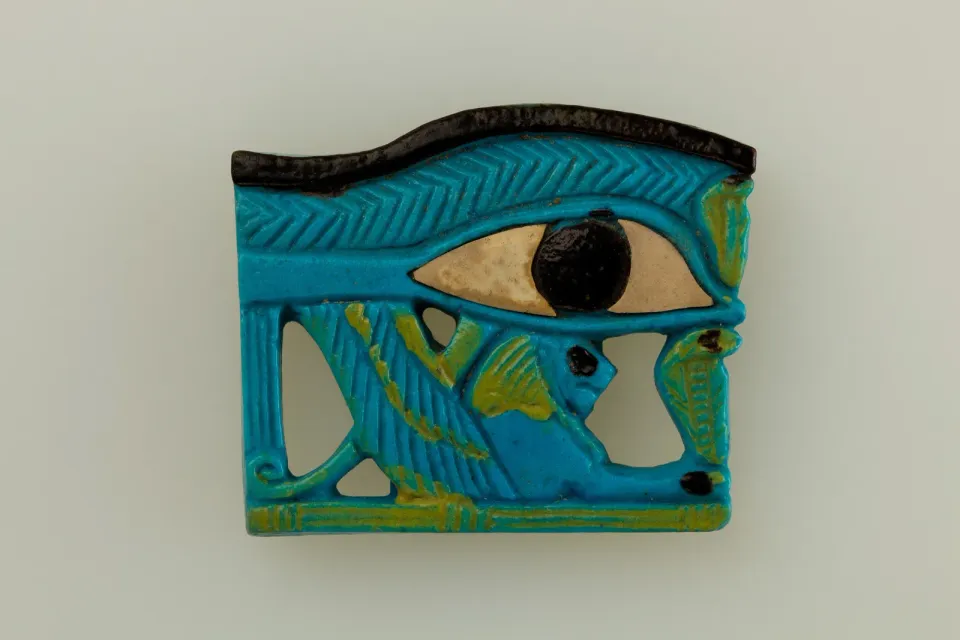
Eye of Horus
Wedjat (Eye of Horus)
An amulet that heals what is hurt and keeps the body whole.
JewelFirst recorded c. 2400 BCE
Loading artifact…
Photograph: Rustam Meets the Challenge of Ashkabus, a page from a Shahnameh painted in Shiraz, Iran, about 1590–1600. On a purple field scattered with flowers, Rostam, on foot, shoots an arrow, an enemy champion falls at right, and armies with banners gather above.
Focus the photograph, then use the arrow keys to pan and the plus and minus keys to zoom. The buttons at the lower left also move it. Press a numbered button on the photograph to zoom to that note.
Babr-e Bayān
It is said that fire could not burn it, water could not soak it and no weapon could pierce it.
In Ferdowsi's Shahnameh, whenever Rostam, the hero of Iran, goes into battle he wears over his armor the babr-e bayan, a battle coat made of tiger skin. In Persian painting too, Rostam is easy to recognize by his striped hide coat and his leopard-head helmet.
The Shahnameh does not say where the babr-e bayan came from. Later tales say that Rostam made it from the skin of a sea monster or a dragon he had slain, and that fire could not burn it, water could not soak it and no weapon could pierce it.
Wearing this coat, Rostam defended Iran in many battles against Turan. In his fight with Ashkabus, he let his weary horse Rakhsh rest and went out on foot; he first shot down his enemy's horse, then pierced Ashkabus with a single arrow.
The photograph shows Rustam meets the challenge of Ashkabus, from a Shah-nama (Book of Kings) of Firdausi (Persian, about 934–1020)(Iran, Shiraz, Safavid period (1501-1722), c. 1590–1600), a real museum object that evokes the legendary artifact.
Wedjat (Eye of Horus)
An amulet that heals what is hurt and keeps the body whole.
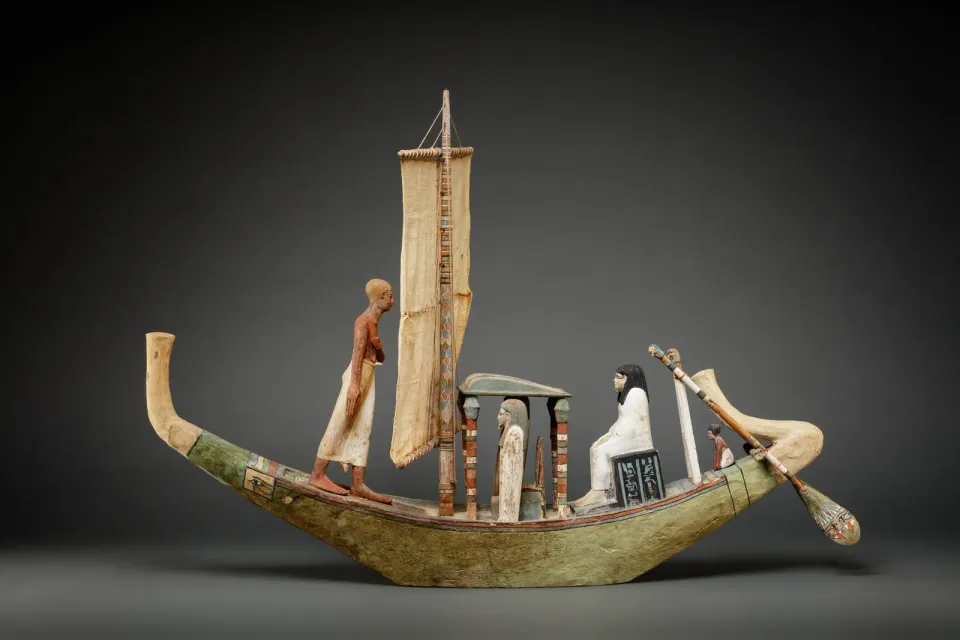
Solar Barque of Ra
Crossing the sky by day and the underworld by night, it makes the sun rise again.
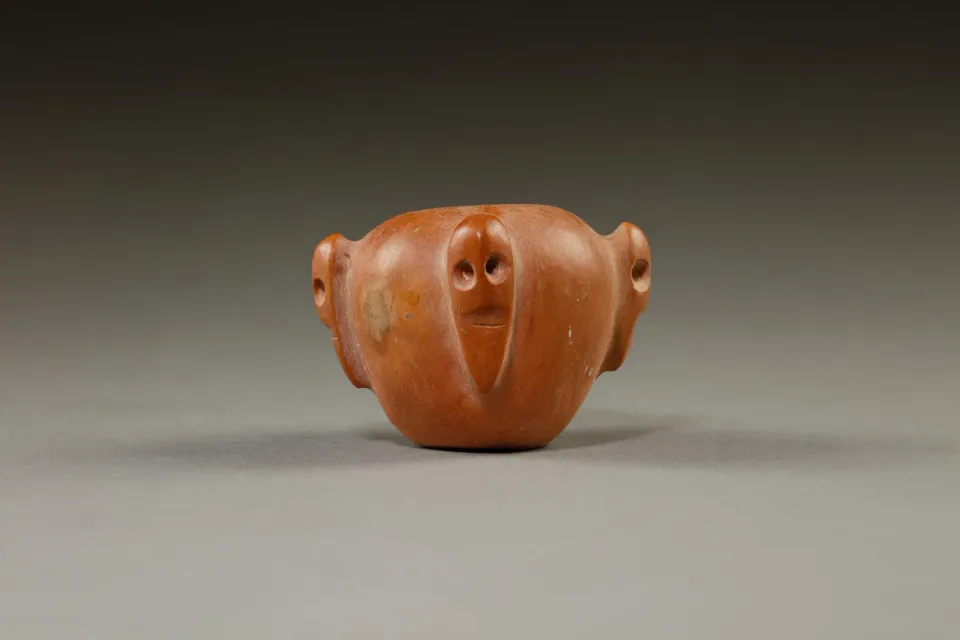
Šar-ur
It speaks, flies off on its own to spy on the enemy, and reports back to its master.
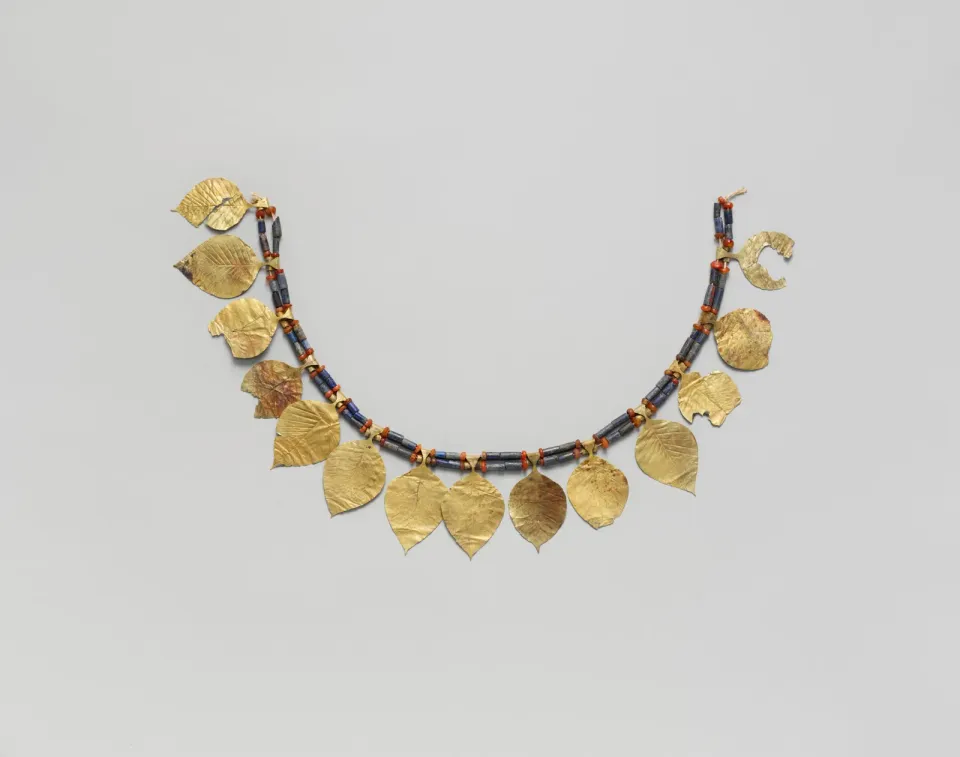
Seven Me of Inanna
Seven ornaments holding the goddess's powers. With each one she removes, she loses her strength.