Egypt & Near East
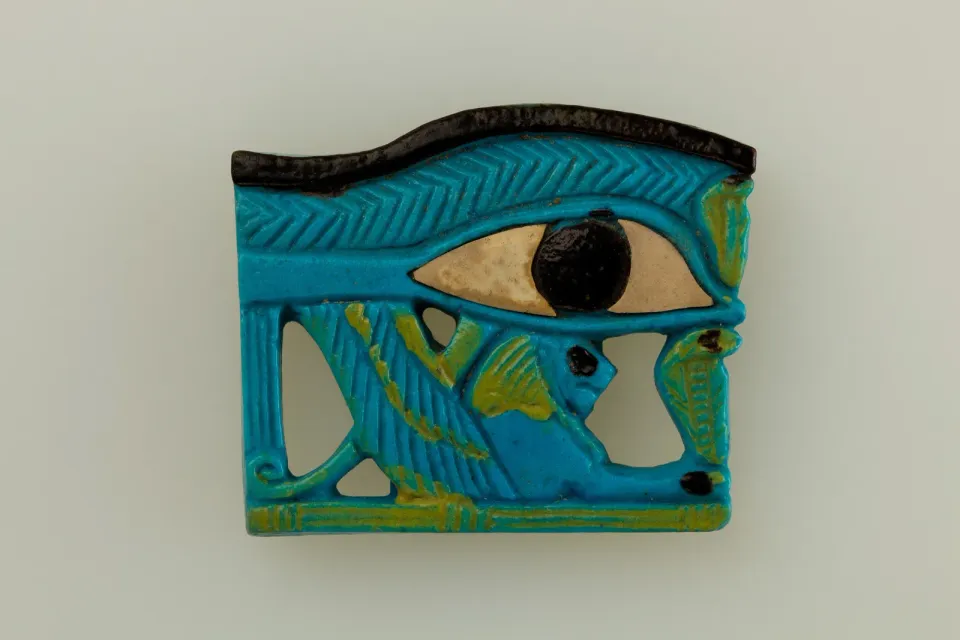
Eye of Horus
Wedjat (Eye of Horus)
An amulet that heals what is hurt and keeps the body whole.
JewelFirst recorded c. 2400 BCE
Loading artifact…
Photograph: A Sumerian headdress of about 2600–2500 BCE. Thin sheets of gold cut into leaf shapes hang in a row from a string of blue lapis lazuli and red carnelian beads.
Focus the photograph, then use the arrow keys to pan and the plus and minus keys to zoom. The buttons at the lower left also move it. Press a numbered button on the photograph to zoom to that note.
Seven Me of Inanna
Seven ornaments holding the goddess's powers. With each one she removes, she loses her strength.
Inanna, queen of heaven, decided to descend to the underworld ruled by her sister Ereshkigal. She put on seven divine powers: on her head the shugurra crown, at her neck small lapis lazuli beads, on her breast a double strand of beads, a breastplate, a gold ring on her hand, a lapis lazuli measuring rod and line in her hand, and a royal robe. She told her servant Ninshubur to seek help from the gods if she did not return in three days.
The underworld had seven gates. At each gate the gatekeeper Neti made her take off one ornament, and whenever Inanna asked why, he only answered, "Quiet, Inanna. The ways of the underworld are perfect." Passing the seventh gate, Inanna stood naked before Ereshkigal, and when the judges of the underworld fixed on her the eye of death, she became a corpse hung on a hook.
Hearing Ninshubur's plea, Enki, god of wisdom, fashioned two beings from the dirt under his fingernails and sent them with the food and water of life, and Inanna came back to life. But by the law of the underworld she had to give up someone to take her place, and she gave up her husband Dumuzi, who had not mourned for her.
The photograph shows Headdress(Sumerian, ca. 2600–2500 BCE), a real museum object that evokes the legendary artifact.
Wedjat (Eye of Horus)
An amulet that heals what is hurt and keeps the body whole.
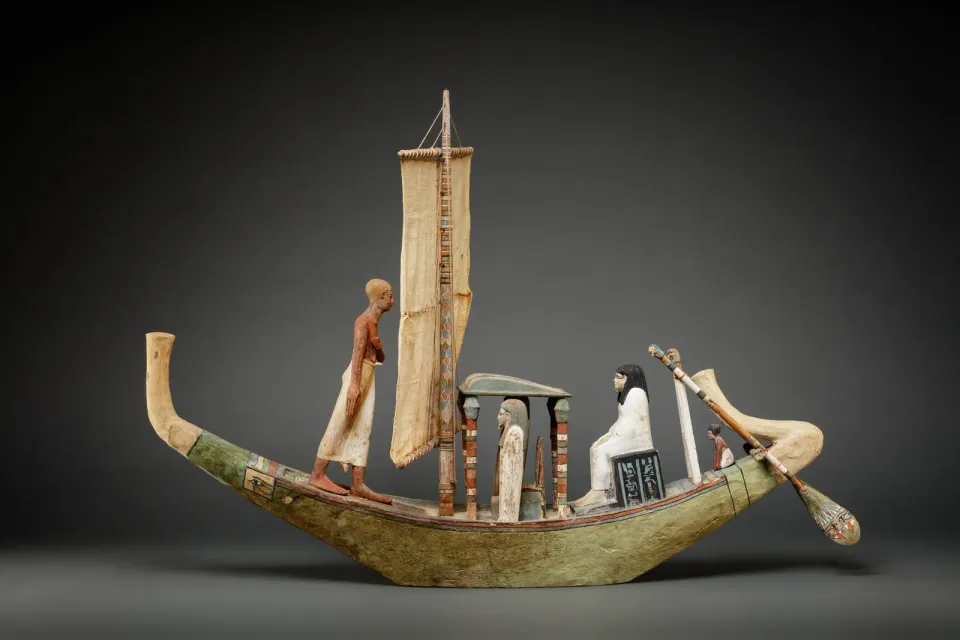
Solar Barque of Ra
Crossing the sky by day and the underworld by night, it makes the sun rise again.
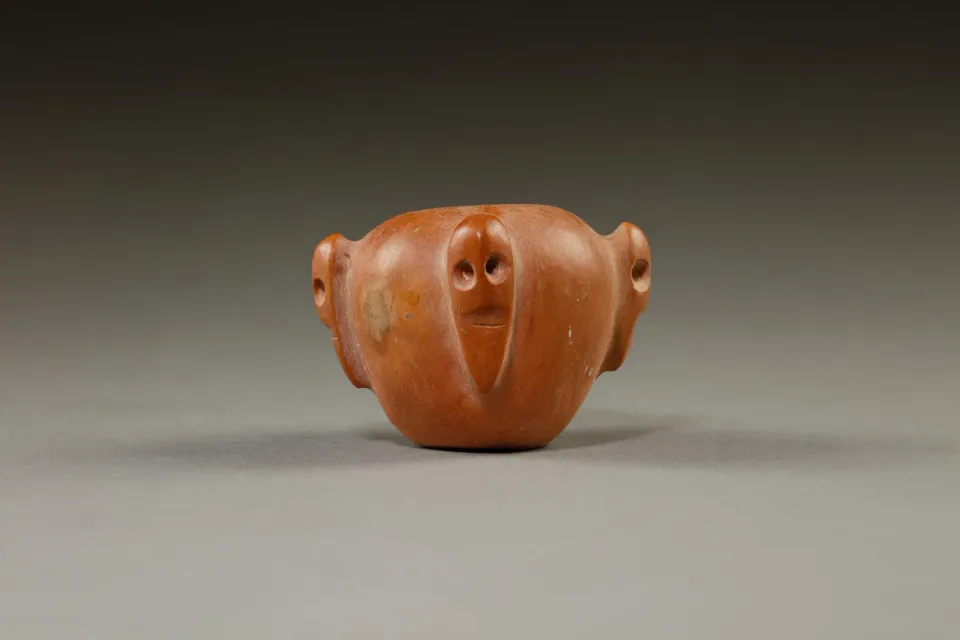
Šar-ur
It speaks, flies off on its own to spy on the enemy, and reports back to its master.
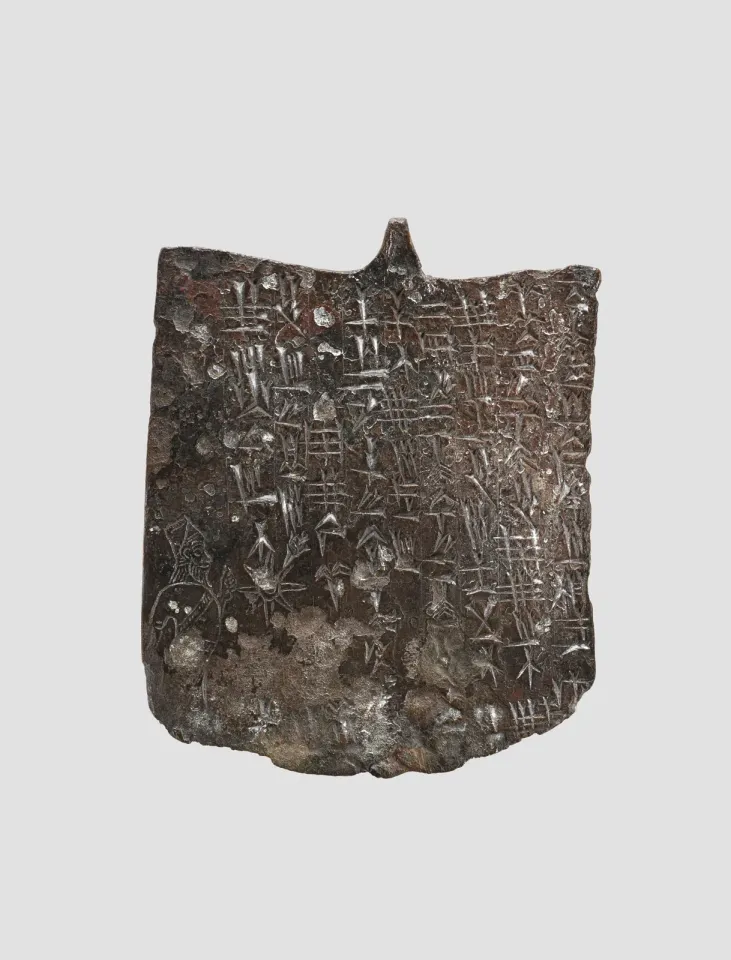
Ṭuppi Šīmāti (Tablet of Destinies)
Whoever holds it decides the fates of gods, people and the world, and rules the universe.