Egypt & Near East
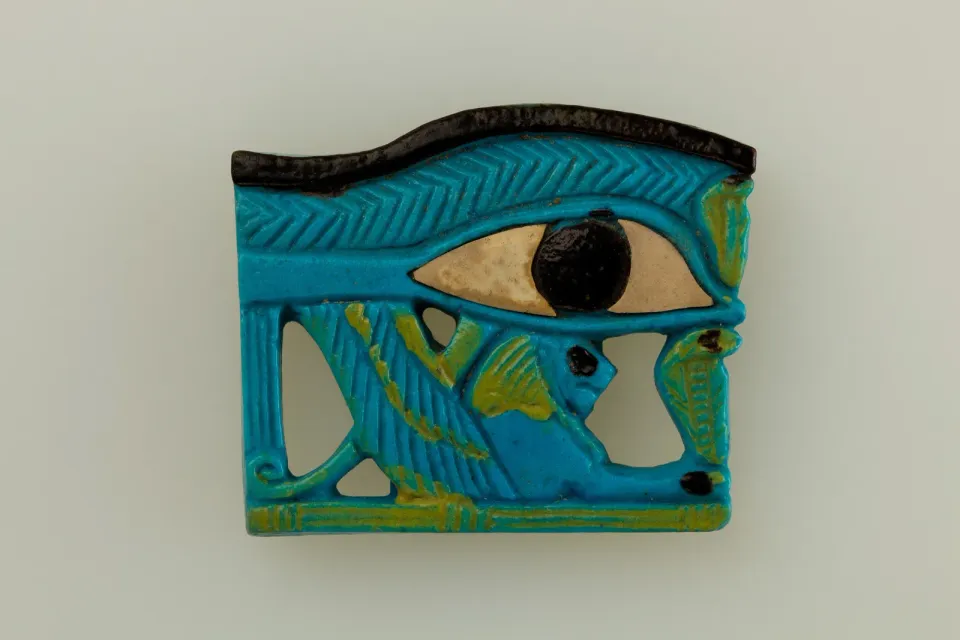
Eye of Horus
Wedjat (Eye of Horus)
An amulet that heals what is hurt and keeps the body whole.
JewelFirst recorded c. 2400 BCE
Loading artifact…
Photograph: A pink limestone mace head from Predynastic Egypt, about 3650–3100 BCE. A face is carved on the front of the pear-shaped body, with a long nose, two drilled eyes and a thin mouth, and pierced knobs project from both sides.
Focus the photograph, then use the arrow keys to pan and the plus and minus keys to zoom. The buttons at the lower left also move it. Press a numbered button on the photograph to zoom to that note.
Šar-ur
It speaks, flies off on its own to spy on the enemy, and reports back to its master.
Ninurta, the Sumerian god of war, carried a mace called Sharur, meaning "smasher of multitudes." Sharur could speak, and it flew off on its own to spy on the enemy and came back to report to its master.
In Lugal-e, Sharur tells Ninurta that Asag, a monster born in the mountains, is ravaging the land with an army of stone warriors. When Ninurta is driven back in the first battle, Sharur flies to Enlil, king of the gods, and returns with his counsel, and Ninurta at last defeats Asag.
After the battle Ninurta piled up stones to make the mountains and gathered the waters flowing down from them into the Tigris to water the fields. He cursed the stones that had sided with Asag and blessed those that had sided with him, giving each kind of stone its use.
The photograph shows Piriform macehead with male faces(Egypt, Predynastic, Naqada II–Naqada III, ca. 3650–3100 BCE), a real museum object that evokes the legendary artifact.
Wedjat (Eye of Horus)
An amulet that heals what is hurt and keeps the body whole.
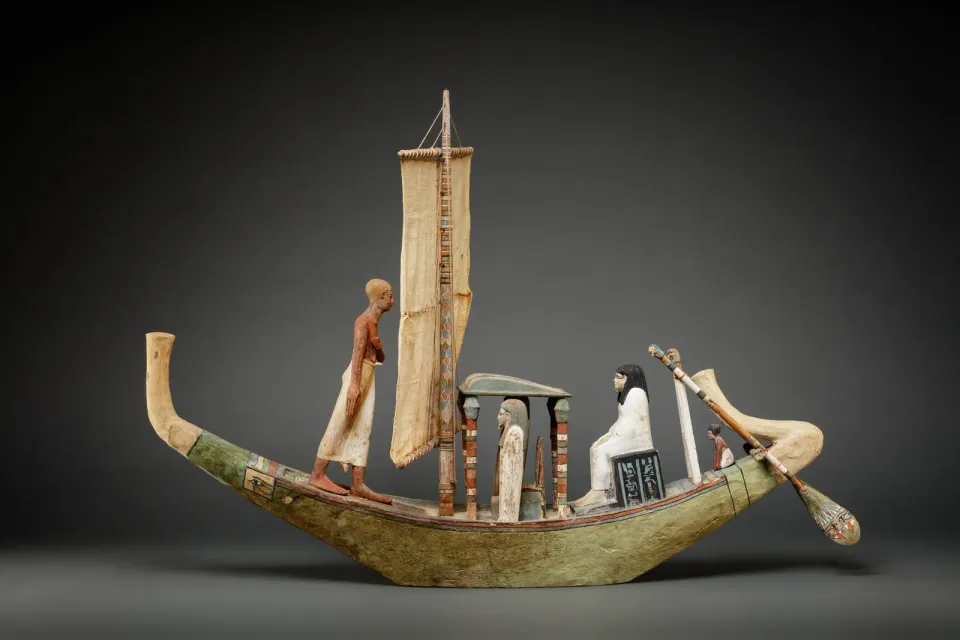
Solar Barque of Ra
Crossing the sky by day and the underworld by night, it makes the sun rise again.
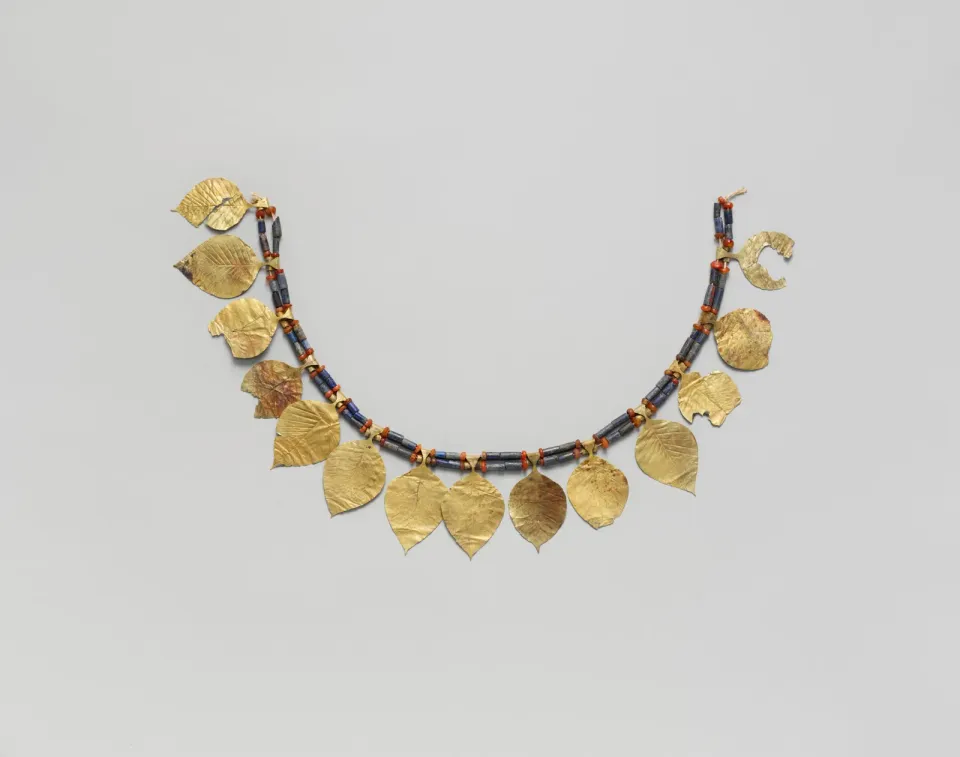
Seven Me of Inanna
Seven ornaments holding the goddess's powers. With each one she removes, she loses her strength.
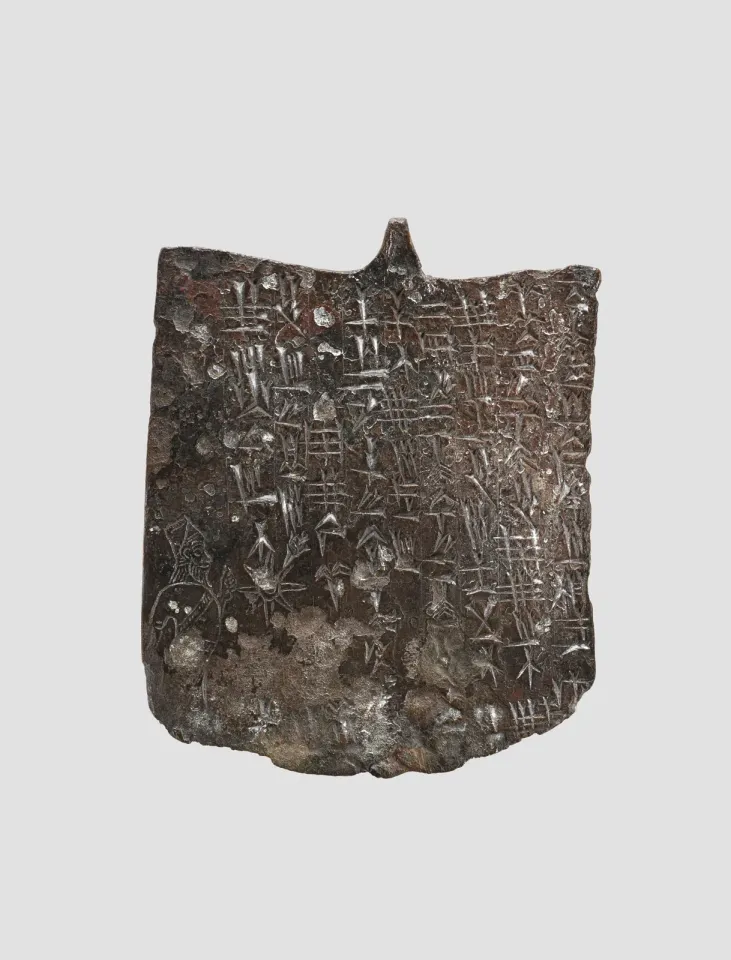
Ṭuppi Šīmāti (Tablet of Destinies)
Whoever holds it decides the fates of gods, people and the world, and rules the universe.