Egypt & Near East
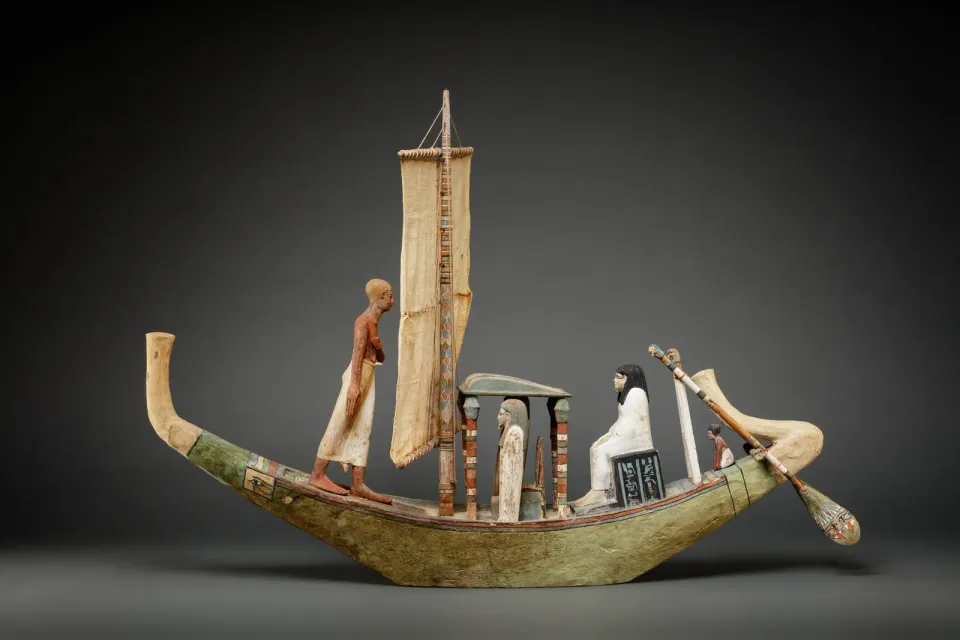
Solar Barque of Ra
Solar Barque of Ra
Crossing the sky by day and the underworld by night, it makes the sun rise again.
MountFirst recorded c. 2400 BCE
Loading artifact…
Photograph: A wedjat eye amulet from Egypt's Third Intermediate Period, about 1080–664 BCE. A white eye with a black pupil is inlaid in a sky-blue faience plaque, with a heavy brow above and the falcon's cheek markings worked in openwork below.
Focus the photograph, then use the arrow keys to pan and the plus and minus keys to zoom. The buttons at the lower left also move it. Press a numbered button on the photograph to zoom to that note.
Wedjat (Eye of Horus)
An amulet that heals what is hurt and keeps the body whole.
When Osiris was killed by his brother Seth, his son Horus, the falcon god, fought a long battle with Seth for his father's throne. During the fight Seth tore out Horus's eye and ripped it to pieces.
Thoth, god of wisdom, gathered the scattered pieces and restored the eye. The eye brought back to life in this way was called the wedjat, "the sound one." In the Pyramid Texts, Horus offers his recovered eye to his dead father Osiris to bring him back to life. The moon, which wanes and waxes again, was seen as the eye of Horus being hurt and healed.
The wedjat eye, drawn with a brow and the markings of a falcon's cheek, became the most common amulet in Egypt. The living wore it to ward off sickness and bad luck, and it was placed between the wrappings of mummies to keep the bodies of the dead whole.
The photograph shows Wedjat Eye Amulet(Third Intermediate Period, ca. 1080–664 BCE), a real museum object that evokes the legendary artifact.
Solar Barque of Ra
Crossing the sky by day and the underworld by night, it makes the sun rise again.
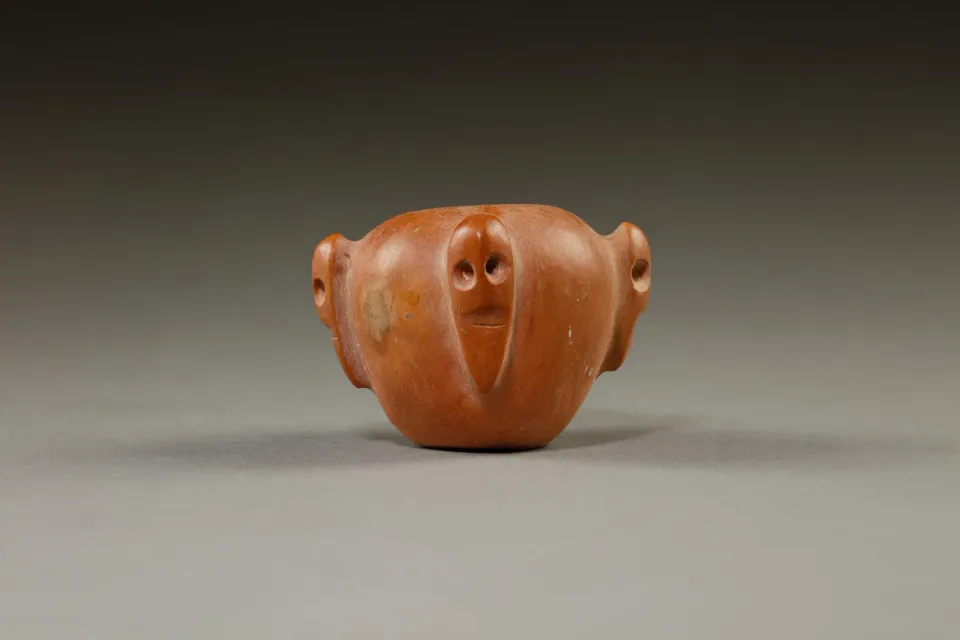
Šar-ur
It speaks, flies off on its own to spy on the enemy, and reports back to its master.
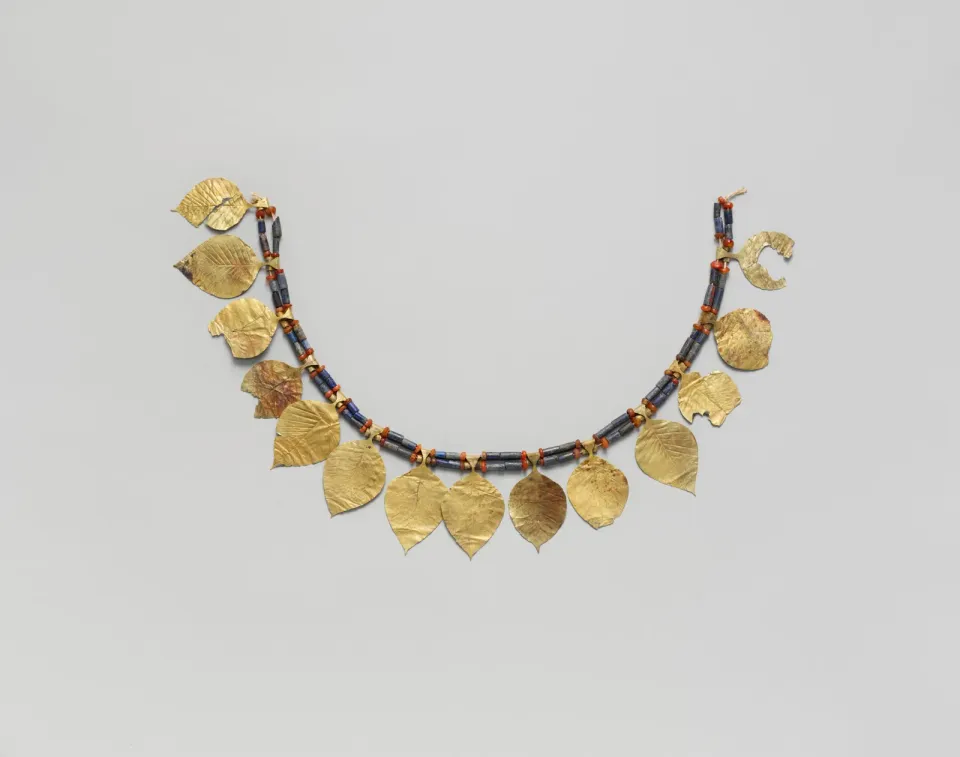
Seven Me of Inanna
Seven ornaments holding the goddess's powers. With each one she removes, she loses her strength.
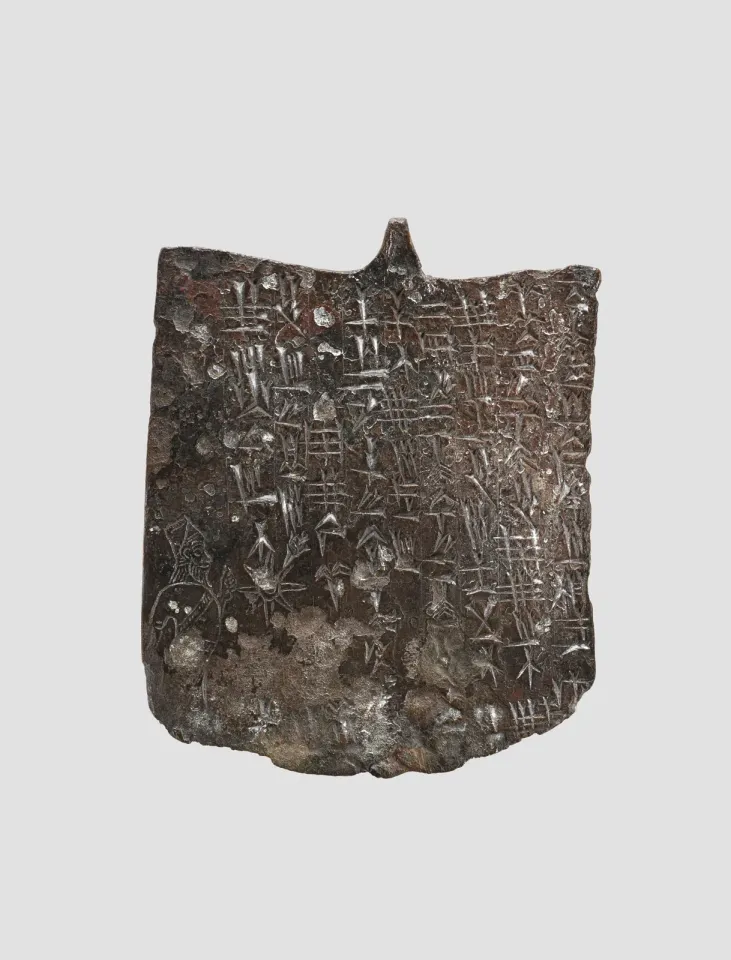
Ṭuppi Šīmāti (Tablet of Destinies)
Whoever holds it decides the fates of gods, people and the world, and rules the universe.