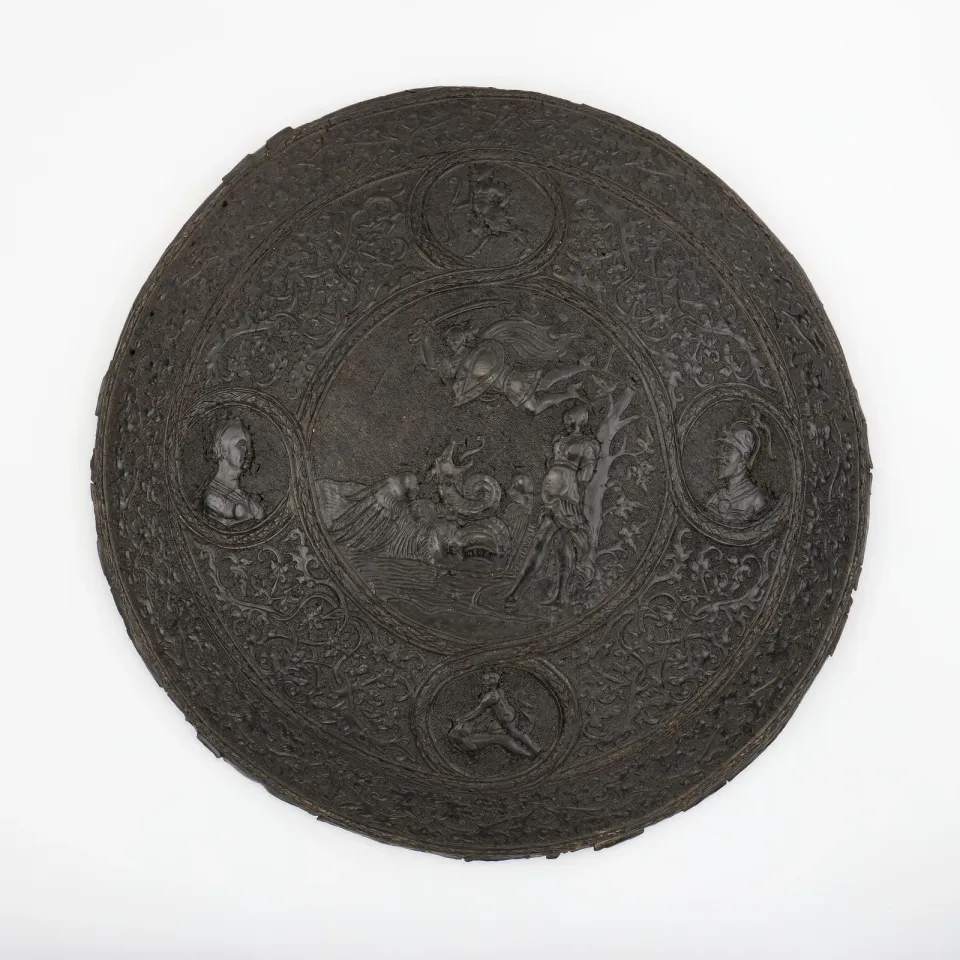
Greek
Aegis
Aegis (Αἰγίς)
Shaken, it raises storms and sends enemy armies fleeing in terror.
ArmorFirst recorded c. 750 BCE
Loading artifact…
Photograph: An agate vessel (askos) of the Ptolemaic dynasty, 200–1 BCE. Agate with swirling brown and white bands is carved in the shape of a wineskin, with gold capping the slanted spout and the foot.
Focus the photograph, then use the arrow keys to pan and the plus and minus keys to zoom. The buttons at the lower left also move it. Press a numbered button on the photograph to zoom to that note.
Bag of Aeolus
It holds every violent wind, so that a ship sails home with only a fair breeze.
Aeolus, master of the winds, lived on a floating island ringed with bronze walls. When Odysseus stopped there on his way home from Troy, Aeolus entertained him for a month and gave him a gift when he left: a bag made from the hide of a nine-year-old ox, in which he had bound all the violent winds, tied with a silver cord.
Outside the bag he left only the west wind, to carry the ship straight to Ithaca. They sailed for nine days and nights, and on the tenth, when they were so close that the fires of home were in sight, Odysseus, who had held the helm the whole time, fell asleep.
The sailors, thinking the bag must be full of gold and silver, secretly untied it. The imprisoned winds rushed out all at once, and the ship was driven back to Aeolus's island. Aeolus, declaring him a man hated by the gods, never helped him again.
The photograph shows Askos(Greece, Ptolemaic Dynasty, 200–1 BCE), a real museum object that evokes the legendary artifact.
Aegis (Αἰγίς)
Shaken, it raises storms and sends enemy armies fleeing in terror.
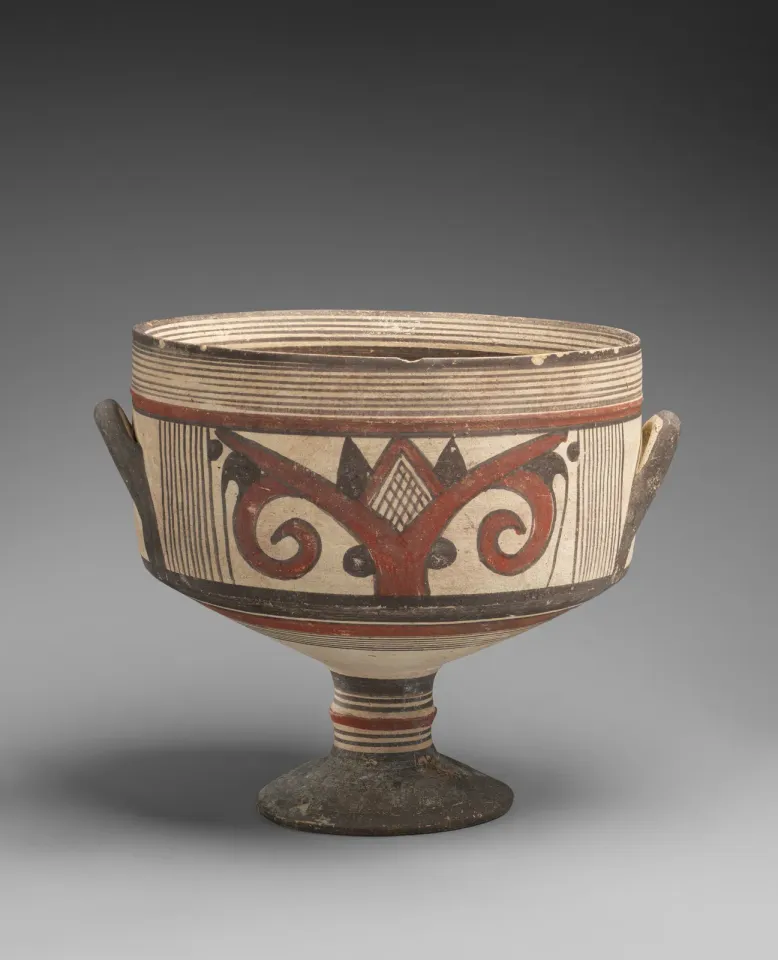
Ambrosia & Nectar
Keeps the gods ageless and deathless.
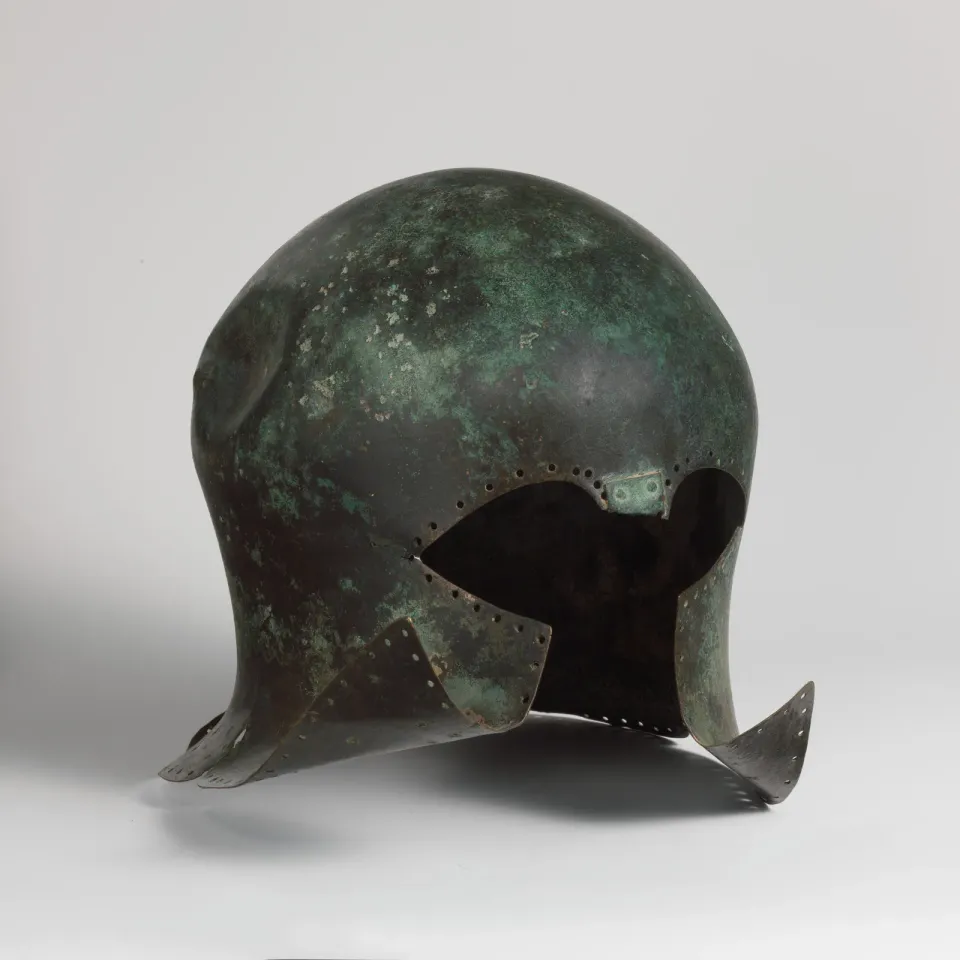
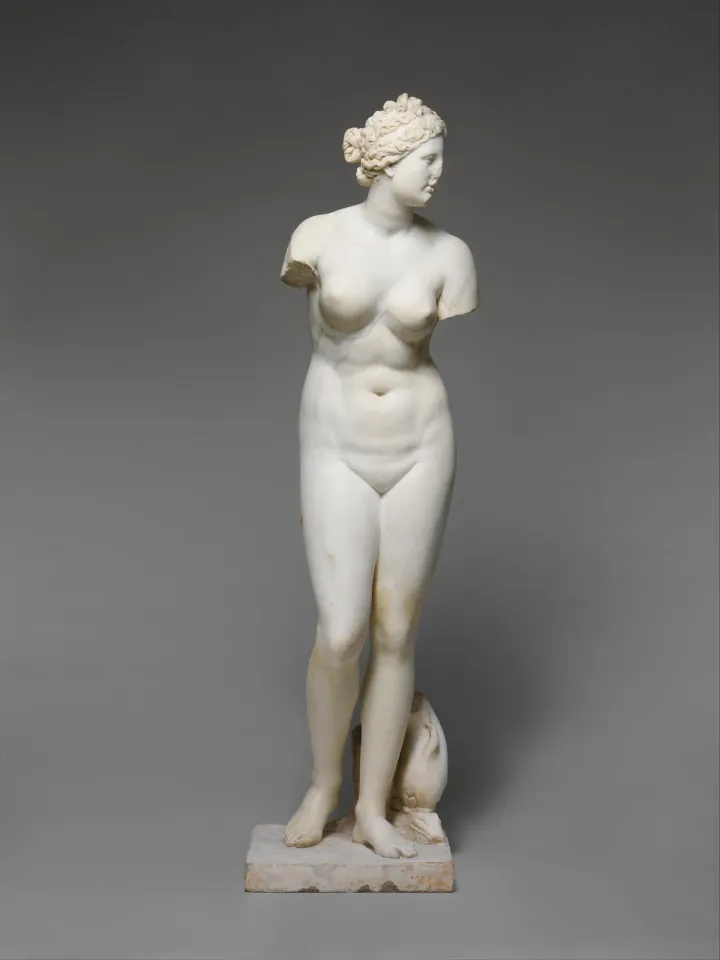
Kestos Himas (Κεστὸς ἱμάς)
Embroidered with love, longing and beguiling words, it makes anyone fall in love.