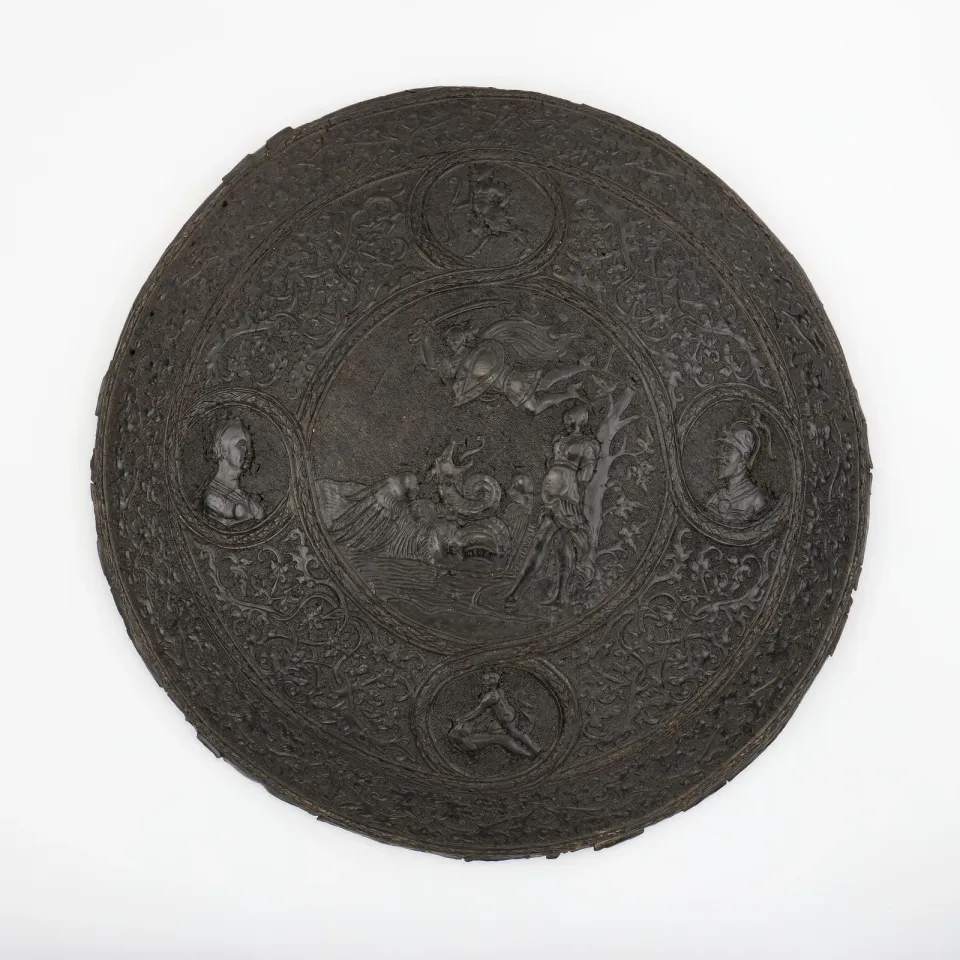
Greek
Aegis
Aegis (Αἰγίς)
Shaken, it raises storms and sends enemy armies fleeing in terror.
ArmorFirst recorded c. 750 BCE
Loading artifact…
Photograph: An Ottoman Turkish composite bow of 1719–20 with two arrows. Unstrung, the bow curves deeply with its tips bent backward, and two long arrows stand beside it.
Focus the photograph, then use the arrow keys to pan and the plus and minus keys to zoom. The buttons at the lower left also move it. Press a numbered button on the photograph to zoom to that note.
Bow of Odysseus
No one but its master can string it.
Twenty years after Odysseus left for the Trojan War, his palace on Ithaca was overrun by men wooing his wife Penelope and wasting his wealth. Unable to hold out any longer, Penelope brought out her husband's bow and said she would marry the man who could string it and shoot an arrow through the holes of twelve axes at once.
Odysseus had received the bow in his youth from Iphitus, son of the great archer Eurytus, as a token of friendship. He treasured it so much that he did not take it to war but kept it at home. The suitors tried one after another, but none could even bend the bow to string it.
Odysseus, who had come home disguised as a beggar, offered to try. He strung the bow as easily as stringing a lyre, and when he plucked the string it sang like a swallow. His arrow passed through all twelve axes, and Odysseus revealed himself and turned the bow on the suitors.
The photograph shows Composite Bow with Forty Arrows(Turkish, A.H. 1132/ 1719–20 CE), a real museum object that evokes the legendary artifact.
Aegis (Αἰγίς)
Shaken, it raises storms and sends enemy armies fleeing in terror.
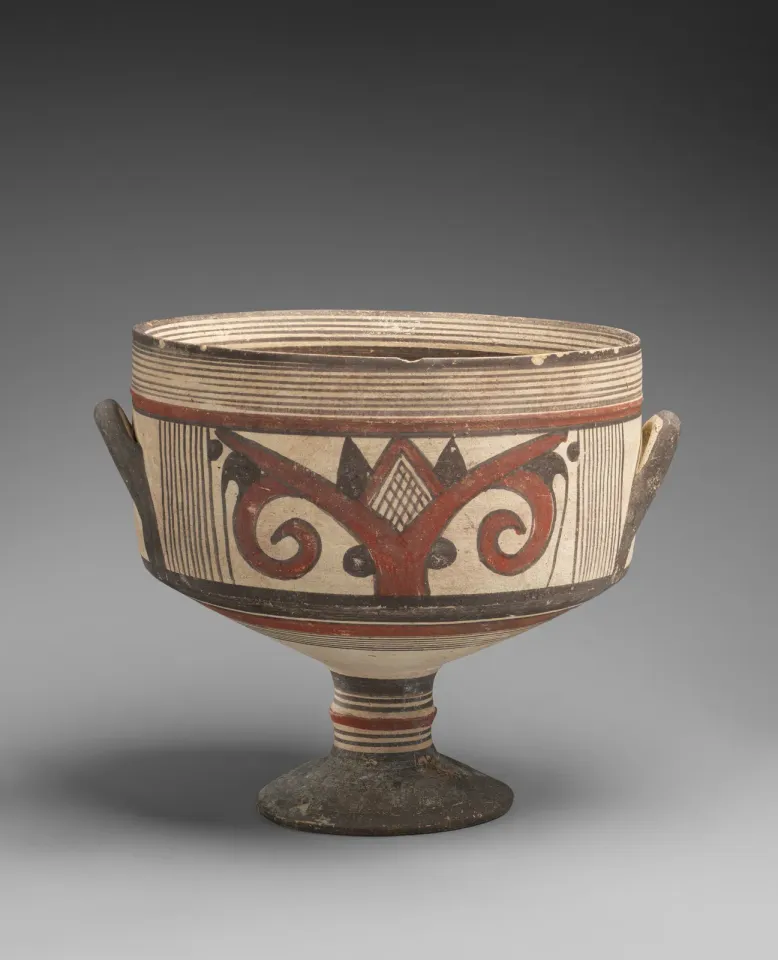
Ambrosia & Nectar
Keeps the gods ageless and deathless.
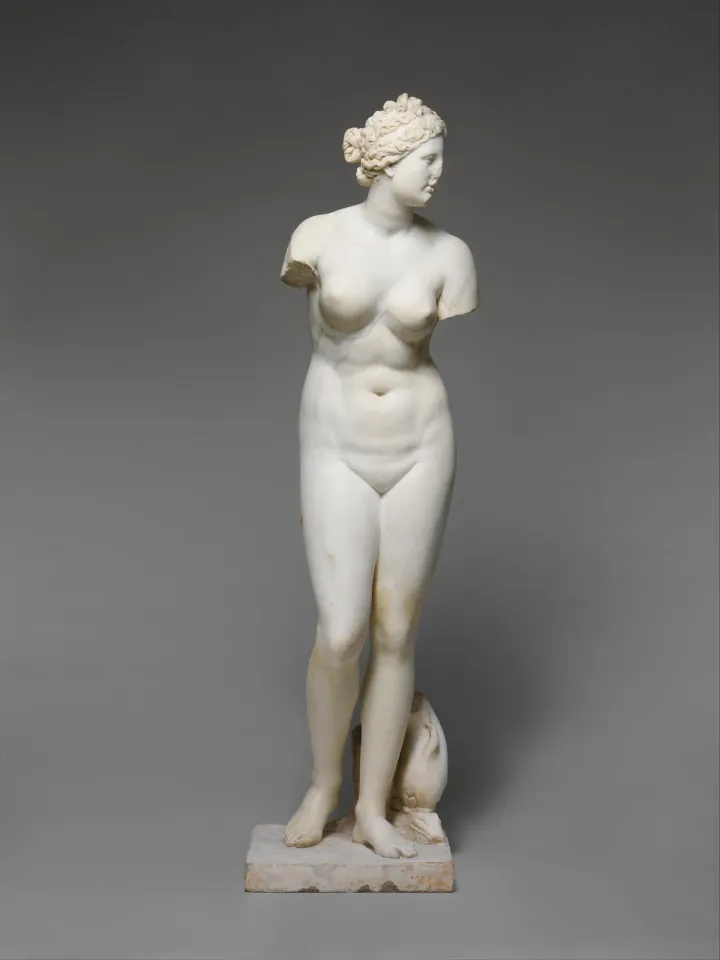
Kestos Himas (Κεστὸς ἱμάς)
Embroidered with love, longing and beguiling words, it makes anyone fall in love.