Egypt & Near East
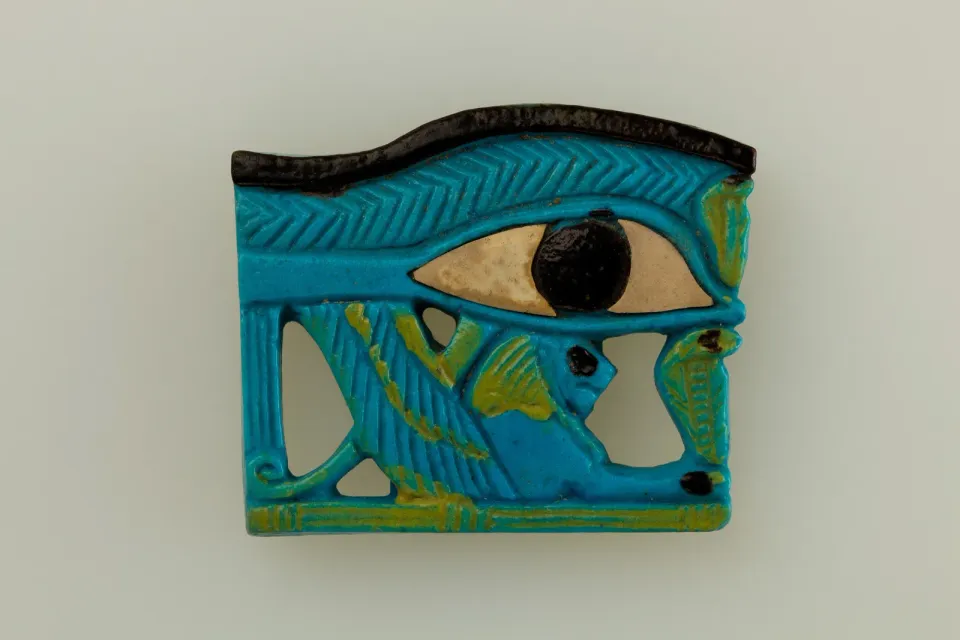
Eye of Horus
Wedjat (Eye of Horus)
An amulet that heals what is hurt and keeps the body whole.
JewelFirst recorded c. 2400 BCE
Loading artifact…
Photograph: The coffin of Bakenmut, a priest of the temple of Amun, made of gessoed and painted sycamore fig in Thebes, Egypt, about 1000–900 BCE. The lid at left shows a face, a wig, a broad collar and deities, and the inside of the coffin at right is densely painted with gods and symbols.
Focus the photograph, then use the arrow keys to pan and the plus and minus keys to zoom. The buttons at the lower left also move it. Press a numbered button on the photograph to zoom to that note.
Larnax Osiridos
Made to fit the body of Osiris exactly, it floated down the Nile with him sealed inside.
According to On Isis and Osiris by the Greek writer Plutarch, Set, brother of Osiris, secretly measured his brother's body and had a beautifully decorated chest made to fit it. Then, at a banquet, he promised the chest to whoever fitted it exactly when lying down in it.
One guest after another lay down in it, but none fitted. At last Osiris climbed in and lay down, and Set and his accomplices slammed the lid, nailed it shut, poured molten lead over it and threw it into the Nile. The chest crossed the sea to Byblos in Phoenicia, where a tree grew up around it and enclosed it in its trunk. The tree was cut down and became a pillar of the royal palace.
Isis, wife of Osiris, traveled all the way to Byblos, took the chest out of the pillar and brought it back to Egypt. But Set found the body, tore it into fourteen pieces and scattered them, and Isis gathered the pieces again. Osiris became king of the underworld, and his son Horus avenged him on Set.
The photograph shows Coffin of Bakenmut(Egypt, Thebes, Third Intermediate (1069–715 BCE), Dynasties 21–22, c. 1000–900 BCE), a real museum object that evokes the legendary artifact.
Wedjat (Eye of Horus)
An amulet that heals what is hurt and keeps the body whole.
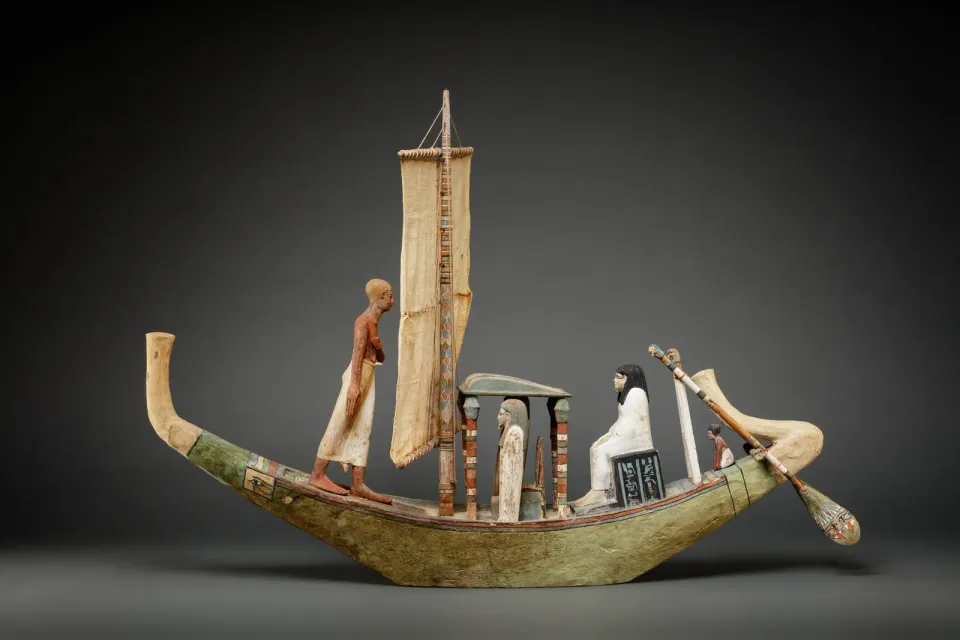
Solar Barque of Ra
Crossing the sky by day and the underworld by night, it makes the sun rise again.
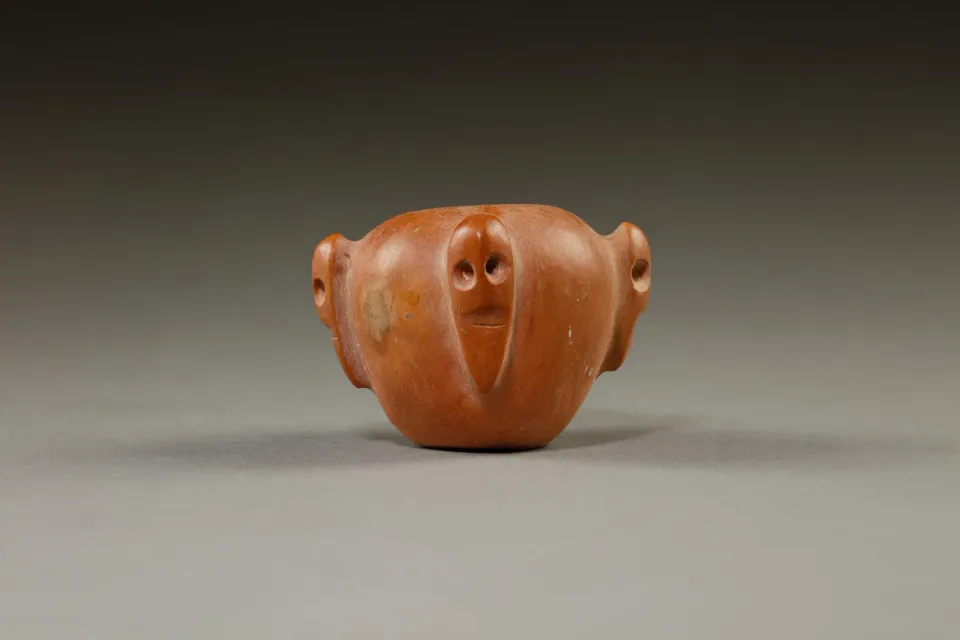
Šar-ur
It speaks, flies off on its own to spy on the enemy, and reports back to its master.
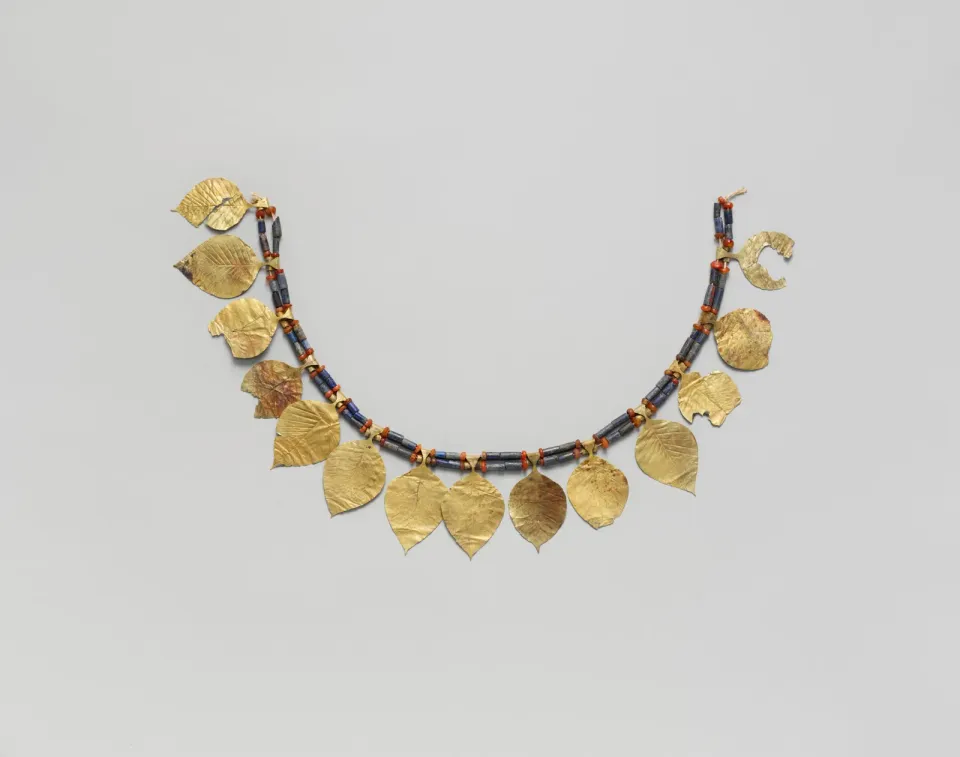
Seven Me of Inanna
Seven ornaments holding the goddess's powers. With each one she removes, she loses her strength.