Greek
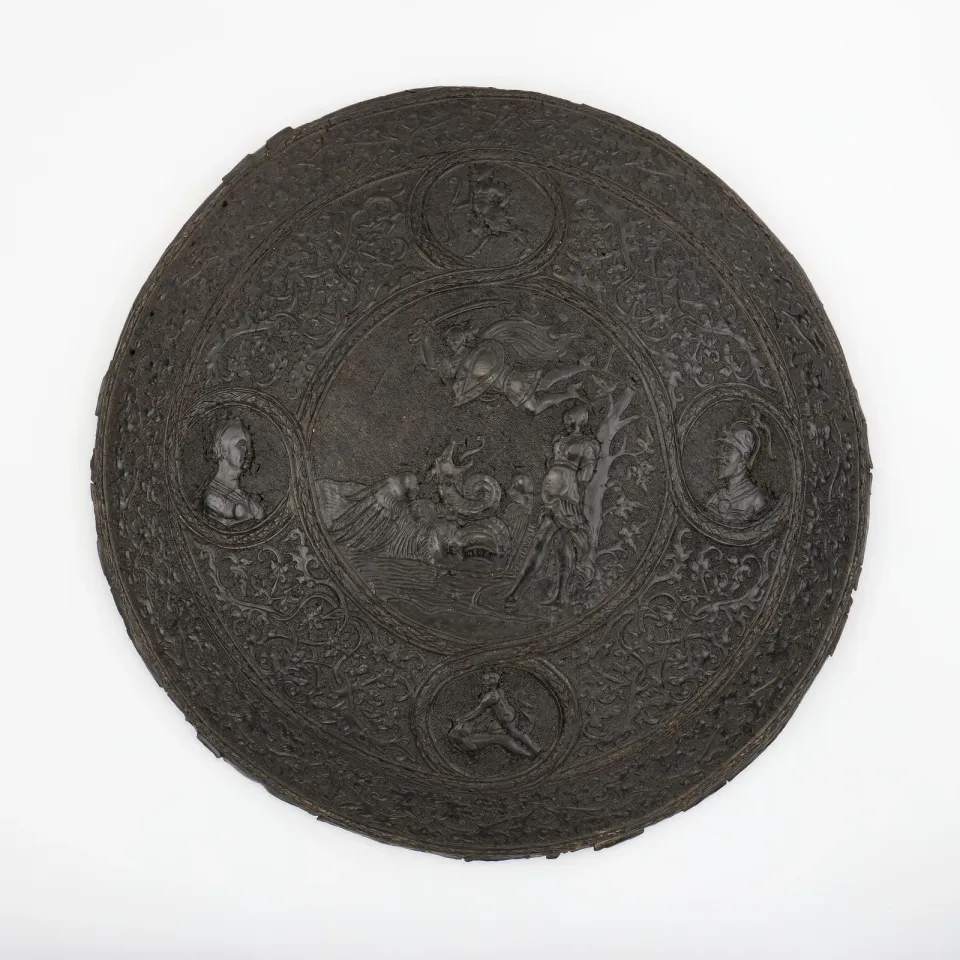
Aegis
Aegis (Αἰγίς)
Shaken, it raises storms and sends enemy armies fleeing in terror.
ArmorFirst recorded c. 750 BCE
Loading artifact…
Photograph: Victory with Cornucopia, a Roman bronze chariot ornament of about 40–68 CE. The winged goddess soars upward with one arm raised above her head and the other holding a long horn of plenty.
Focus the photograph, then use the arrow keys to pan and the plus and minus keys to zoom. The buttons at the lower left also move it. Press a numbered button on the photograph to zoom to that note.
Cornucopia (Horn of Amalthea)
Food and drink of every kind flow from it without end.
To hide him from his father Cronus, who swallowed his children, Rhea hid the newborn Zeus in a cave on Crete. The infant was nursed by the she-goat Amalthea. One day, while playing, Zeus broke off one of her horns, and from then on food and drink of every kind flowed from it without end.
There is another story. Heracles, wrestling the river god Achelous, who had turned himself into a bull, broke off one of his horns, and the water nymphs filled it with fruit and fragrant flowers. Ovid sang that by this horn Plenty became plentiful.
The horn overflowing with fruit and grain became the attribute of Tyche and Fortuna, goddesses of fortune, and of Plutus, god of wealth. The Latin name cornucopia, "horn of plenty," still lives on in harvest decorations and in the coats of arms of many countries.
The photograph shows Victory with Cornucopia (Chariot Attachment)(Italy, Rome, Imperial, later Julio-Claudian, 40–68 CE), a real museum object that evokes the legendary artifact.
Aegis (Αἰγίς)
Shaken, it raises storms and sends enemy armies fleeing in terror.
Ambrosia & Nectar
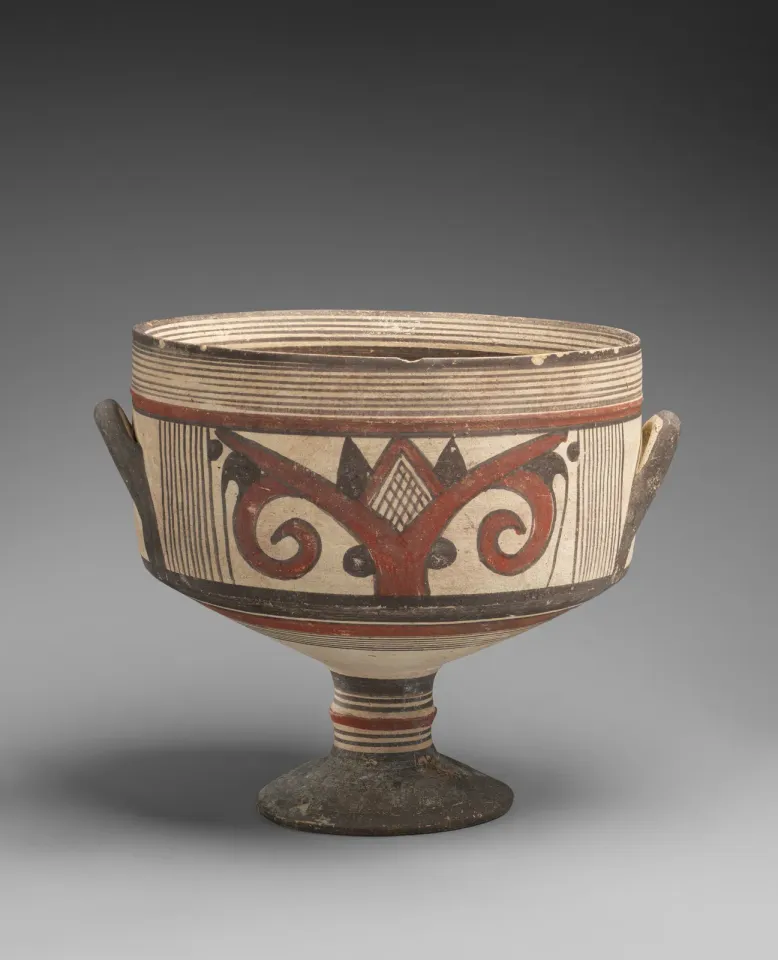
Keeps the gods ageless and deathless.
Kestos Himas (Κεστὸς ἱμάς)
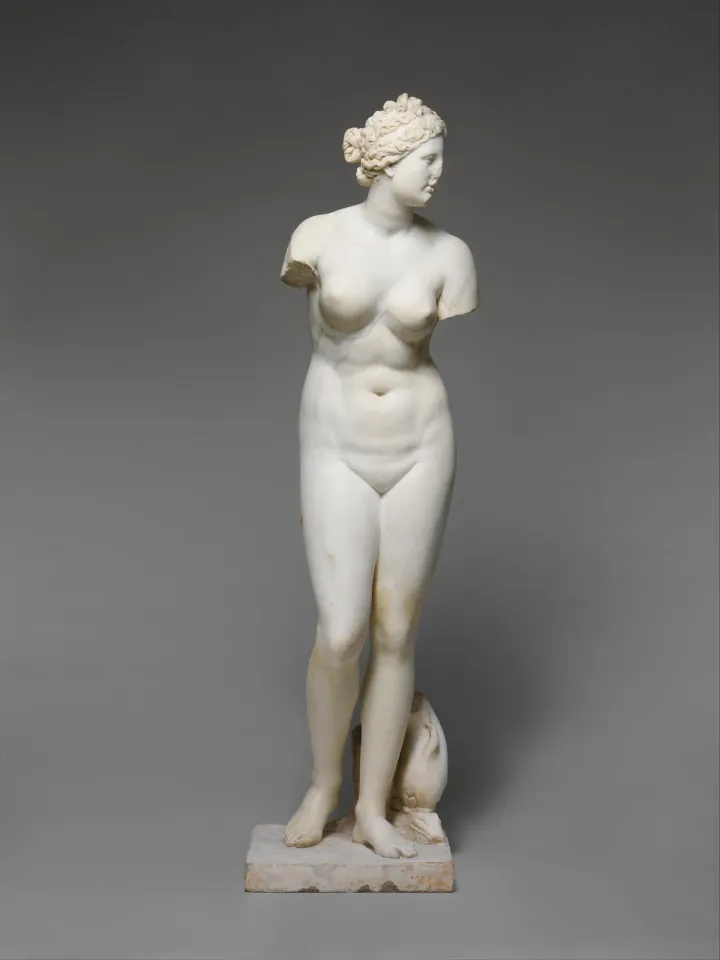
Embroidered with love, longing and beguiling words, it makes anyone fall in love.