Egypt & Near East
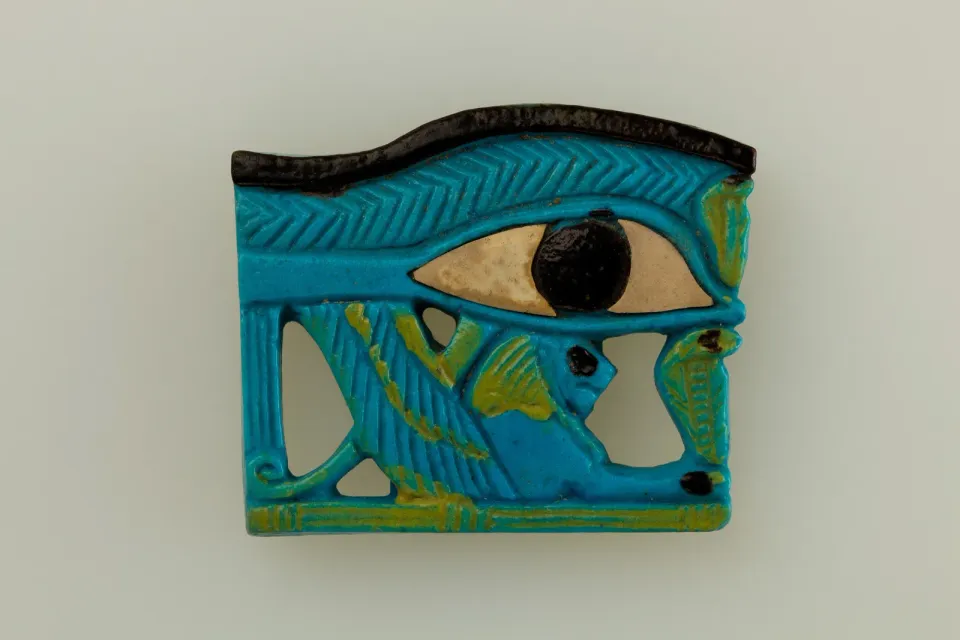
Eye of Horus
Wedjat (Eye of Horus)
An amulet that heals what is hurt and keeps the body whole.
JewelFirst recorded c. 2400 BCE
Loading artifact…
Photograph: A brass processional standard ('alam) of the late seventeenth to early eighteenth century. Below a top pointed like a spearhead, leaf-shaped blades spread out, and two dragons on either side curve around a round plaque pierced with lettering.
Focus the photograph, then use the arrow keys to pan and the plus and minus keys to zoom. The buttons at the lower left also move it. Press a numbered button on the photograph to zoom to that note.
Derafsh-e Kāviāni
The banner that rallied the people against a tyrant. Those who fought beneath it were believed to win.
In the Shahnameh, two serpents grew from the shoulders of the tyrant Zahhak where a demon had kissed him. The serpents were calmed only by eating the brains of young men every day, and the people lost their sons one after another. Kaveh the blacksmith lost seventeen of his eighteen sons.
When even his last son was to be taken, Kaveh stormed into the palace and tore up the document declaring Zahhak just. He hung the leather apron he wore at his forge on the tip of a spear, held it high and went into the streets, and the people gathered beneath it. They went to Fereydun, a prince living in hiding, and overthrew Zahhak.
Fereydun adorned Kaveh's leather apron with silk and jewels and made it the royal banner. This "Banner of Kaveh" was kept by generations of Iranian kings, each adding more jewels, until, it is said, it was captured by the Arab army in 636 and cut into pieces.
The photograph shows Processional Standard ('Alam)(late 17th–early 18th century), a real museum object that evokes the legendary artifact.
Wedjat (Eye of Horus)
An amulet that heals what is hurt and keeps the body whole.
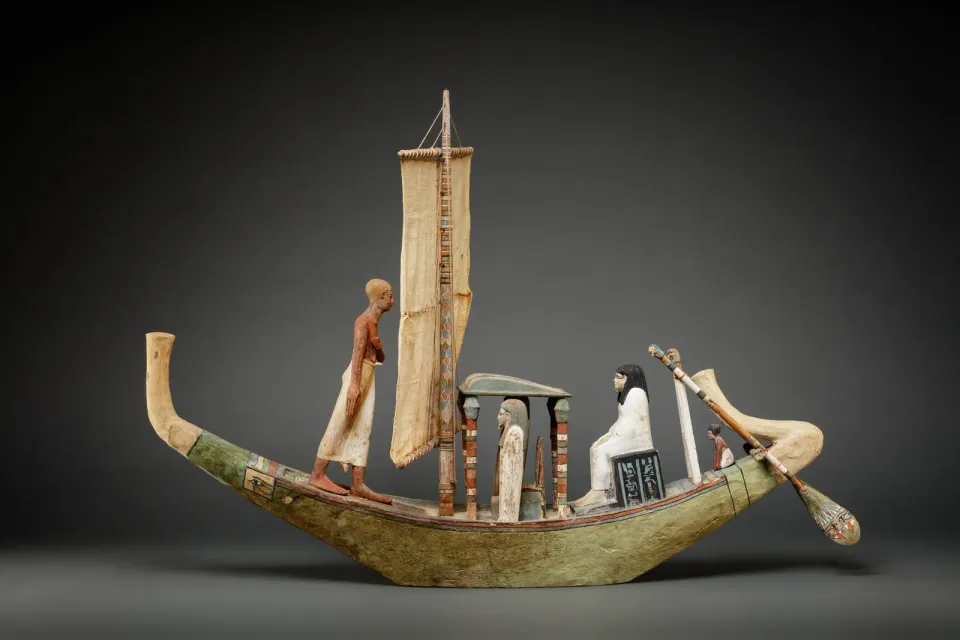
Solar Barque of Ra
Crossing the sky by day and the underworld by night, it makes the sun rise again.
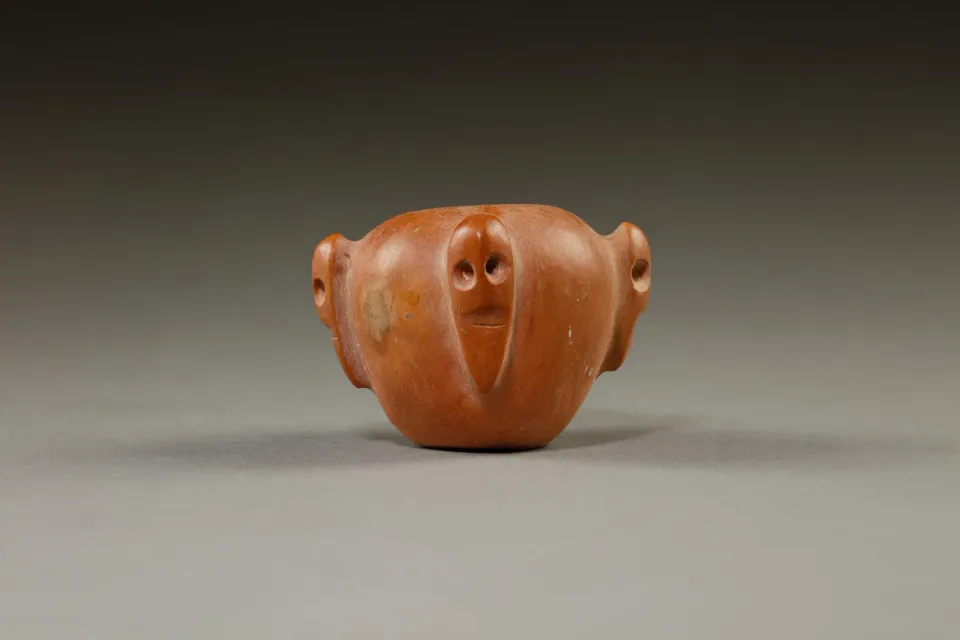
Šar-ur
It speaks, flies off on its own to spy on the enemy, and reports back to its master.
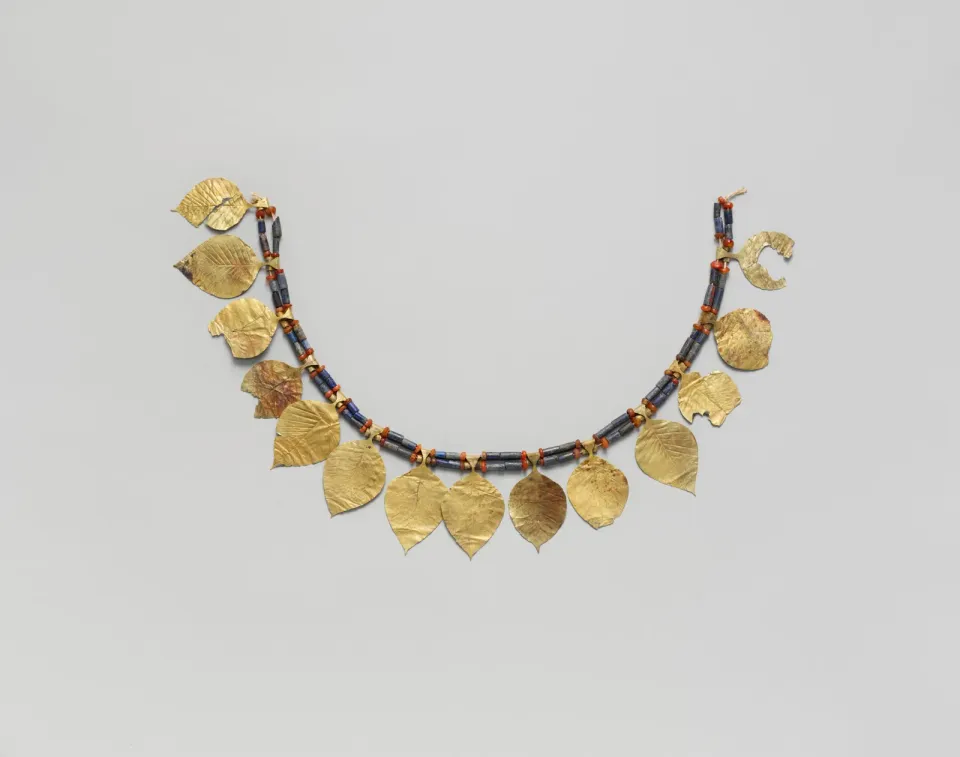
Seven Me of Inanna
Seven ornaments holding the goddess's powers. With each one she removes, she loses her strength.