Egypt & Near East
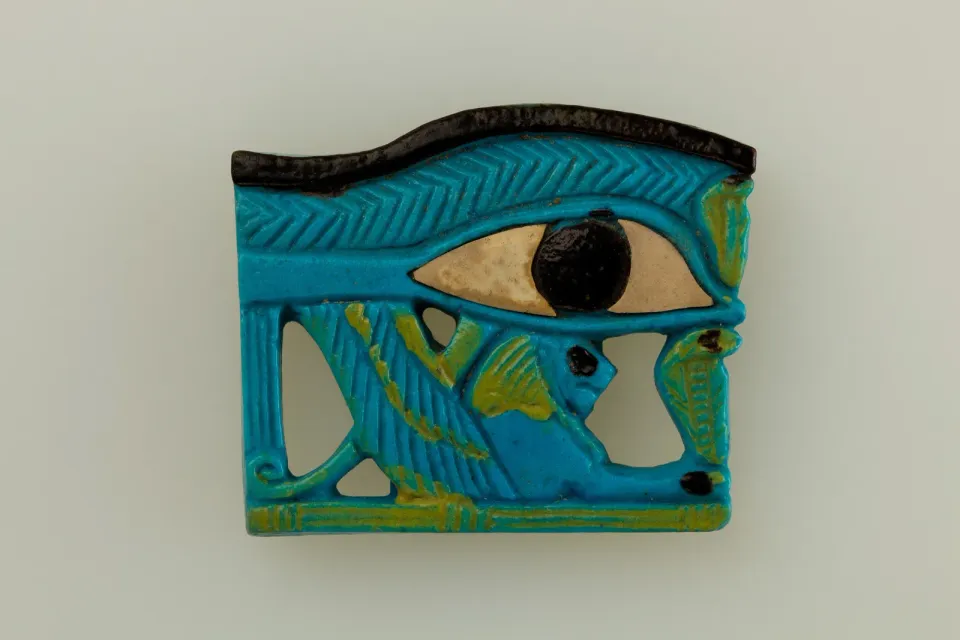
Eye of Horus
Wedjat (Eye of Horus)
An amulet that heals what is hurt and keeps the body whole.
JewelFirst recorded c. 2400 BCE
Loading artifact…
Photograph: A clay tablet letter written in Babylonia about 1632 BCE. Cuneiform is pressed in dense horizontal lines across a palm-sized rectangular tablet.
Focus the photograph, then use the arrow keys to pan and the plus and minus keys to zoom. The buttons at the lower left also move it. Press a numbered button on the photograph to zoom to that note.
Enmerkar's Clay Tablet
By writing on clay a message too long for his envoy to memorize, he sent words in writing for the first time.
In the Sumerian epic Enmerkar and the Lord of Aratta, Enmerkar, king of Uruk, sends an envoy to Aratta, a land far beyond the mountains, demanding gold, silver and precious stones to adorn the temple of the goddess Inanna. The two kings send the envoy back and forth, trading riddling challenges and contests of words.
At last Enmerkar's message grew so long that the envoy could not memorize it all. So Enmerkar smoothed a piece of clay and set the words down on it. The poem says that before this, words had never been put on clay. The lord of Aratta took the tablet and looked it over, but he could not read the writing he had never seen before.
In fact, writing first appeared in Uruk about 3300 BCE as signs for keeping accounts. Through this story, the Sumerians remembered that writing was born in their own city.
The photograph shows Cuneiform tablet: private letter(Babylonian, ca. 1632 BCE), a real museum object that evokes the legendary artifact.
Wedjat (Eye of Horus)
An amulet that heals what is hurt and keeps the body whole.
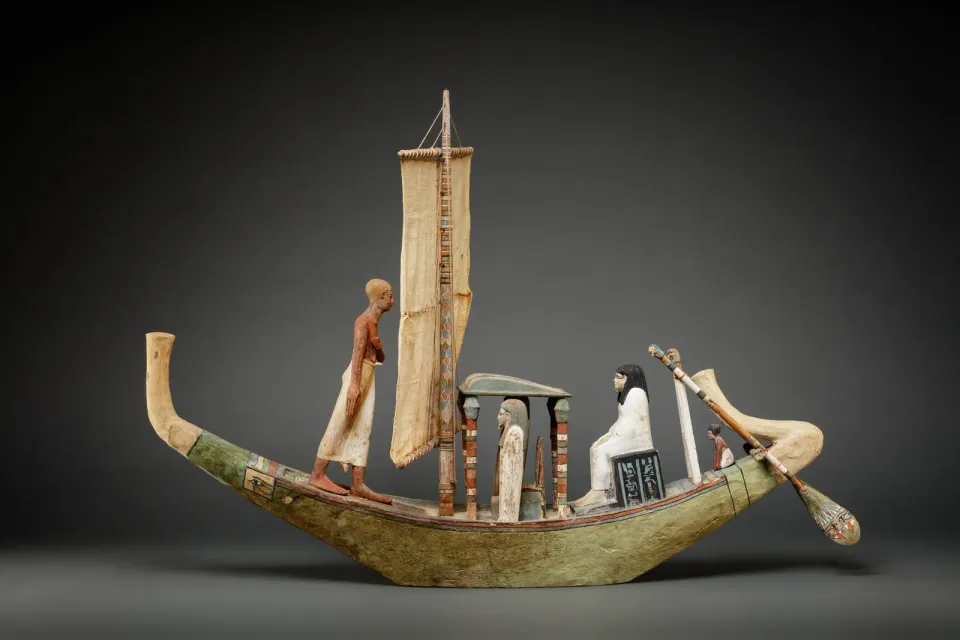
Solar Barque of Ra
Crossing the sky by day and the underworld by night, it makes the sun rise again.
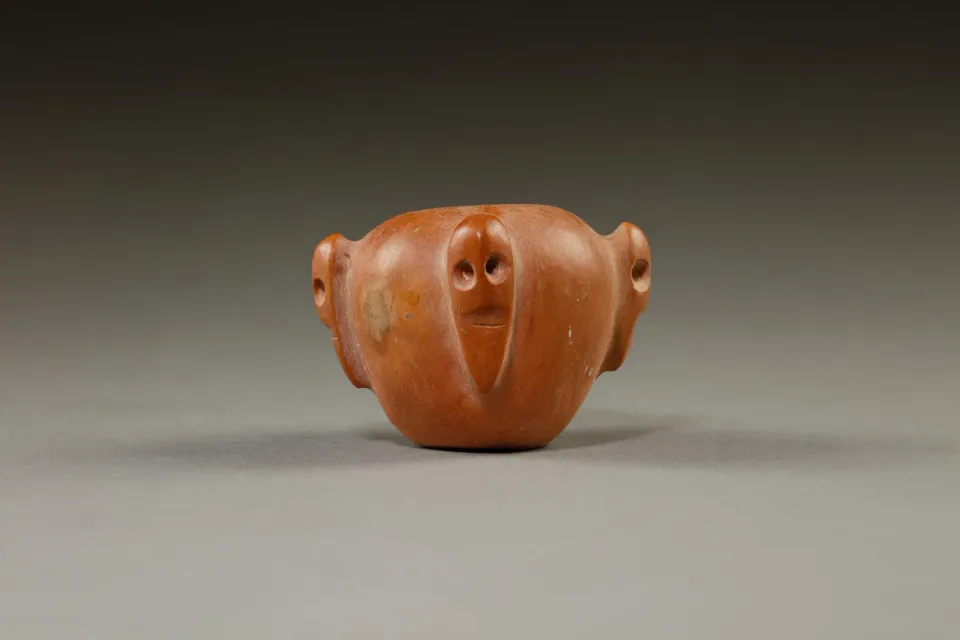
Šar-ur
It speaks, flies off on its own to spy on the enemy, and reports back to its master.
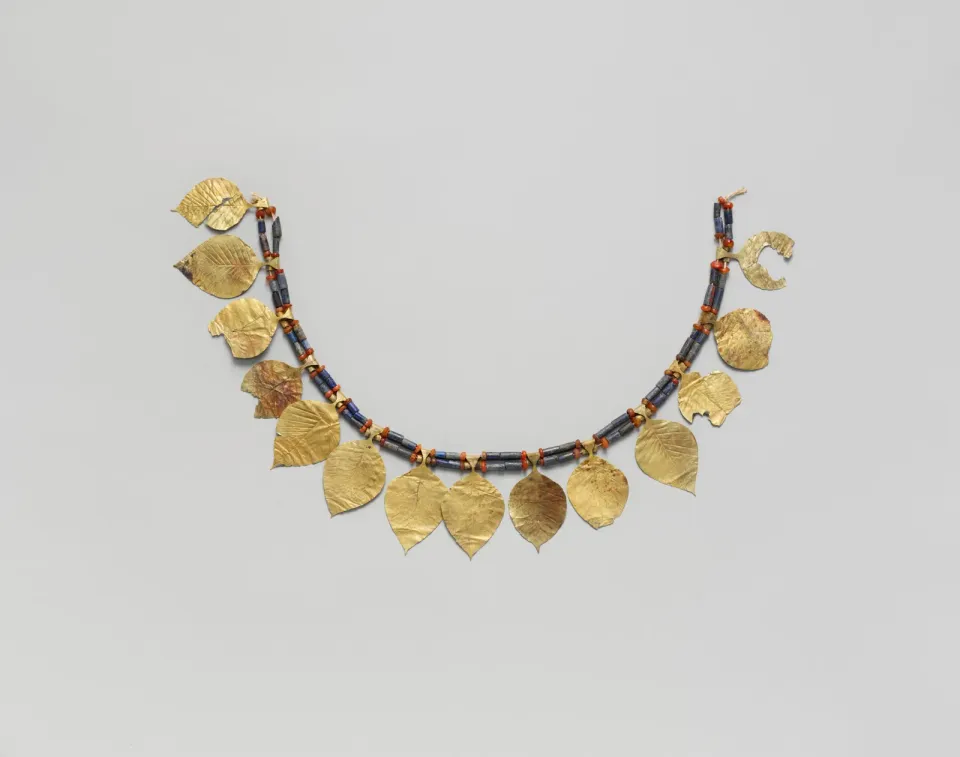
Seven Me of Inanna
Seven ornaments holding the goddess's powers. With each one she removes, she loses her strength.