Egypt & Near East
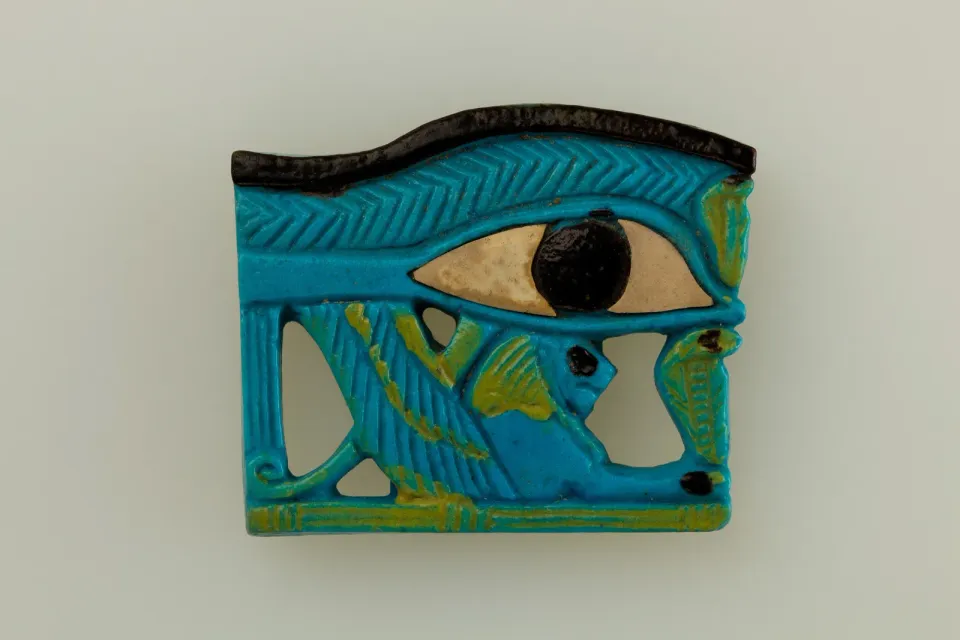
Eye of Horus
Wedjat (Eye of Horus)
An amulet that heals what is hurt and keeps the body whole.
JewelFirst recorded c. 2400 BCE
Loading artifact…
Photograph: A round ceramic jar from western Iran in the Early Bronze Age, about 2500–1900 BCE. An eagle with outspread wings is painted in black on the shoulder of the pale body, with a broad band of wavy lines below it.
Focus the photograph, then use the arrow keys to pan and the plus and minus keys to zoom. The buttons at the lower left also move it. Press a numbered button on the photograph to zoom to that note.
Erû ša Etana
It carried Etana on its back up to the heaven of Anu, god of the sky.
In the Mesopotamian Legend of Etana, Etana, king of Kish, has no son to succeed him. He prays every day to Shamash, the sun god, for the 'plant of birth' that would let him have a child.
Shamash sends him to an eagle trapped in a pit. The eagle had eaten the young of its friend the serpent, and the serpent, taking revenge, had plucked out its wing feathers and thrown it into the pit. Etana rescued the eagle and cared for it until its wings grew back.
Its strength restored, the eagle carried Etana on its back up to the heaven of Anu, god of the sky. The earth grew smaller and smaller, until at last it looked like a little garden plot. The end of the story is lost where the tablets are broken, but the Sumerian King List records that Etana, the shepherd who ascended to heaven, was succeeded by his son Balih.
The photograph shows Jar with painted eagle(Western Iran, Early Bronze Age, ca. 2500–1900 BCE), a real museum object that evokes the legendary artifact.
Wedjat (Eye of Horus)
An amulet that heals what is hurt and keeps the body whole.
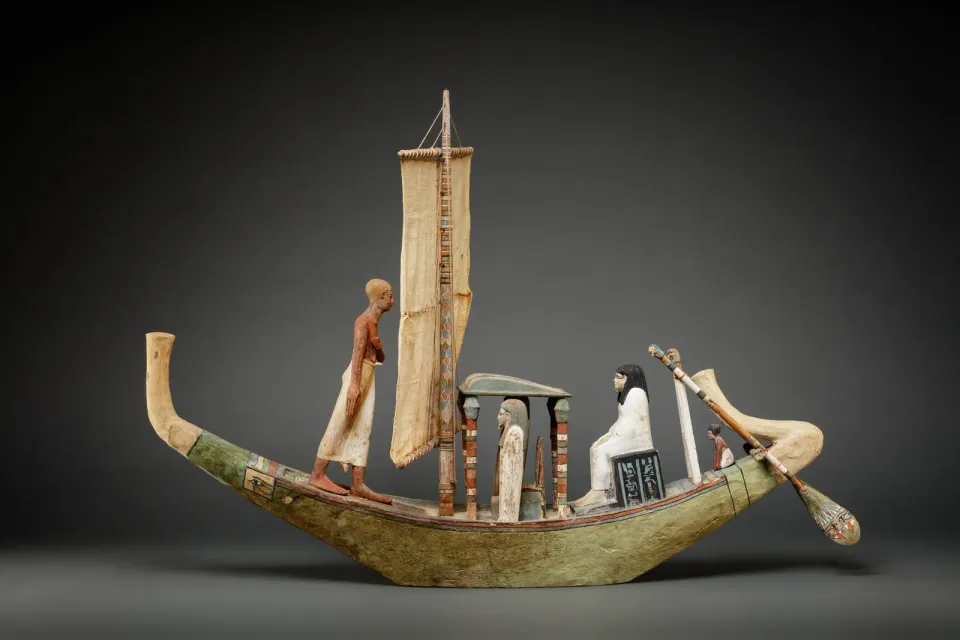
Solar Barque of Ra
Crossing the sky by day and the underworld by night, it makes the sun rise again.
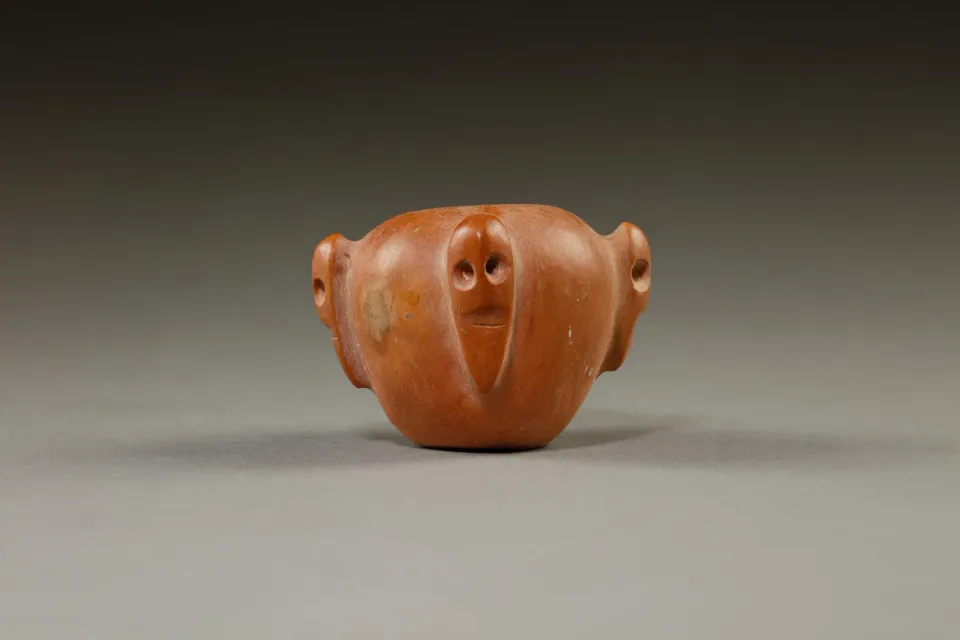
Šar-ur
It speaks, flies off on its own to spy on the enemy, and reports back to its master.
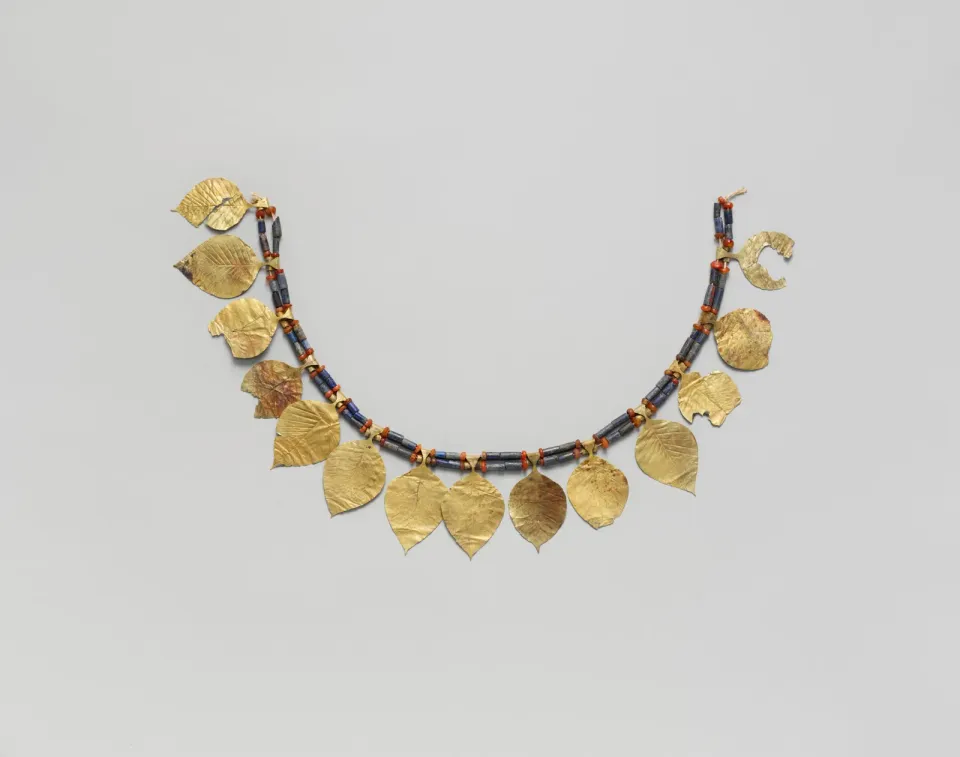
Seven Me of Inanna
Seven ornaments holding the goddess's powers. With each one she removes, she loses her strength.