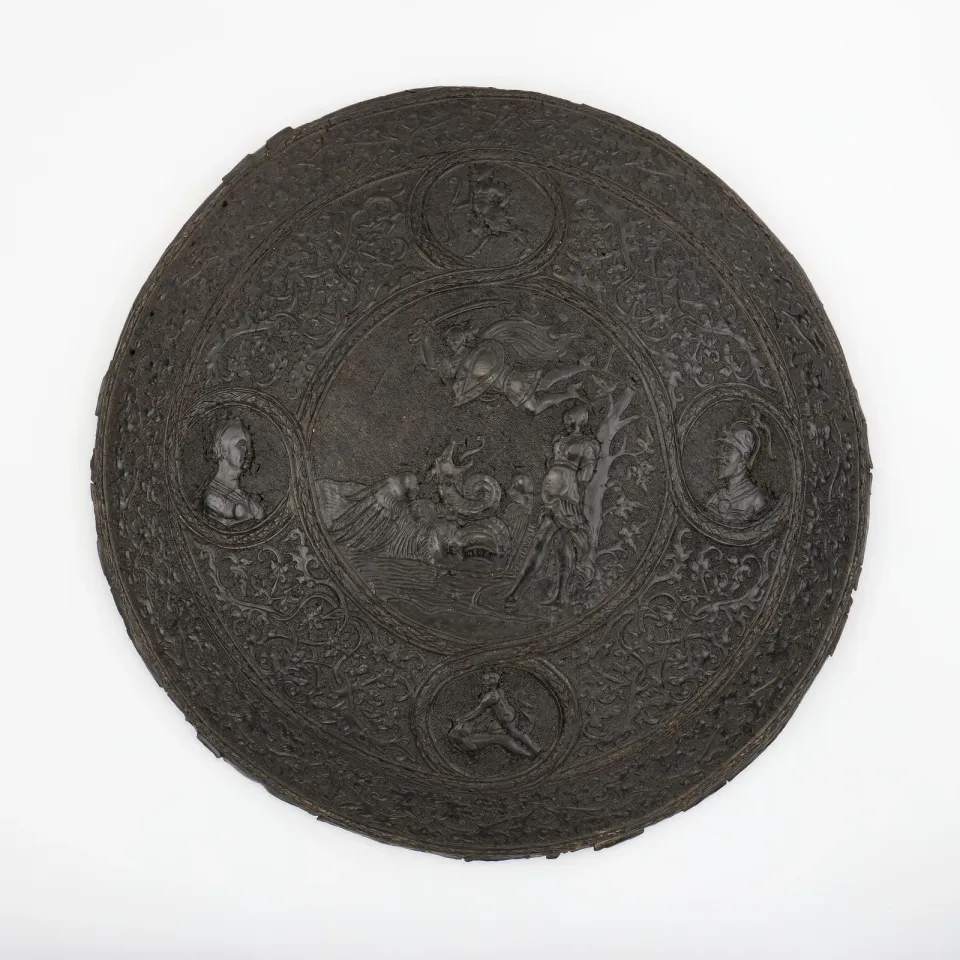
Greek
Aegis
Aegis (Αἰγίς)
Shaken, it raises storms and sends enemy armies fleeing in terror.
ArmorFirst recorded c. 750 BCE
Loading artifact…
Photograph: Aeneas and the Sibyl in the Underworld, painted in oil on copper by Jan Brueghel the Younger in the 1630s. In the middle of a dark underworld where flames shoot up, the helmeted Aeneas follows the Sibyl, who points the way, surrounded by monsters and shades.
Focus the photograph, then use the arrow keys to pan and the plus and minus keys to zoom. The buttons at the lower left also move it. Press a numbered button on the photograph to zoom to that note.
Ramus Aureus
Whoever plucks it and carries it may enter the underworld alive and return.
Having reached Italy after the fall of Troy, Aeneas wished to meet his father Anchises in the underworld. The Sibyl of Cumae told him that a living man who wishes to enter the underworld must first pluck a golden bough hidden in a dark tree in the forest and offer it to Proserpina, queen of the dead. Only for one whom fate allows does the bough come away, and in its place a new golden bough soon grows.
As Aeneas stood helpless before the vast forest, two doves, the birds of his mother Venus, flew down before him. Following them, he found the gleaming golden bough in a tree beside Lake Avernus and plucked it.
At the river of the underworld the ferryman Charon barred the way, saying he could not carry the living, but at the sight of the golden bough he silently gave up his boat. Aeneas offered the bough at the threshold of the palace of the dead and met his father. In 1890 the British anthropologist James Frazer took the title of his book on myth and magic, The Golden Bough, from this story.
The photograph shows Aeneas and the Sibyl in the Underworld(Jan Brueghel the Younger, 1630s), a real museum object that evokes the legendary artifact.
Aegis (Αἰγίς)
Shaken, it raises storms and sends enemy armies fleeing in terror.
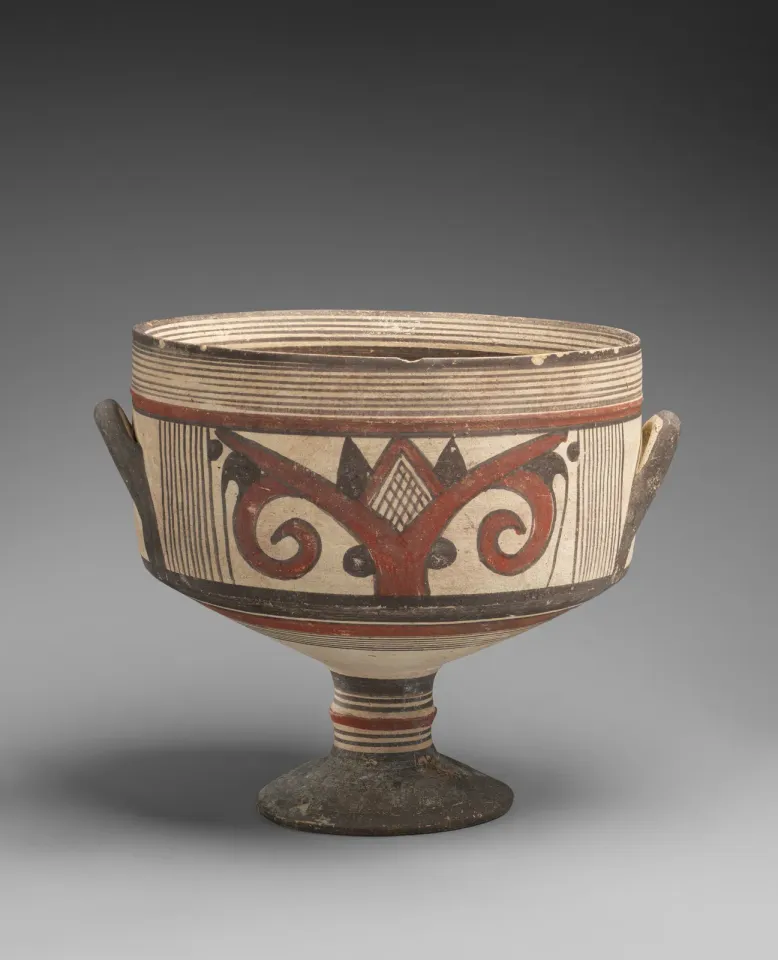
Ambrosia & Nectar
Keeps the gods ageless and deathless.
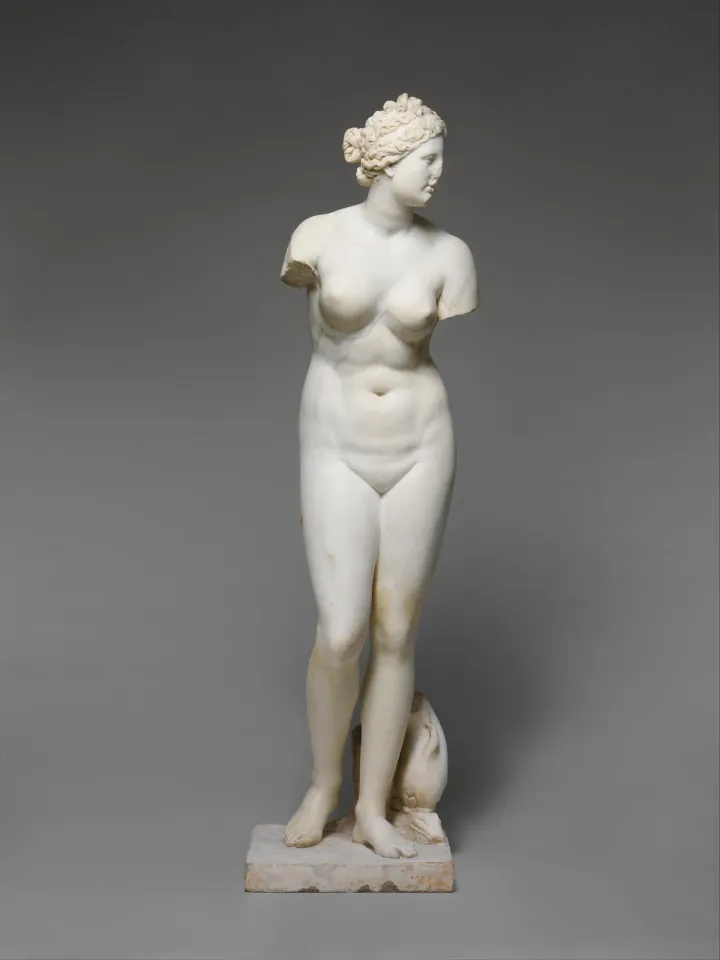
Kestos Himas (Κεστὸς ἱμάς)
Embroidered with love, longing and beguiling words, it makes anyone fall in love.