Greek
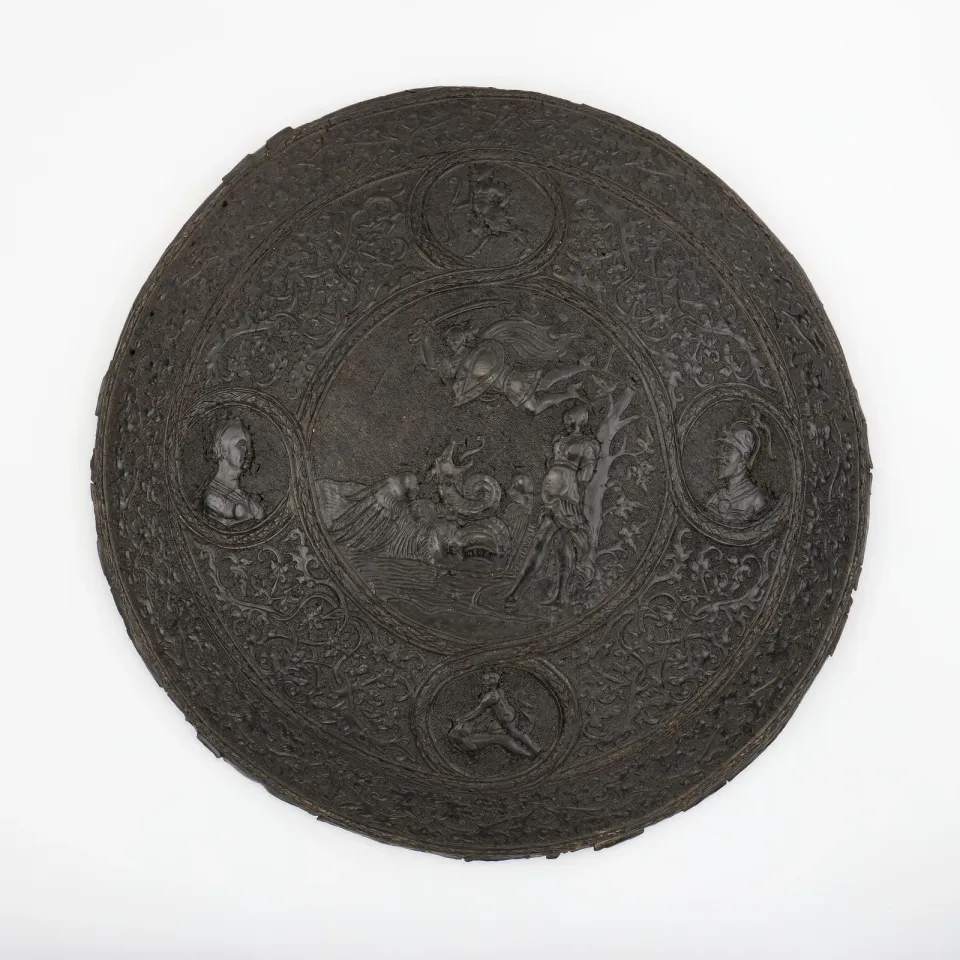
Aegis
Aegis (Αἰγίς)
Shaken, it raises storms and sends enemy armies fleeing in terror.
ArmorFirst recorded c. 750 BCE
Loading artifact…
Photograph: A bronze mirror made in Greece, probably Sicyon, about 470–460 BCE. A clothed woman stands holding a round mirror disk above her head, while winged Erotes fly in from either side. A ring for hanging is attached above the disk.
Focus the photograph, then use the arrow keys to pan and the plus and minus keys to zoom. The buttons at the lower left also move it. Press a numbered button on the photograph to zoom to that note.
Chryseiai Amphipoloi
They thought and spoke like living girls and supported their lame master as he walked.
In Book 18 of the Iliad, Hephaestus rises to greet Thetis, limping. He is supported by handmaidens made of gold. The poem sings that they looked like living young women, had understanding in their hearts, had voice and strength, and had learned their skills from the gods.
Hephaestus was the son of Zeus and Hera. Some say he was lame from birth, others that he was hurled from heaven and injured his legs. In his forge he made the gods' weapons, palaces and ornaments.
Today the golden maidens are often mentioned, together with Talos, the bronze giant said to have guarded Crete, as the oldest examples of imagining a thinking being made by hand.
The photograph shows Mirror(Greece, Sicyon(?), c. 470–460 BCE), a real museum object that evokes the legendary artifact.
Aegis (Αἰγίς)
Shaken, it raises storms and sends enemy armies fleeing in terror.
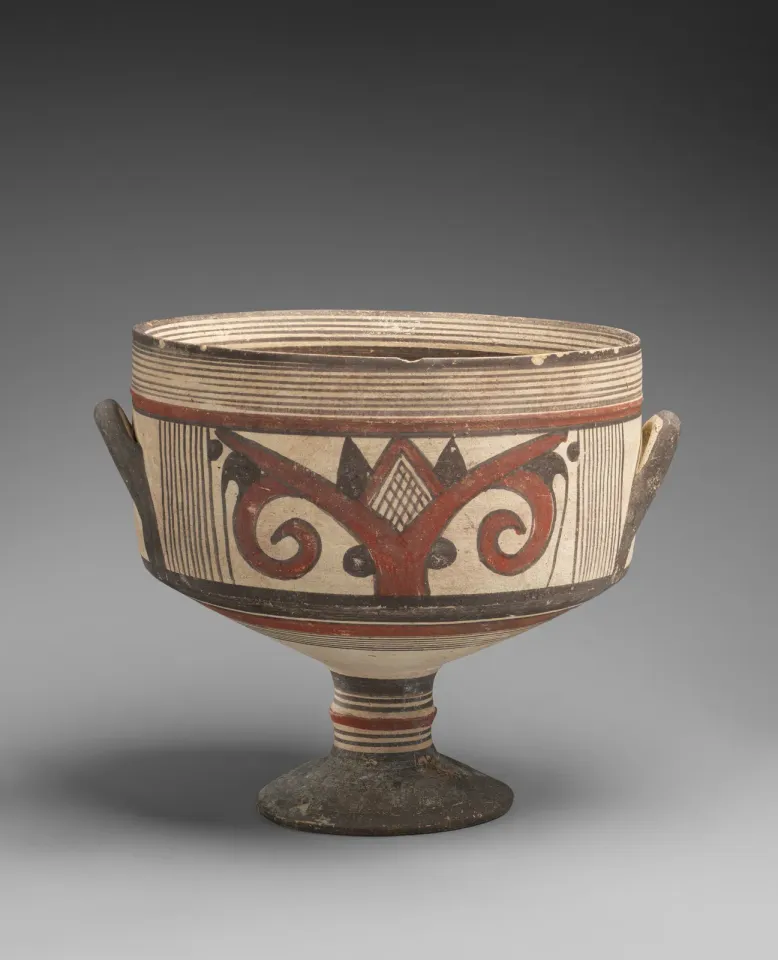
Ambrosia & Nectar
Keeps the gods ageless and deathless.
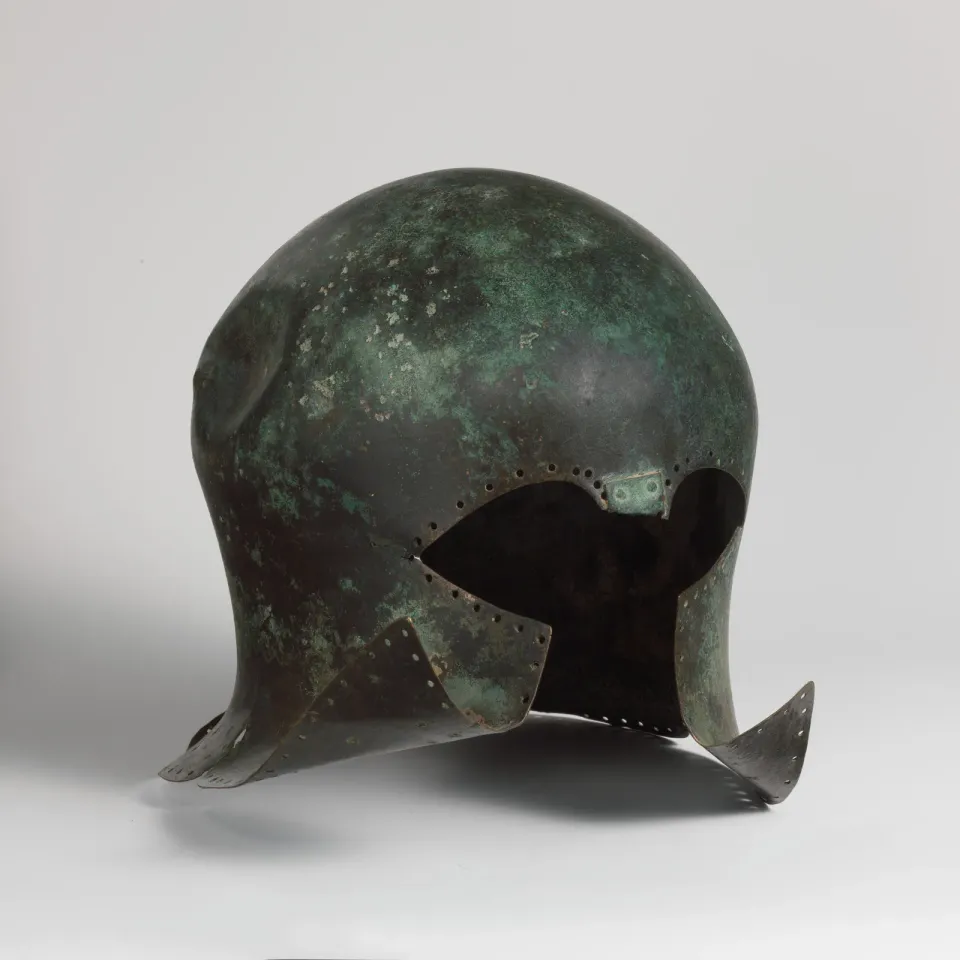
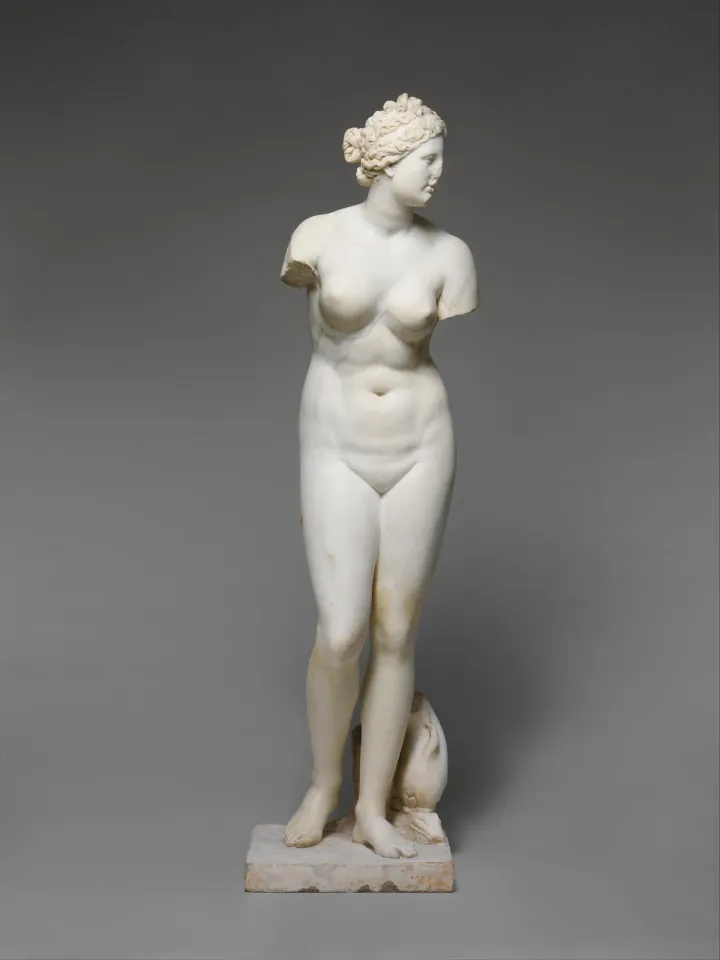
Kestos Himas (Κεστὸς ἱμάς)
Embroidered with love, longing and beguiling words, it makes anyone fall in love.