Egypt & Near East
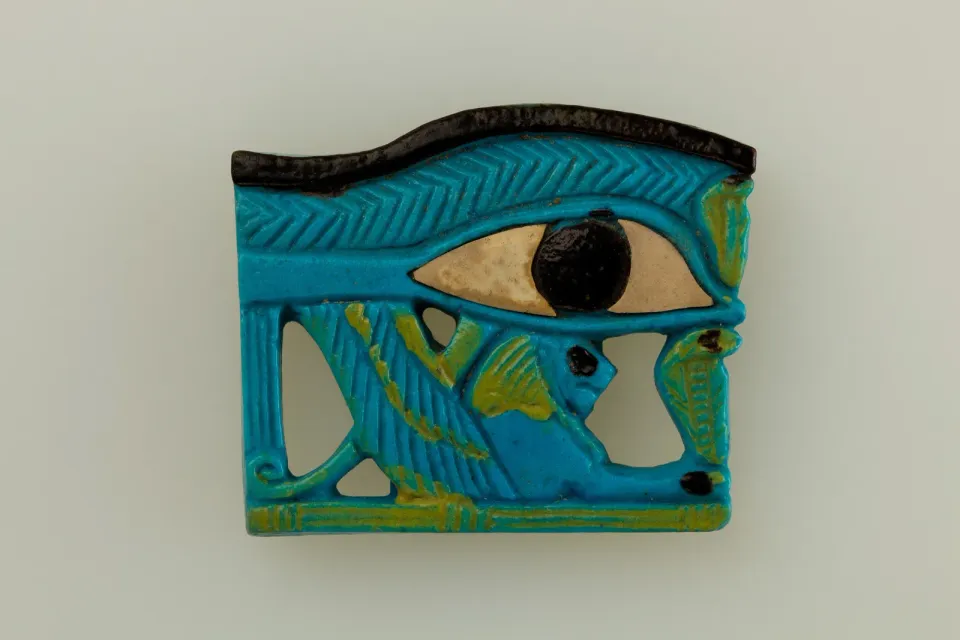
Eye of Horus
Wedjat (Eye of Horus)
An amulet that heals what is hurt and keeps the body whole.
JewelFirst recorded c. 2400 BCE
Loading artifact…
Photograph: A steel and gold mace made in Iran in the nineteenth century. The head is shaped like an ox head with horns and ears, its face inlaid with gold scrolling vines, and the long shaft is ringed with gold bands.
Focus the photograph, then use the arrow keys to pan and the plus and minus keys to zoom. The buttons at the lower left also move it. Press a numbered button on the photograph to zoom to that note.
Gorz-e Gāvsār
The ox-headed mace that struck down Zahhak, the serpent-shouldered tyrant.
In the Shahnameh, Zahhak is a tyrant who ruled Iran for a thousand years, feeding the brains of young men every day to the two serpents that grew from his shoulders. When the blacksmith Kaveh rose up, fixing his leather apron to a spear point as a banner, the people rallied to Fereydun, a prince who had grown up in hiding.
Fereydun summoned smiths, drew the shape of a mace on the ground and had them make an ox-headed mace just like it. Because Zahhak had killed the cow Birmaye that suckled and raised him as a child, some read the ox head as a sign of his vow of revenge.
Fereydun struck Zahhak's helmet with the ox-headed mace and felled him, but did not kill him, for the angel Sorush told him the time had not yet come. Zahhak was chained in a cave on Mount Damavand. The ox-headed mace later became the weapon of Rostam and other Iranian heroes, and Iranian Sufi dervishes also carried it as a symbol.
The photograph shows Mace(Iranian, 19th century), a real museum object that evokes the legendary artifact.
Wedjat (Eye of Horus)
An amulet that heals what is hurt and keeps the body whole.
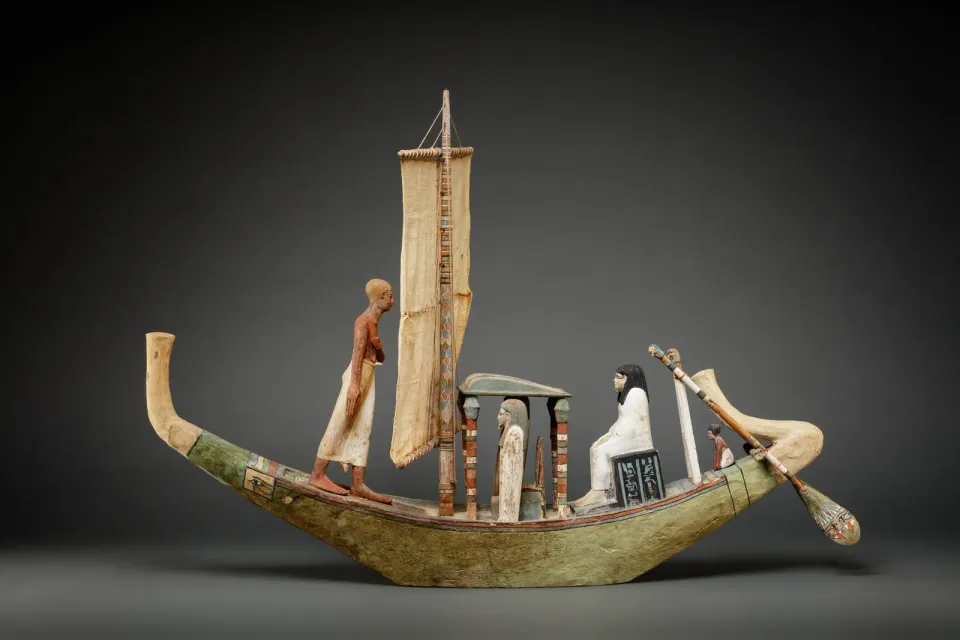
Solar Barque of Ra
Crossing the sky by day and the underworld by night, it makes the sun rise again.
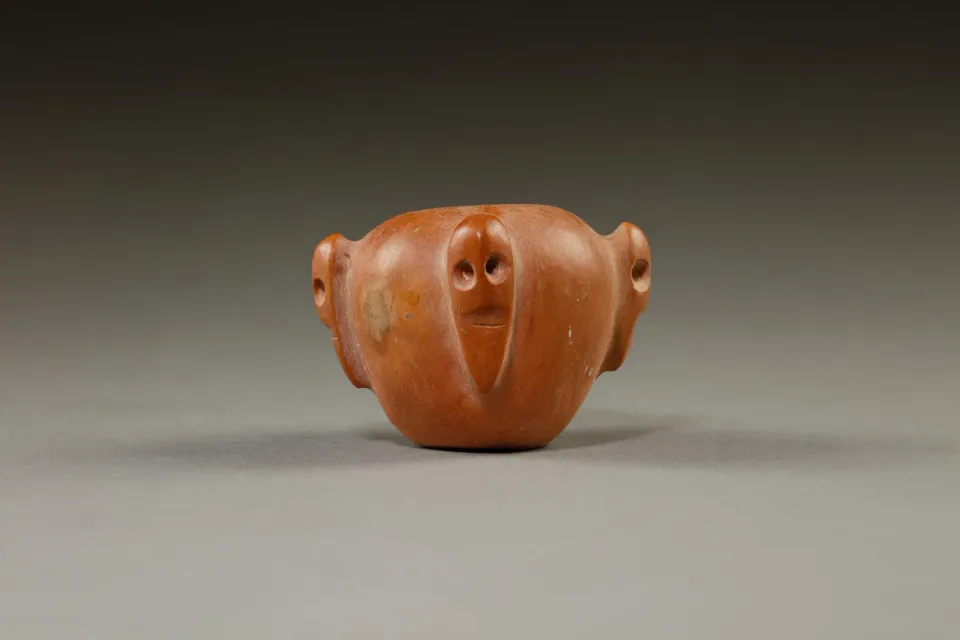
Šar-ur
It speaks, flies off on its own to spy on the enemy, and reports back to its master.
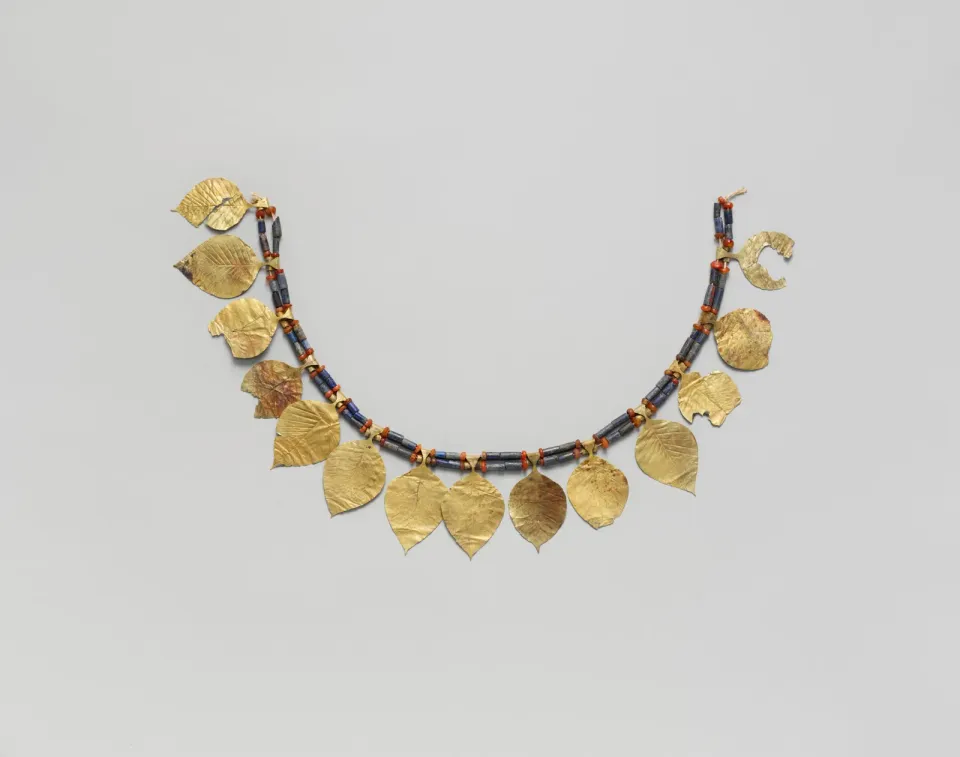
Seven Me of Inanna
Seven ornaments holding the goddess's powers. With each one she removes, she loses her strength.