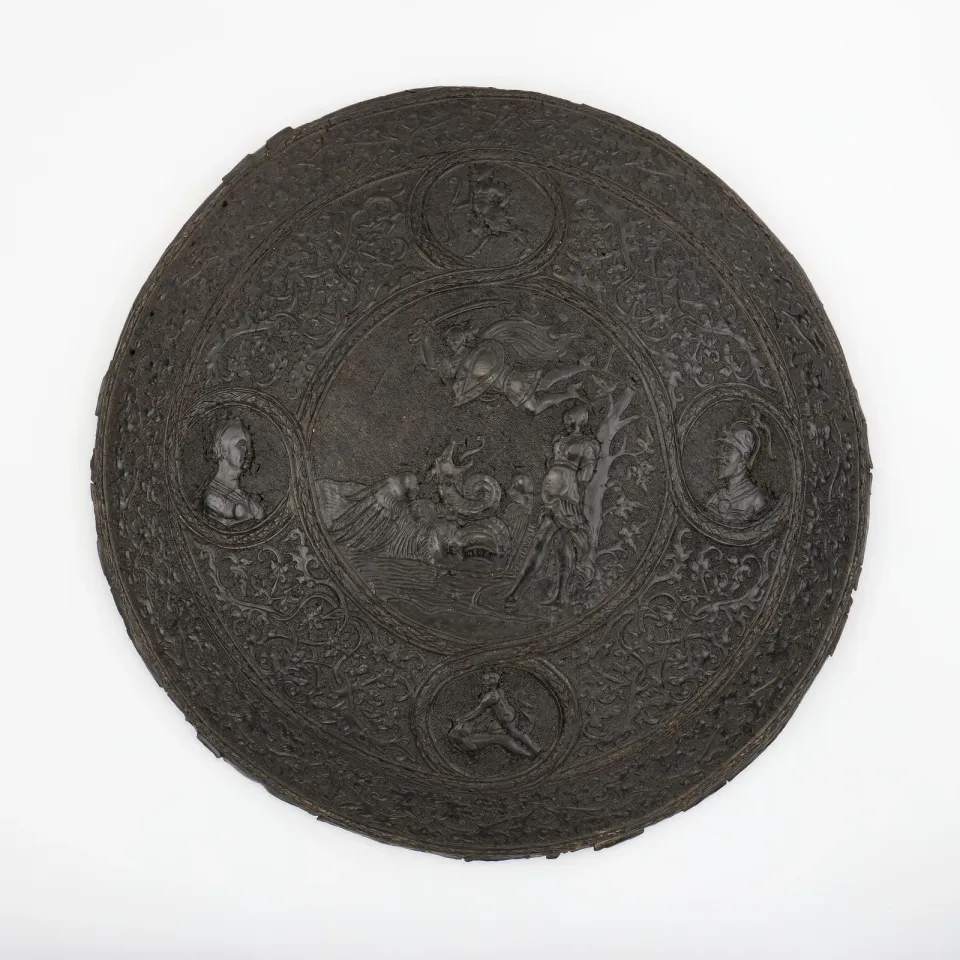
Greek
Aegis
Aegis (Αἰγίς)
Shaken, it raises storms and sends enemy armies fleeing in terror.
ArmorFirst recorded c. 750 BCE
Loading artifact…
Photograph: A Greek bronze rod tripod stand of the early sixth century BCE. The round ring at the top is decorated with horse heads and animals, and three legs of crossed thin rods end in animal feet. The surface is covered with green corrosion.
Focus the photograph, then use the arrow keys to pan and the plus and minus keys to zoom. The buttons at the lower left also move it. Press a numbered button on the photograph to zoom to that note.
Tripodes Hephaistou
With golden wheels beneath their legs, they rolled by themselves to the gathering of the gods and back home again.
In Book 18 of the Iliad, Thetis, the mother of Achilles, comes to the house of Hephaestus to ask him to make new armor for her son. She finds the smith god sweating at work on twenty tripods. Under the legs of each he was fitting golden wheels, so that they would roll by themselves to the gathering of the gods and come home again.
The tripods were nearly finished; only the ear-shaped handles were still to be attached. Hephaestus stopped work to welcome Thetis and made new armor for Achilles, the famous shield among it.
In ancient Greece the tripod was among the most precious of gifts and a prize in contests, and tripods were dedicated at the temple of Apollo at Delphi. The self-moving tripods of Hephaestus are often cited as the first automata in Western literature.
The photograph shows Bronze rod tripod stand(Greek, early 6th century BCE), a real museum object that evokes the legendary artifact.
Aegis (Αἰγίς)
Shaken, it raises storms and sends enemy armies fleeing in terror.
Ambrosia & Nectar
Keeps the gods ageless and deathless.
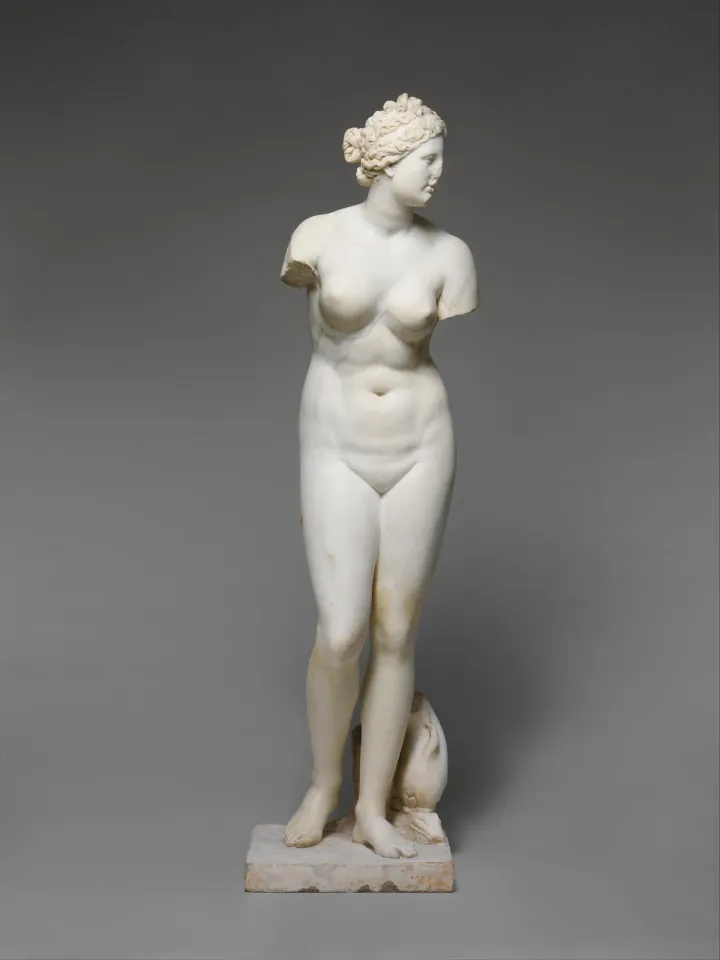
Kestos Himas (Κεστὸς ἱμάς)
Embroidered with love, longing and beguiling words, it makes anyone fall in love.