Egypt & Near East
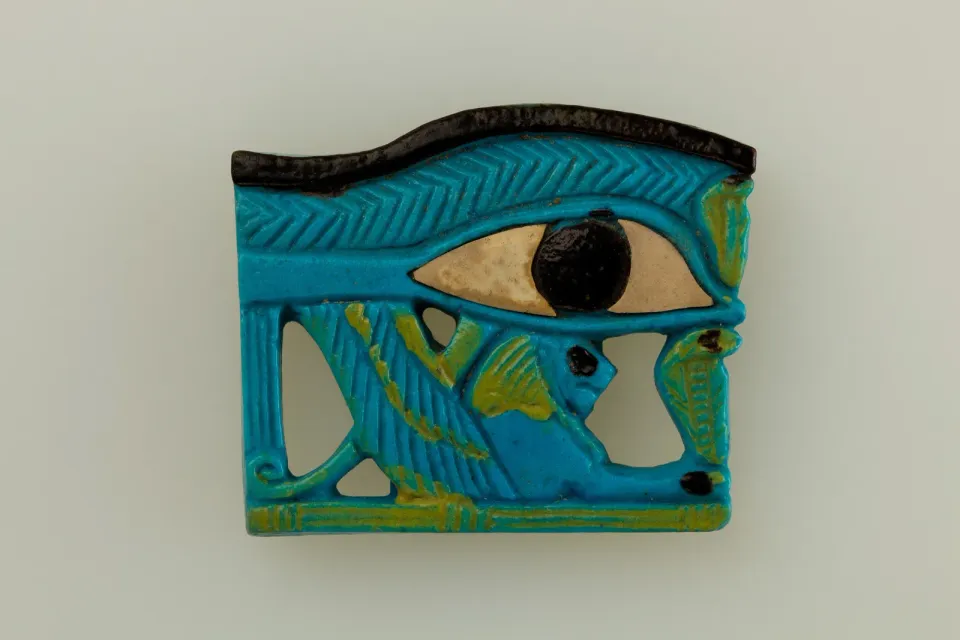
Eye of Horus
Wedjat (Eye of Horus)
An amulet that heals what is hurt and keeps the body whole.
JewelFirst recorded c. 2400 BCE
Loading artifact…
Photograph: An inlaid brass container from northern Iraq, about 1250–1350. A round box with a knobbed lid is inlaid with silver and gold in dense patterns, Arabic lettering and a seated figure, with clasps on both sides to lock the lid.
Focus the photograph, then use the arrow keys to pan and the plus and minus keys to zoom. The buttons at the lower left also move it. Press a numbered button on the photograph to zoom to that note.
Qumqum of the Fisherman and the Jinni
Sealed with Solomon's seal, it keeps the jinni inside from escaping.
A poor fisherman had resolved to cast his net only four times a day. One day his fourth cast brought up a heavy brass bottle. Its mouth was sealed with lead, stamped with the seal of King Solomon.
When the fisherman pried off the lead with his knife, smoke poured out of the bottle and reached the sky, then became a gigantic jinni. It was a jinni who had defied Solomon and been shut in the bottle and thrown into the sea. For the first hundred years, he said, he had sworn to make whoever freed him rich, but when no one came for centuries he changed his oath and swore to kill whoever freed him, and he told the fisherman to choose how he would die.
The fisherman, thinking fast, said he could not believe such a huge body had fitted into this little bottle. The angry jinni turned into smoke and went back into the bottle to show him, and the fisherman quickly shut the lid and sealed it again. In The Thousand and One Nights, this story becomes the first link in a chain of tales that follow.
The photograph shows Luxury Inlaid Container(Northern Iraq, Ayyubid period, c. 1250–1350), a real museum object that evokes the legendary artifact.
Wedjat (Eye of Horus)
An amulet that heals what is hurt and keeps the body whole.
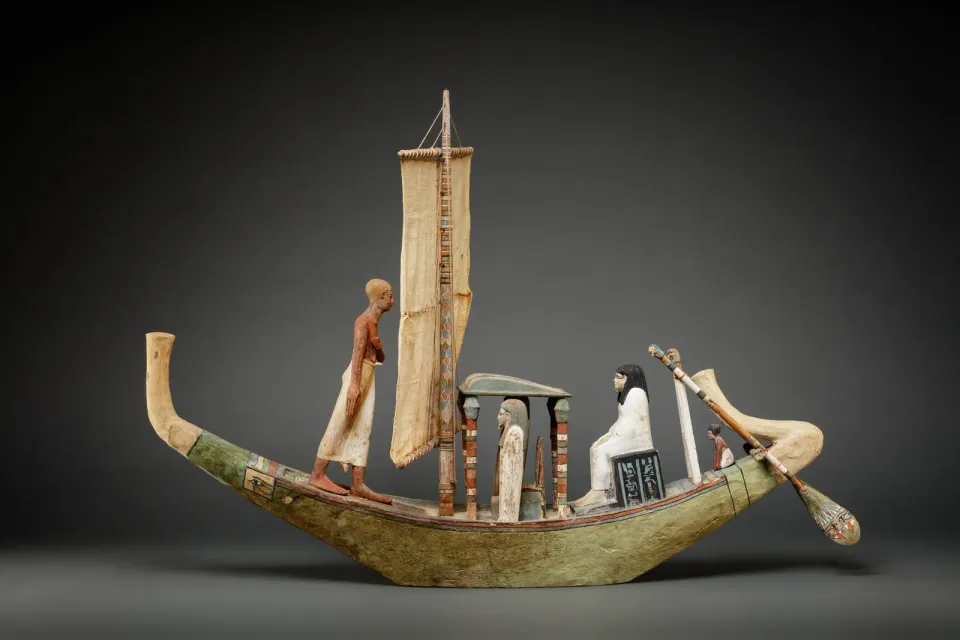
Solar Barque of Ra
Crossing the sky by day and the underworld by night, it makes the sun rise again.
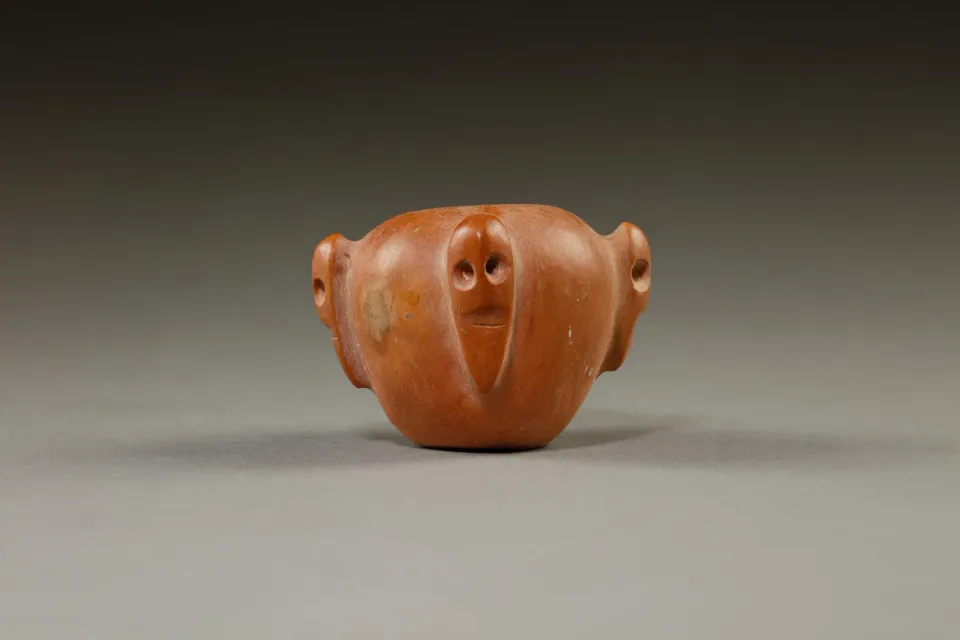
Šar-ur
It speaks, flies off on its own to spy on the enemy, and reports back to its master.
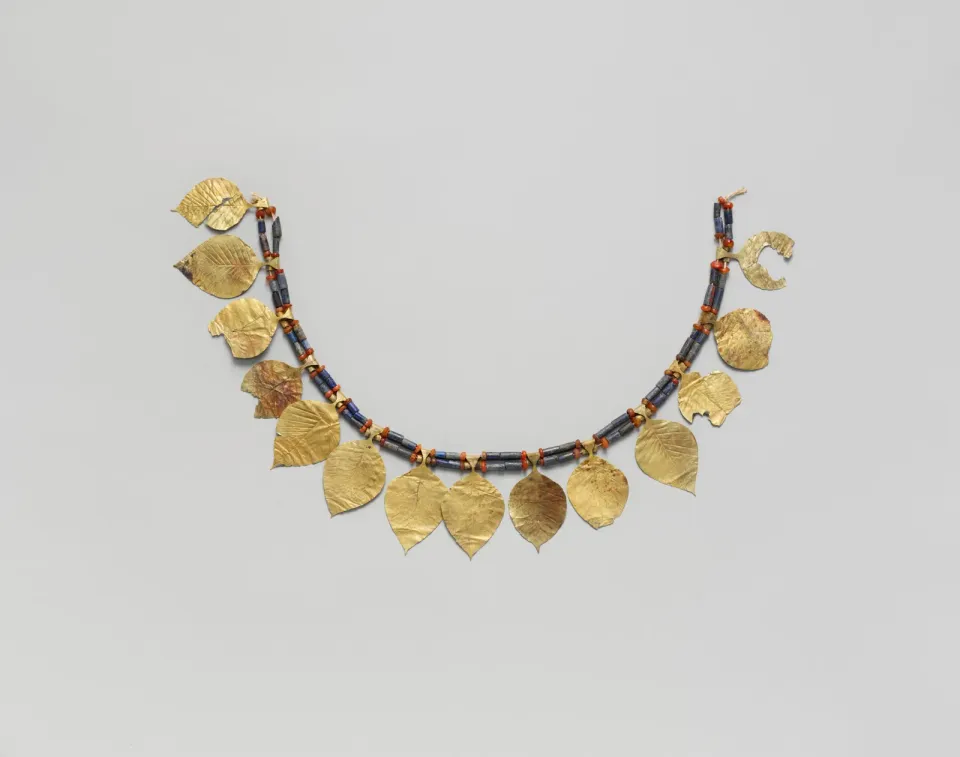
Seven Me of Inanna
Seven ornaments holding the goddess's powers. With each one she removes, she loses her strength.