Korean
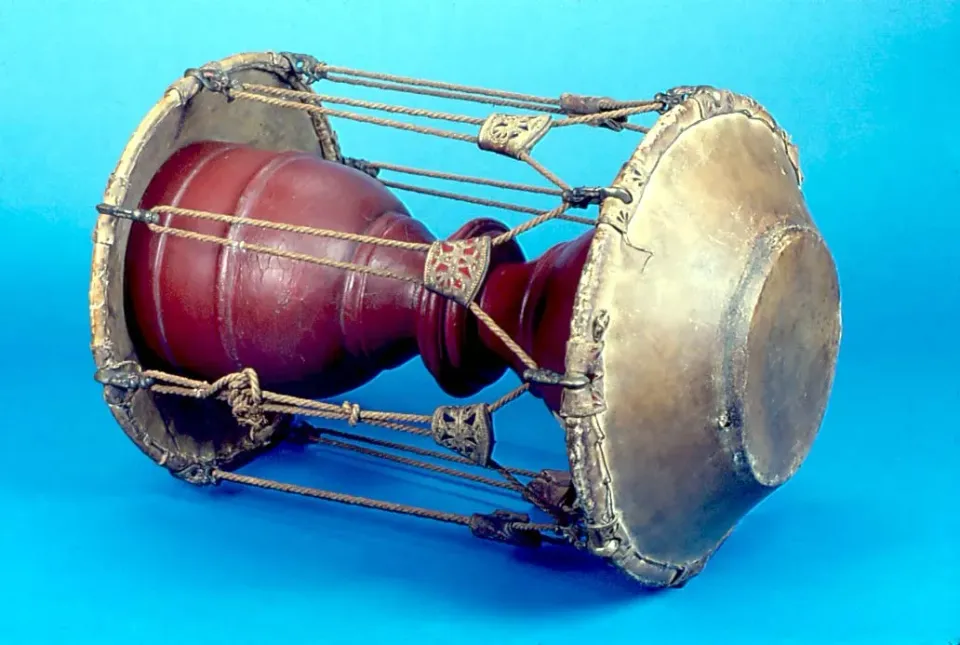
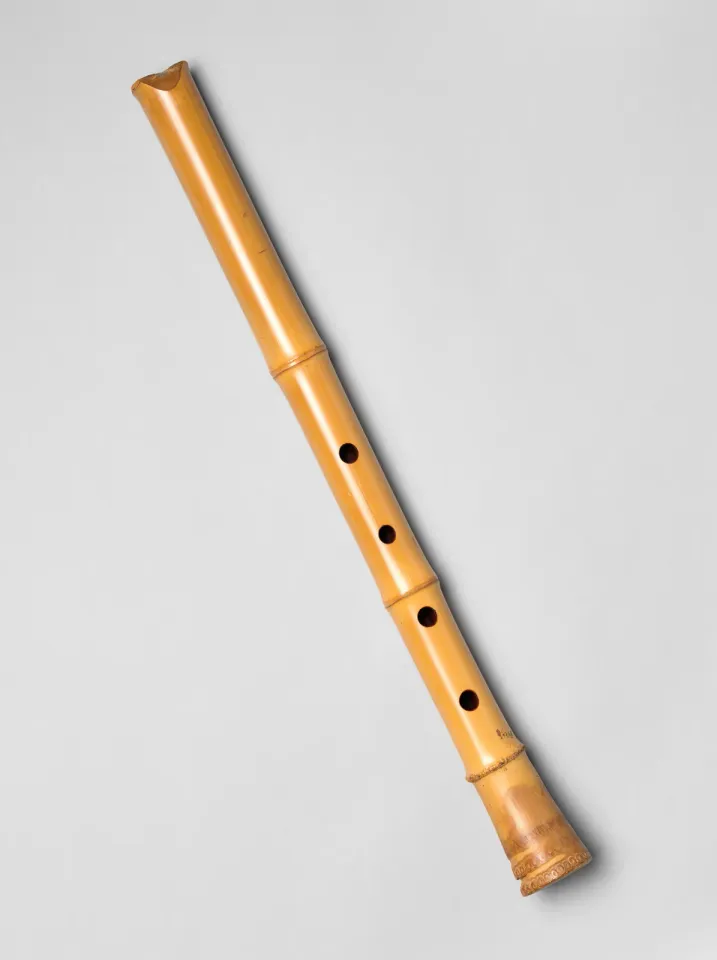
Manpasikjeok
萬波息笛
When played, enemy armies retreat, illness is cured, drought brings rain and rough waves grow calm.
TreasureFirst recorded 1281
Loading artifact…
Photograph: A leather bow case, quiver and belt from Tibet or Mongolia, fifteenth to seventeenth century. A bow case and quiver of dark brown leather are fitted with round ornaments decorated in gold, joined by a belt.
Focus the photograph, then use the arrow keys to pan and the plus and minus keys to zoom. The buttons at the lower left also move it. Press a numbered button on the photograph to zoom to that note.
朱蒙之弓
Every arrow hit its mark, so that "jumong," meaning a fine archer, became his name.
Sunlight shone on Yuhwa, daughter of the water god Habaek, who was confined in the palace of Buyeo, and she laid a great egg. When the king threw the egg to dogs and pigs they would not eat it; when he cast it on the road, oxen and horses stepped around it; when he left it in a field, birds covered it with their wings. The boy who hatched from the egg made his own bow and arrows at the age of seven, and every arrow hit its mark.
In the language of Buyeo a fine archer was called "jumong," and so the boy was named Jumong. The Chinese history Book of Wei, completed in 554, records this story as the founding legend of Goguryeo. The princes of Buyeo, jealous of Jumong's skill, plotted to kill him.
Fleeing south, Jumong came to a river with no bridge and cried, "I am the son of the sun and the grandson of Habaek," and fish and turtles rose up to form a bridge. When he had crossed, the bridge scattered, and his pursuers could not cross. Jumong came to Jolbon and founded Goguryeo.
The photograph shows Bow Case, Quiver, and Belt (gzhu shubs dang mda' shubs)(Tibetan or Mongolian, 15th–17th century), a real museum object that evokes the legendary artifact.
萬波息笛
When played, enemy armies retreat, illness is cured, drought brings rain and rough waves grow calm.
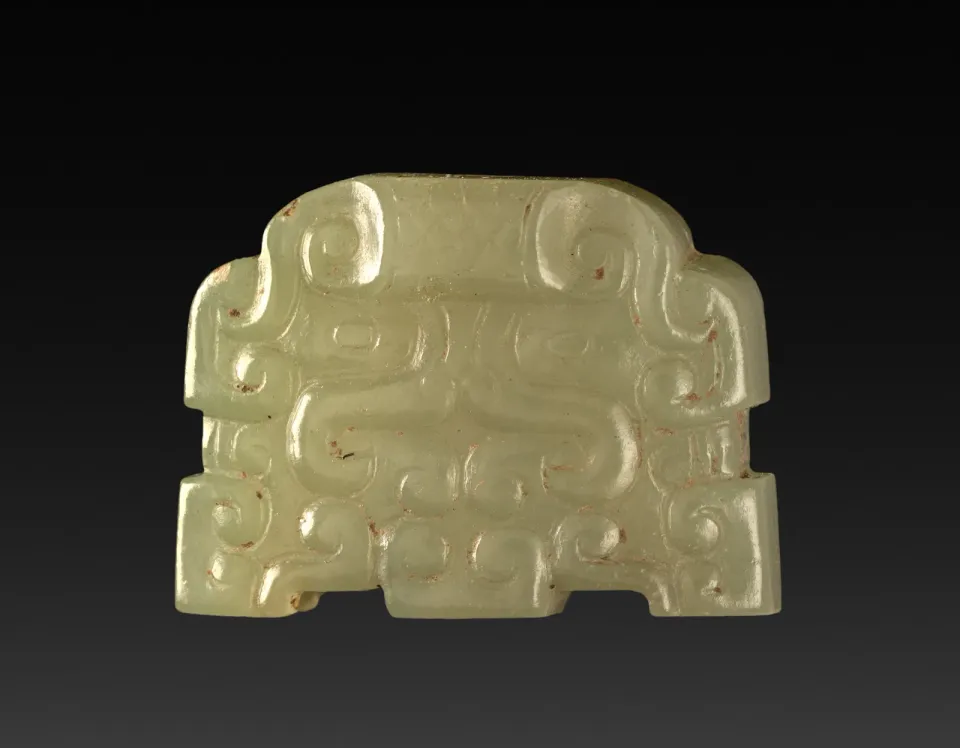
金錐子 (방이 설화)
Strike it, saying "Out with gold!", and whatever one wishes comes pouring out.
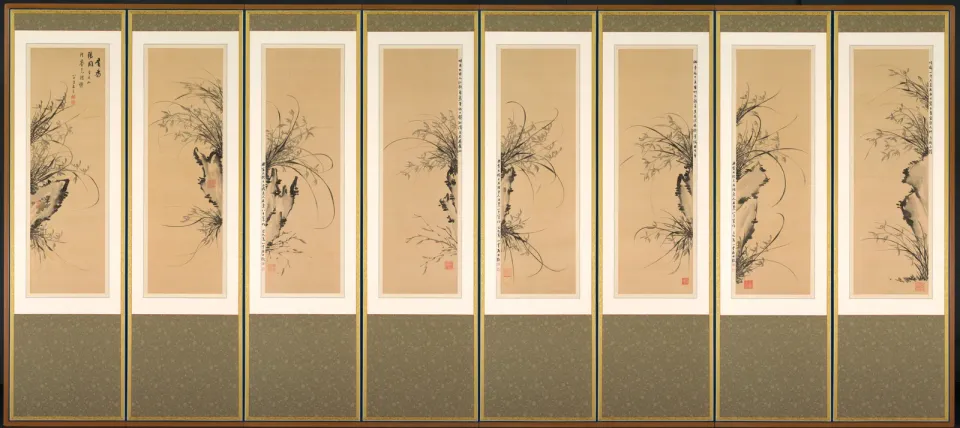
浮石
A great rock that Seonmyo became; it rose into the air and drove off the band that stood in Uisang's way.