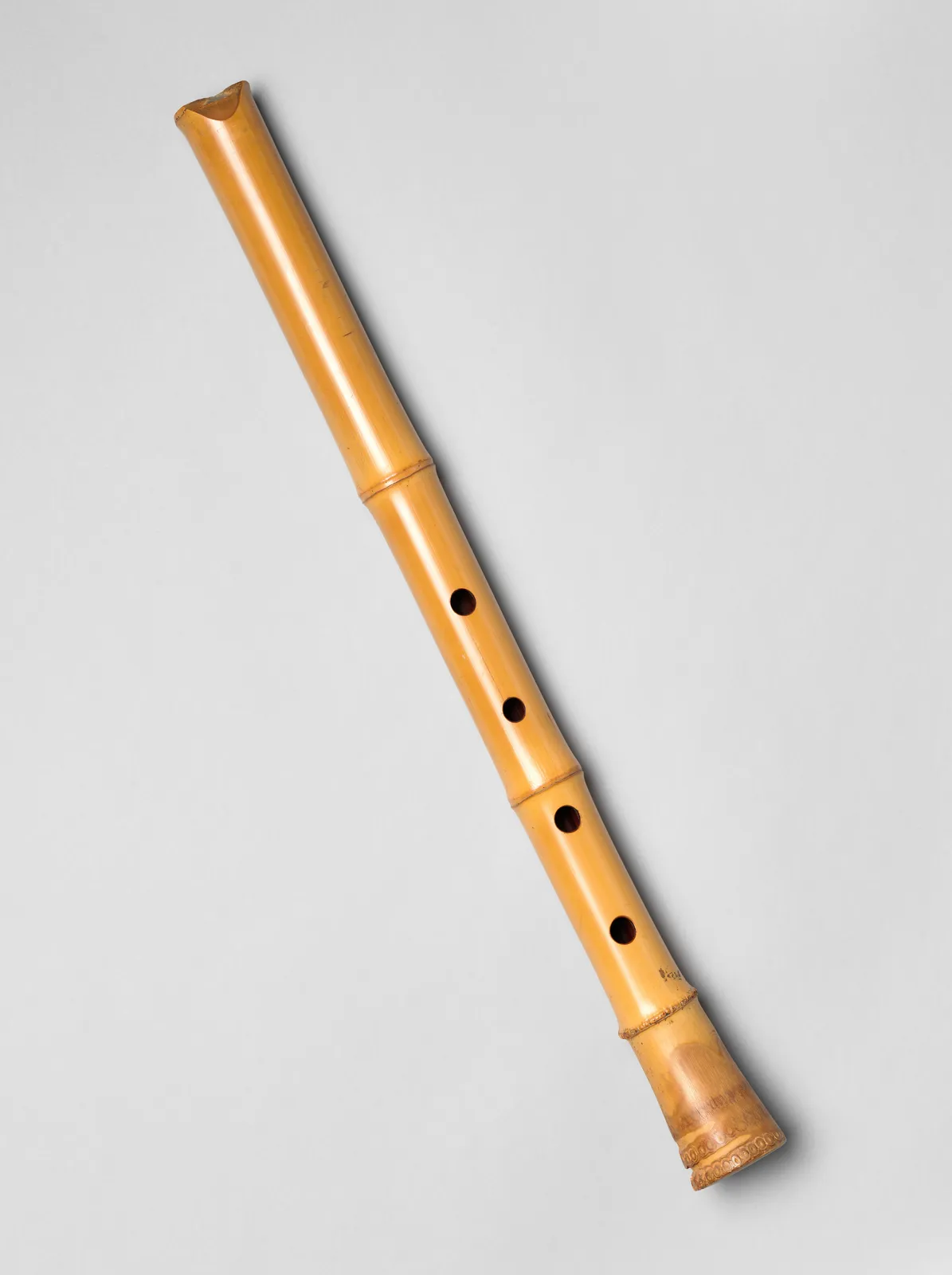
Korean
Manpasikjeok
萬波息笛
When played, enemy armies retreat, illness is cured, drought brings rain and rough waves grow calm.
TreasureFirst recorded 1281
Loading artifact…
Photograph: A nineteenth-century Korean janggu drum. Hide is fitted to both ends of a red-lacquered wooden body with a narrow waist and tightened with cords. It is photographed against a blue background.
Focus the photograph, then use the arrow keys to pan and the plus and minus keys to zoom. The buttons at the lower left also move it. Press a numbered button on the photograph to zoom to that note.
自鳴鼓
Sounds by itself when enemies invade.
According to the record of King Daemusin of Goguryeo in the Samguk Sagi, Prince Hodong of Goguryeo met Choe Ri, king of Nangnang, while traveling in Okjeo. Choe Ri made Hodong his son-in-law and gave him his daughter.
Nangnang had a drum and horn that sounded by themselves when enemy troops approached. After returning to Goguryeo, Hodong sent word to his wife that if she entered the armory, tore the drum and broke the horn, he would receive her with all honors.
The princess secretly broke the drum and horn, and on Hodong's word King Daemusin launched a surprise attack on Nangnang. Unprepared because the drum did not sound, Choe Ri killed his daughter and surrendered. Later people called this drum Jamyeonggo, the drum that sounds by itself.
The photograph shows Changgo (장구)(Korean, 19th century), a real museum object that evokes the legendary artifact.
萬波息笛
When played, enemy armies retreat, illness is cured, drought brings rain and rough waves grow calm.
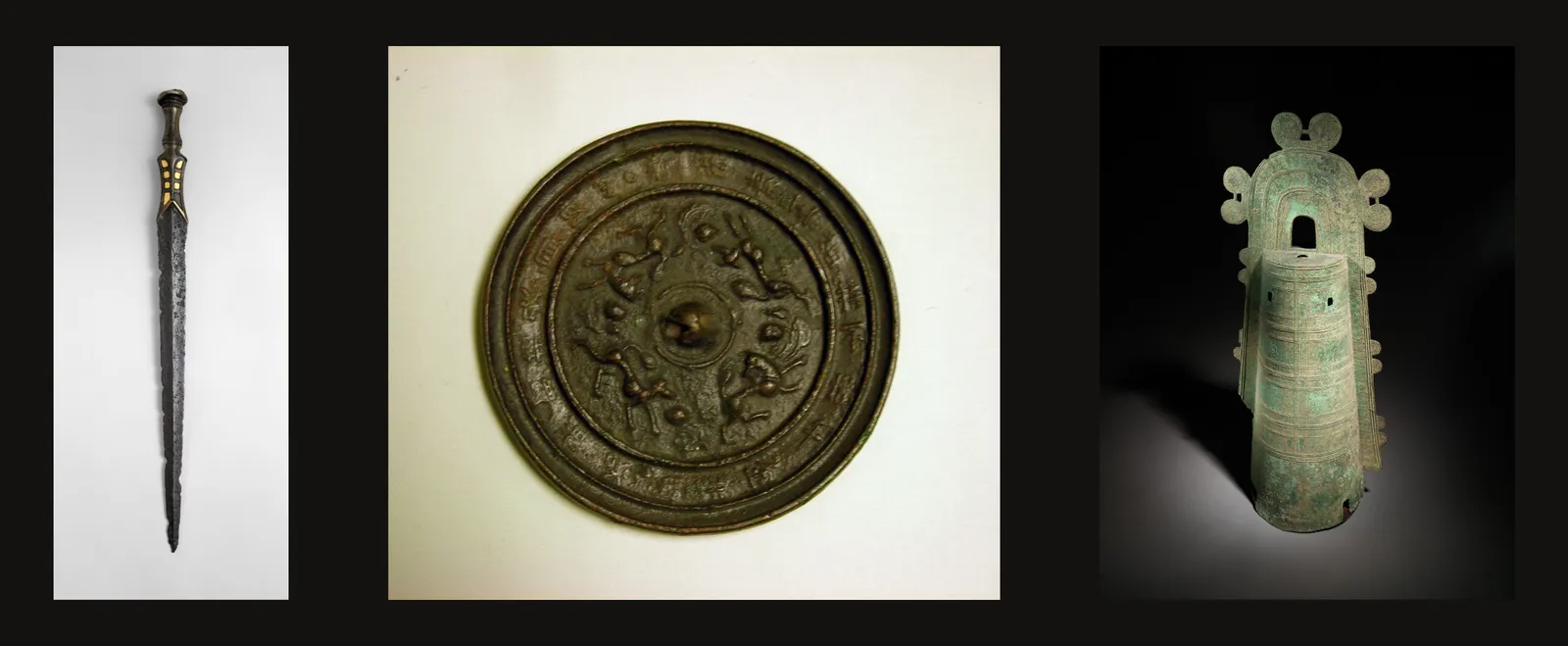
天符印
Proves its bearer has received heaven's mandate, and commands wind, rain and clouds.
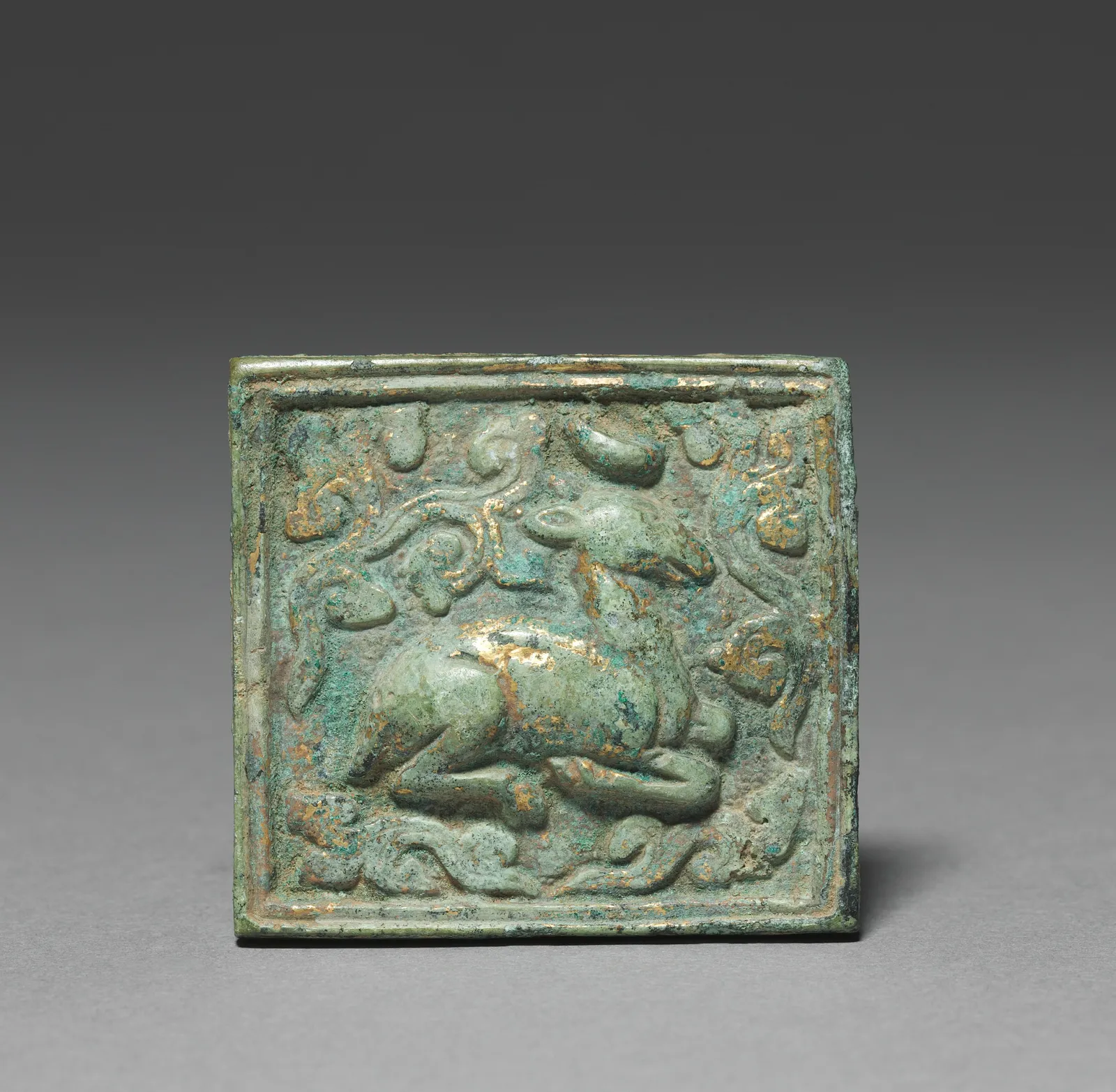
天賜玉帶
One of the three treasures of Silla. While it remained, no one dared attack the kingdom.