Korean
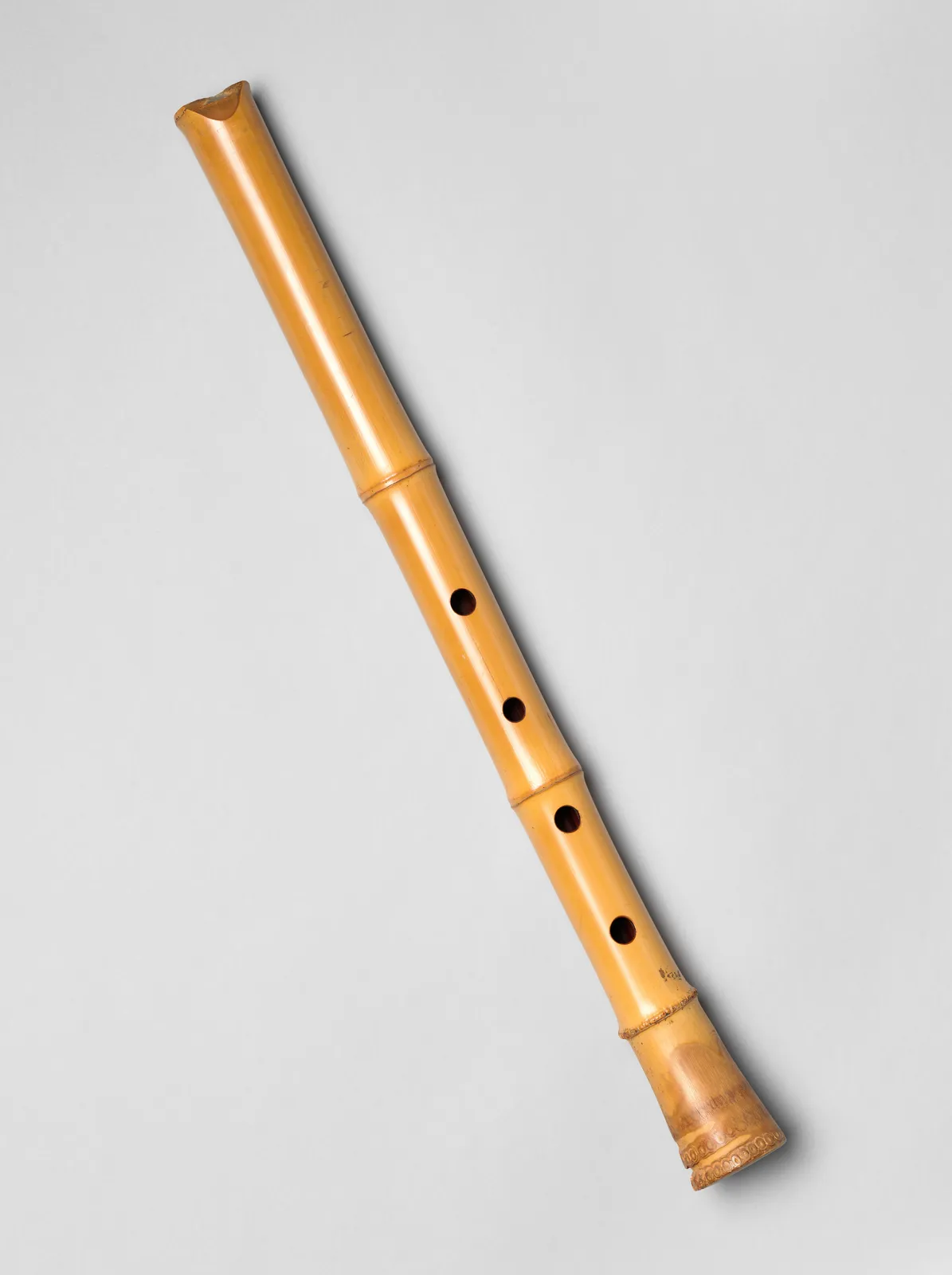
Manpasikjeok
萬波息笛
When played, enemy armies retreat, illness is cured, drought brings rain and rough waves grow calm.
TreasureFirst recorded 1281
Loading artifact…
Photograph: A twelfth-century gilt-bronze belt ornament from Goryeo Korea. A seated deer is embossed on a square plaque against a background of scrolls, with blue-green patina.
Focus the photograph, then use the arrow keys to pan and the plus and minus keys to zoom. The buttons at the lower left also move it. Press a numbered button on the photograph to zoom to that note.
天賜玉帶
One of the three treasures of Silla. While it remained, no one dared attack the kingdom.
According to the Samguk Yusa, in the year King Jinpyeong of Silla took the throne a messenger from heaven came down to the palace courtyard and presented a jade belt, saying the Lord on High had ordered it given. The king received it on his knees and wore it at every great ceremony.
The Heavenly Jade Belt was counted among the three treasures of Silla, along with the great Buddha statue and nine-story pagoda of Hwangnyongsa Temple. It is told that a king of Goguryeo gave up a plan to invade Silla on hearing that no one could attack while these three treasures remained.
When Gyeongsun, the last king of Silla, surrendered his kingdom to Goryeo, this belt too was presented to Wang Geon, Taejo of Goryeo, who stored it in the royal treasury.
The photograph shows Belt Ornament(Korea, Goryeo dynasty (918–1392), 1100s), a real museum object that evokes the legendary artifact.
萬波息笛
When played, enemy armies retreat, illness is cured, drought brings rain and rough waves grow calm.
天符印
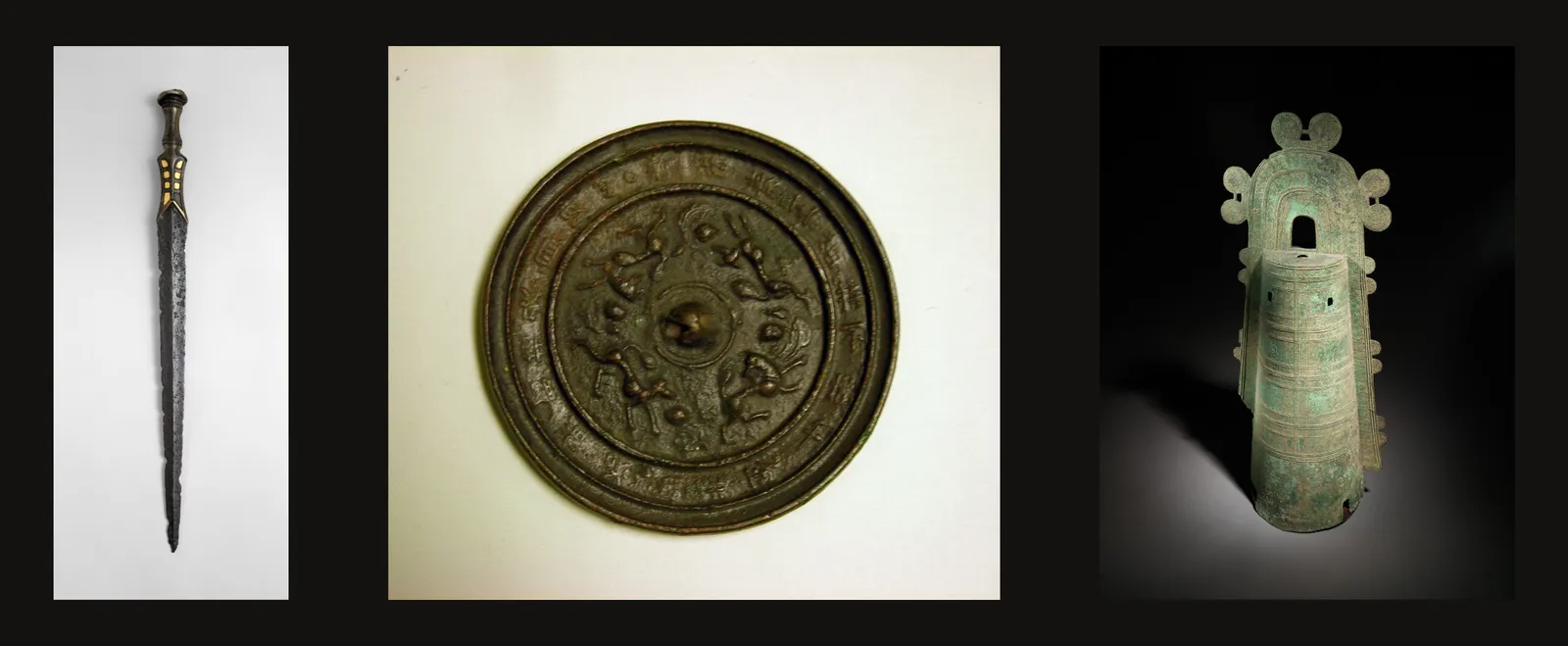
Proves its bearer has received heaven's mandate, and commands wind, rain and clouds.