Egypt & Near East
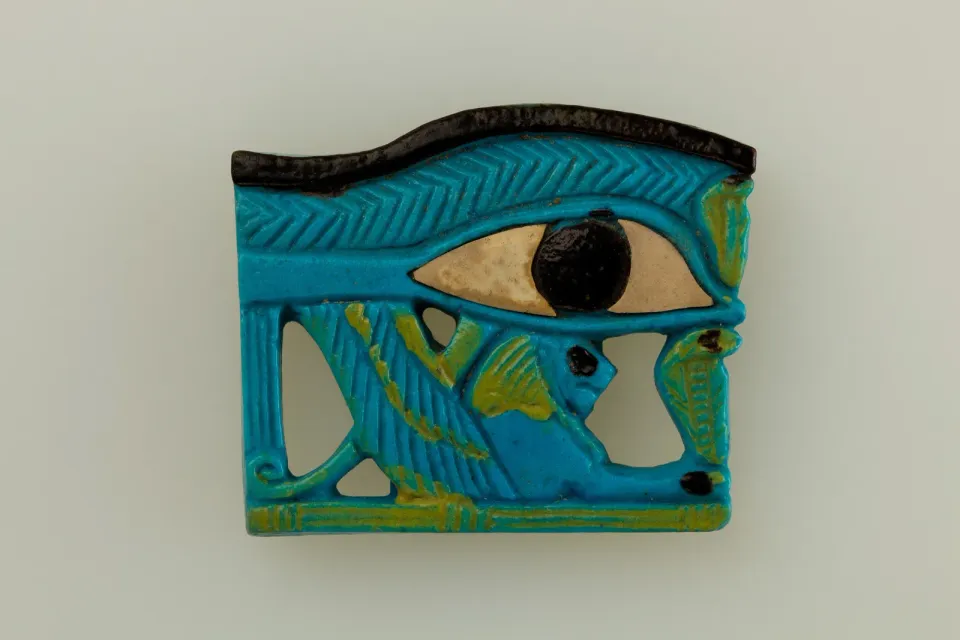
Eye of Horus
Wedjat (Eye of Horus)
An amulet that heals what is hurt and keeps the body whole.
JewelFirst recorded c. 2400 BCE
Loading artifact…
Photograph: The top fragment of a kudurru (boundary stone) carved in limestone in Babylonia under the Second Dynasty of Isin, about 1156–1025 BCE. A horned dragon, the mushhushshu, sits beside a pointed spade-shaped symbol set on a pedestal, with cuneiform remaining below.
Focus the photograph, then use the arrow keys to pan and the plus and minus keys to zoom. The buttons at the lower left also move it. Press a numbered button on the photograph to zoom to that note.
Saparru ša Marduk
With the four winds stationed at its four corners, it kept Tiamat, goddess of the sea, from escaping.
In the Babylonian creation epic Enuma Elish, Tiamat, the primeval goddess of the sea, gives birth to monsters to make war on the younger gods. The gods promise the young god Marduk that if he defeats Tiamat they will make him king of the gods.
Along with a bow and arrows and a mace, Marduk made a net. He stationed the south wind and the north wind, the east wind and the west wind at its four corners so that Tiamat could not escape. When Tiamat opened her mouth to swallow him, Marduk cast the net over her, drove the raging winds into her mouth and pierced her with an arrow.
Marduk split Tiamat's body in two to make heaven and earth, took the Tablet of Destinies from her general Kingu and became king of the gods. The epic was recited every year at the New Year festival in Babylon.
The photograph shows Top fragment of a kudurru with a mushhushshu dragon and divine symbols(Second Dynasty of Isin, ca. 1156–1025 BCE), a real museum object that evokes the legendary artifact.
Wedjat (Eye of Horus)
An amulet that heals what is hurt and keeps the body whole.
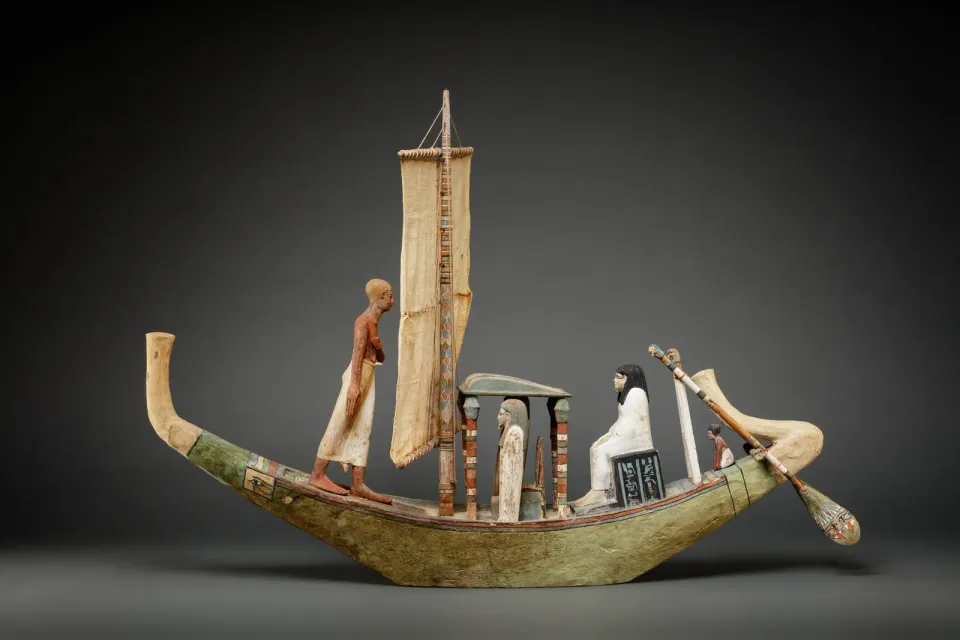
Solar Barque of Ra
Crossing the sky by day and the underworld by night, it makes the sun rise again.
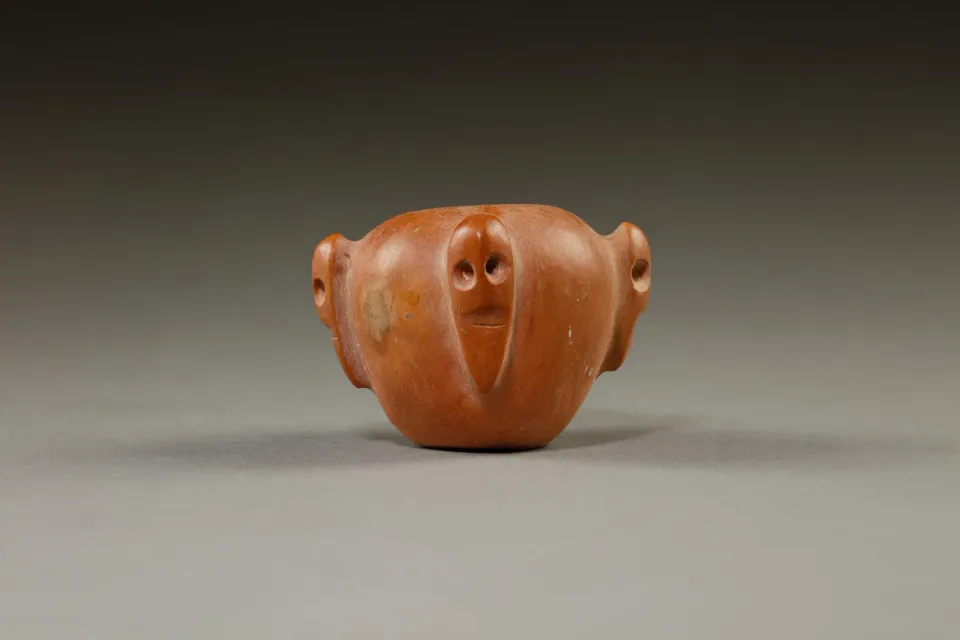
Šar-ur
It speaks, flies off on its own to spy on the enemy, and reports back to its master.
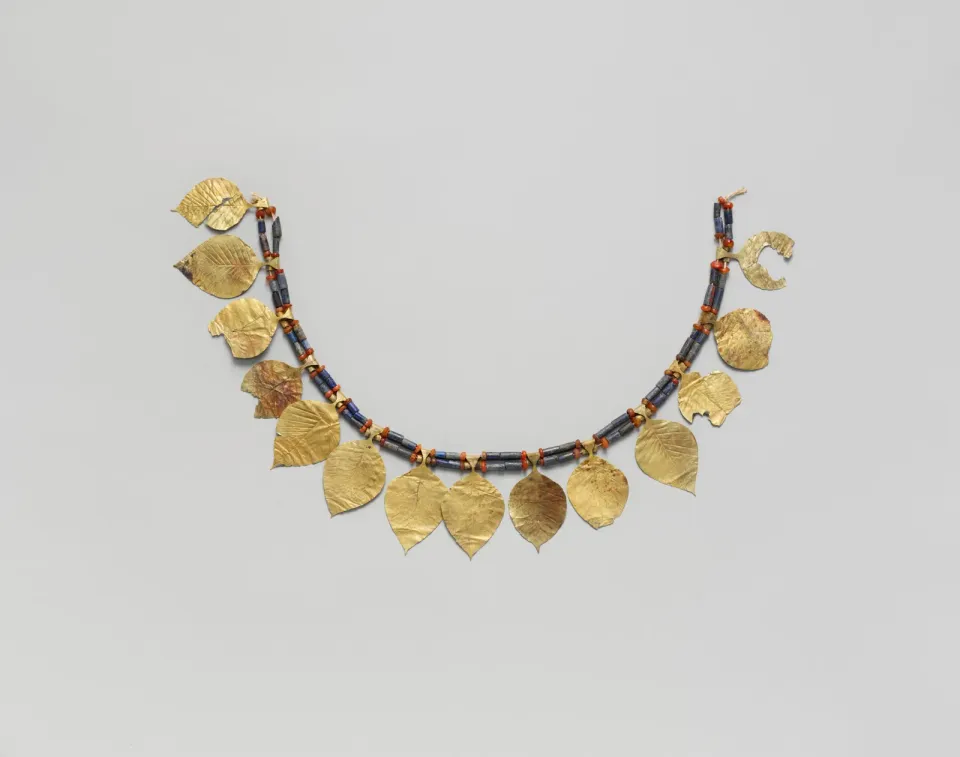
Seven Me of Inanna
Seven ornaments holding the goddess's powers. With each one she removes, she loses her strength.