Greek
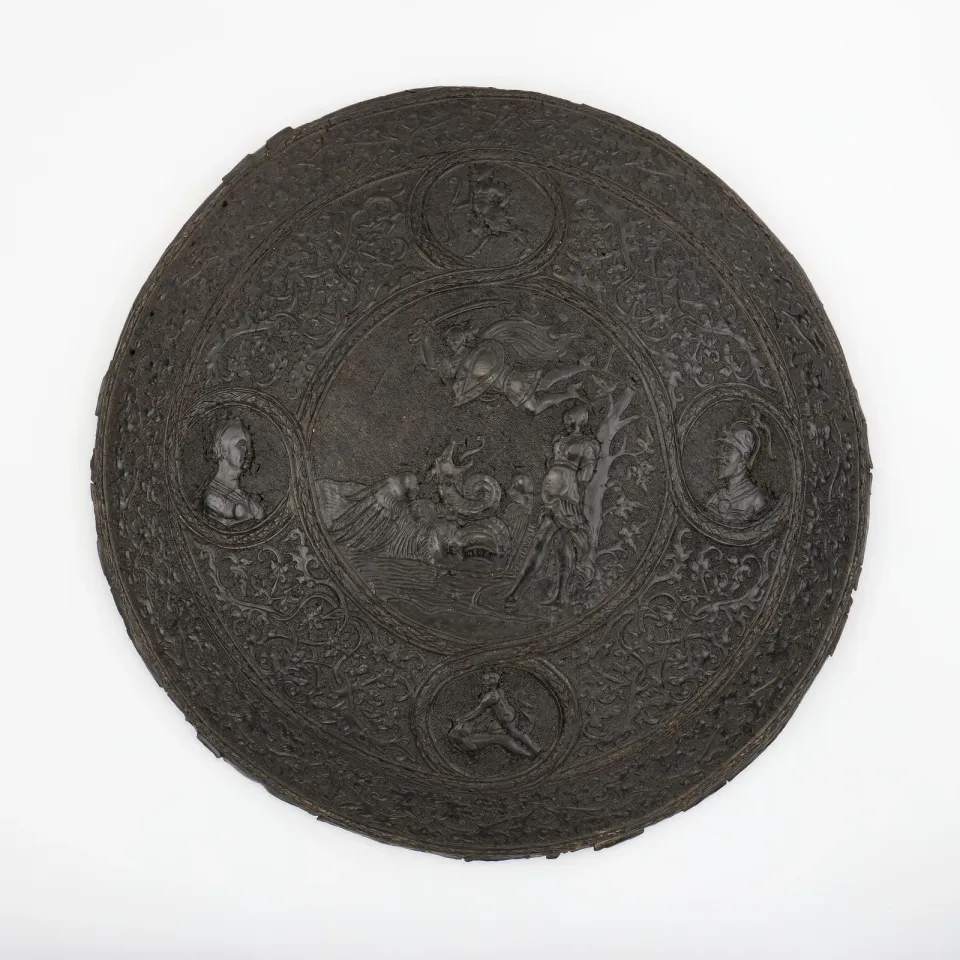
Aegis
Aegis (Αἰγίς)
Shaken, it raises storms and sends enemy armies fleeing in terror.
ArmorFirst recorded c. 750 BCE
Loading artifact…
Photograph: A gold kantharos from Mycenaean Greece, about 1550–1500 BCE. Two tall handles rise on either side of a round-bellied cup hammered from sheet gold, which stands on a small foot.
Focus the photograph, then use the arrow keys to pan and the plus and minus keys to zoom. The buttons at the lower left also move it. Press a numbered button on the photograph to zoom to that note.
Depas Nestoros
When it was full, others could barely lift it, but old Nestor raised it with ease.
In Book 11 of the Iliad, Nestor, the old king of Pylos, brings the wounded healer Machaon to his tent and offers him a drink. The cup his servant Hecamede sets out is one Nestor brought from home, adorned with golden studs.
The cup had four handles, and on each handle two golden doves were feeding; beneath were two supports. When it was full, any other man could barely lift it from the table, but old Nestor raised it with ease. Hecamede poured wine into the cup and sprinkled it with grated goat's cheese and barley meal.
In 1876, when Heinrich Schliemann found a gold cup with birds perched on its handles in the royal graves at Mycenae, people called it 'Nestor's Cup.' A clay cup of the eighth century BCE from the Italian island of Ischia also bears an inscription that begins 'I am the cup of Nestor.'
The photograph shows Gold kantharos (drinking cup with two high vertical handles)(Helladic, Mycenaean, ca. 1550–1500 BCE), a real museum object that evokes the legendary artifact.
Aegis (Αἰγίς)
Shaken, it raises storms and sends enemy armies fleeing in terror.
Ambrosia & Nectar
Keeps the gods ageless and deathless.
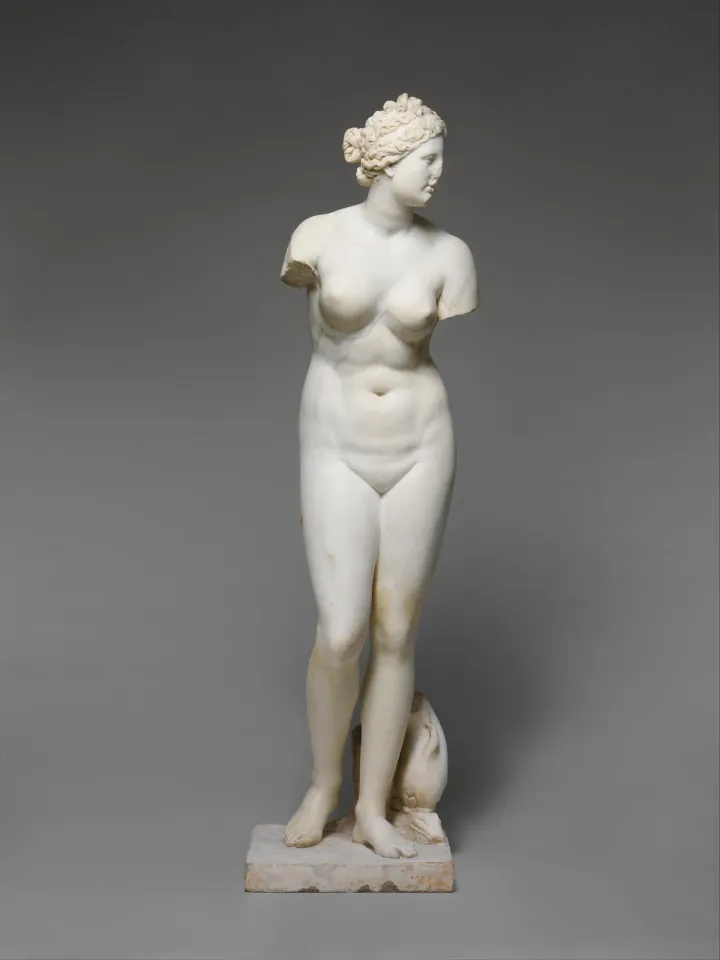
Kestos Himas (Κεστὸς ἱμάς)
Embroidered with love, longing and beguiling words, it makes anyone fall in love.