Egypt & Near East
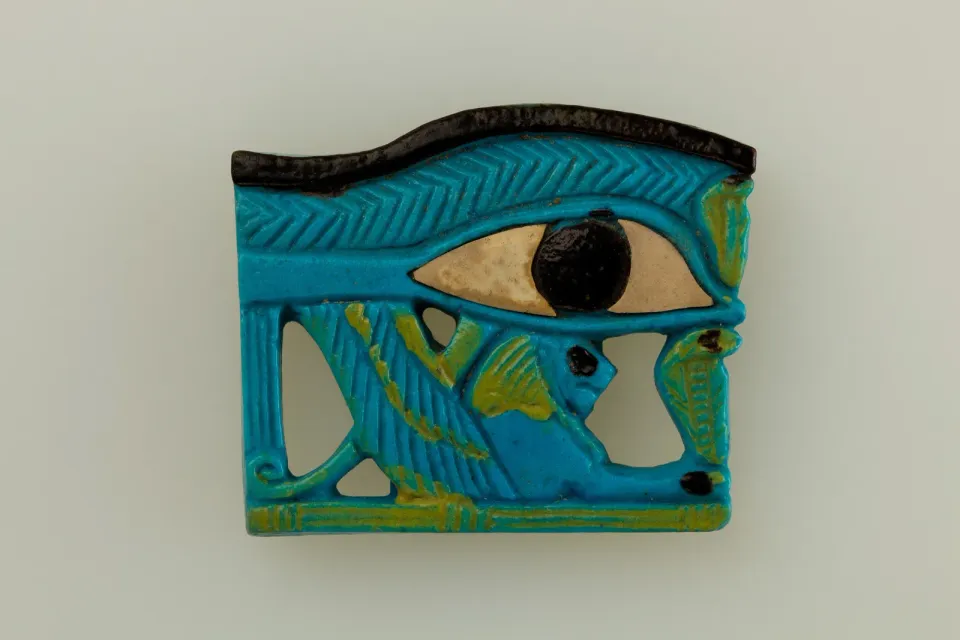
Eye of Horus
Wedjat (Eye of Horus)
An amulet that heals what is hurt and keeps the body whole.
JewelFirst recorded c. 2400 BCE
Loading artifact…
Photograph: An Assyrian shell inlay plaque of the ninth to eighth century BCE, in the shape of a tree with pointed leaves fanning out at the top and a trunk with chevron markings running downward.
Focus the photograph, then use the arrow keys to pan and the plus and minus keys to zoom. The buttons at the lower left also move it. Press a numbered button on the photograph to zoom to that note.
Šību iṣṣaḫir amēlu
Eaten, it makes an old man young again.
When his friend Enkidu died, Gilgamesh, king of Uruk, terrified of death, set out in search of eternal life. At the end of the world he met Utnapishtim, who had survived the great flood and been granted immortality by the gods, but immortality could not be granted again.
As Gilgamesh was leaving empty-handed, Utnapishtim told him a secret: deep under the water grows a plant like a thornbush, and whoever eats it becomes young again. Gilgamesh tied heavy stones to his feet, sank to the bottom and dug up the plant, though its thorns pricked his hands. He named it "the old man grows young" and said he would take it home and give it to the old men to eat.
On the way back, while Gilgamesh was bathing in a cool spring, a snake smelled the plant, came up and carried it off, shedding its skin as it went. Gilgamesh sat down and wept. They say snakes shed their skins and are born anew because they ate that plant.
The photograph shows Plaque in the form of a tree(Assyrian, ca. 9th–8th century BCE), a real museum object that evokes the legendary artifact.
Wedjat (Eye of Horus)
An amulet that heals what is hurt and keeps the body whole.
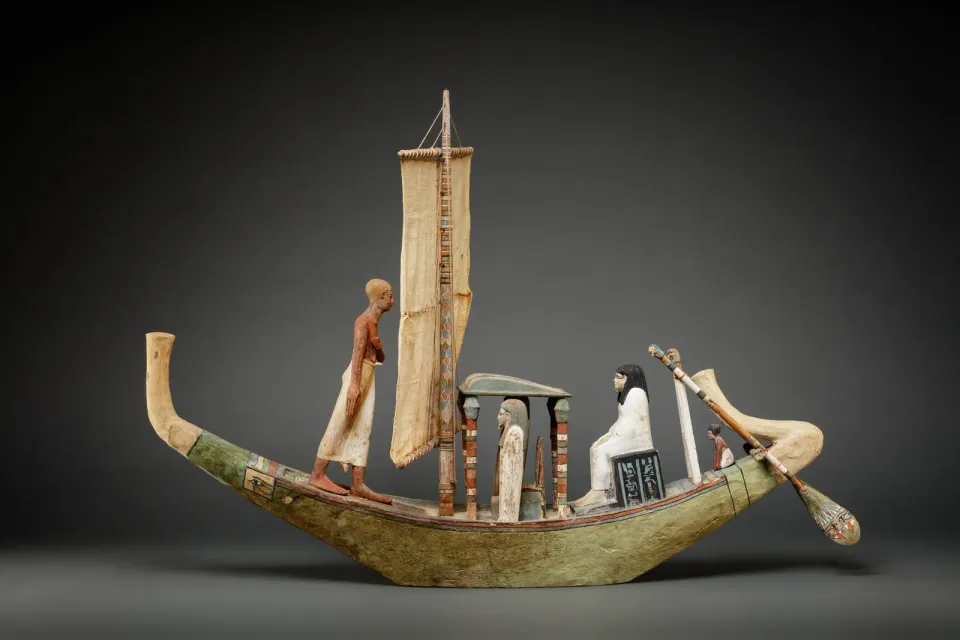
Solar Barque of Ra
Crossing the sky by day and the underworld by night, it makes the sun rise again.
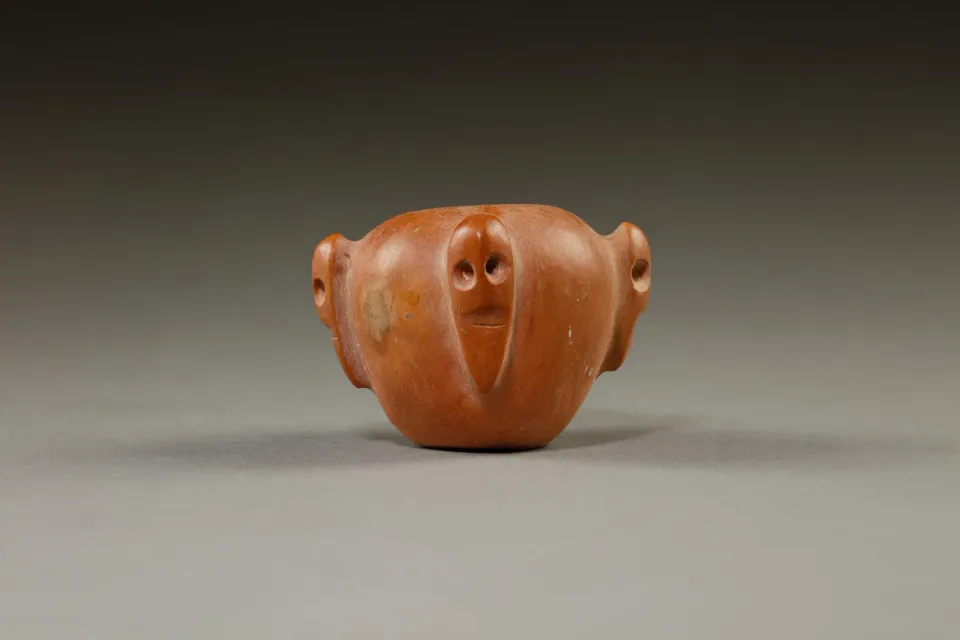
Šar-ur
It speaks, flies off on its own to spy on the enemy, and reports back to its master.
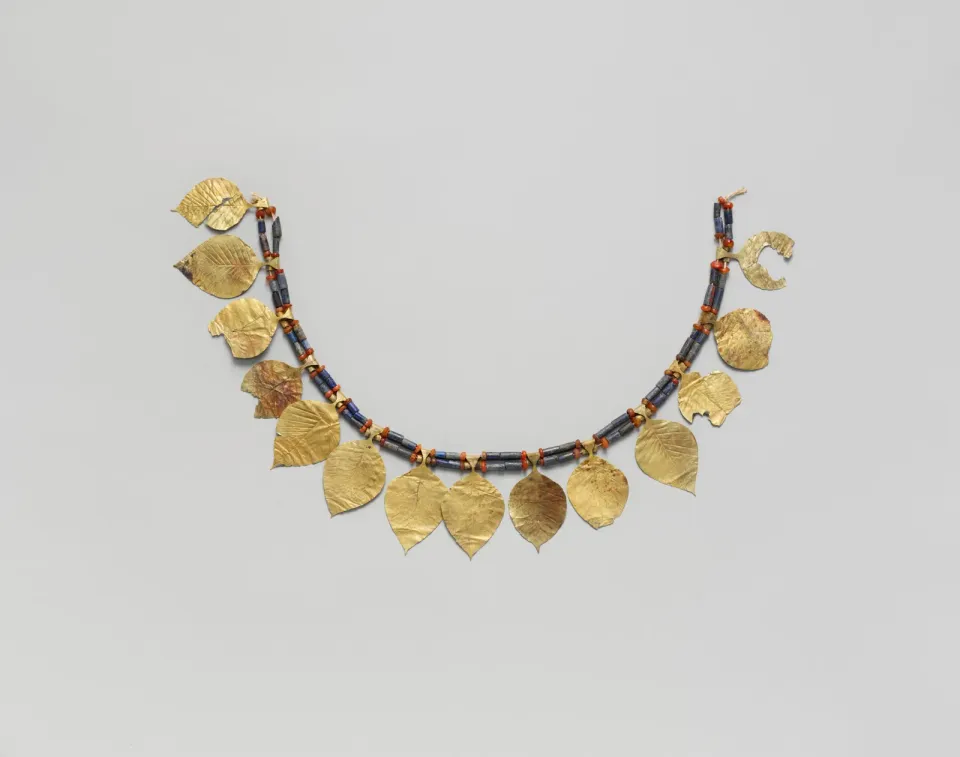
Seven Me of Inanna
Seven ornaments holding the goddess's powers. With each one she removes, she loses her strength.