Egypt & Near East
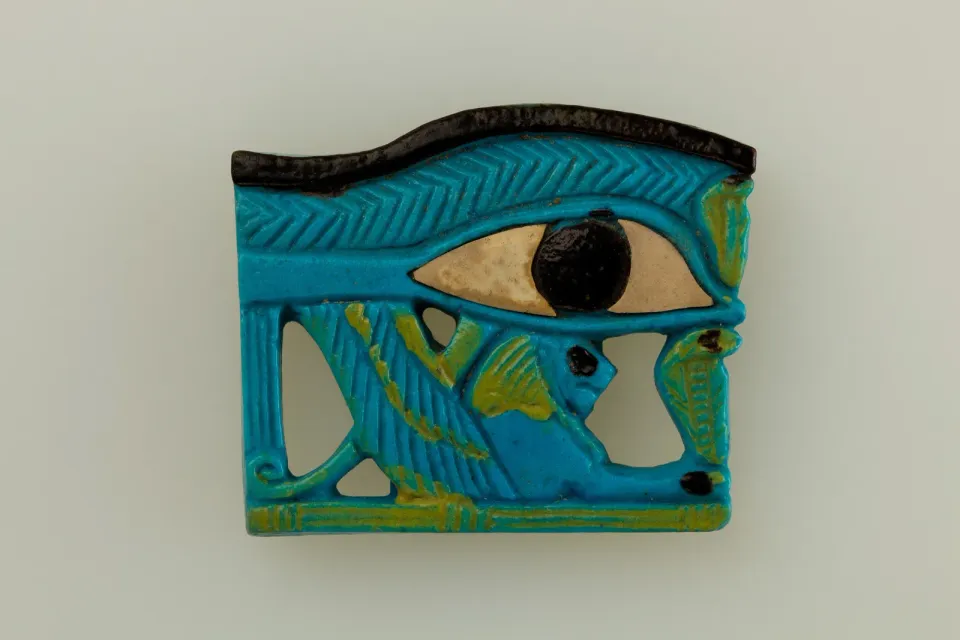
Eye of Horus
Wedjat (Eye of Horus)
An amulet that heals what is hurt and keeps the body whole.
JewelFirst recorded c. 2400 BCE
Loading artifact…
Photograph: A figurine plaque of a bearded man playing a drum, pressed in a mold and fired in Babylonia in the seventh–sixth century BCE. A long-bearded man stands holding a round drum against his chest; the clay is worn and the outlines are blurred.
Focus the photograph, then use the arrow keys to pan and the plus and minus keys to zoom. The buttons at the lower left also move it. Press a numbered button on the photograph to zoom to that note.
Pukku u Mikkû
Gilgamesh's favorite plaything, which in the end fell into the netherworld and left Enkidu trapped there.
In the Sumerian tale Gilgamesh, Enkidu and the Netherworld, the goddess Inanna replants a huluppu tree from the banks of the Euphrates. But a snake settles in its roots, the lion-headed bird Anzud in its branches and the demoness Lilith in its trunk, so Inanna cannot use the tree. The hero Gilgamesh drives them out and cuts the tree down for her.
Inanna made a chair and a bed from the wood, and from what was left Gilgamesh made the pukku and mikku. Interpreted as a ball and stick, a hoop and driver, or a drum and drumstick, these were what Gilgamesh played with among the young men of Uruk. When the people of the city, worn out by the game, cried out, the pukku and mikku fell down into the netherworld.
His friend Enkidu offered to go down and bring them back. Gilgamesh told him the rules to keep in the netherworld, but Enkidu did not heed them and was held there. The tale was later translated into Akkadian and became the last tablet of the Epic of Gilgamesh.
The photograph shows Figurine plaque: bearded man playing a drum(Babylonian, ca. 7th–6th century BCE), a real museum object that evokes the legendary artifact.
Wedjat (Eye of Horus)
An amulet that heals what is hurt and keeps the body whole.
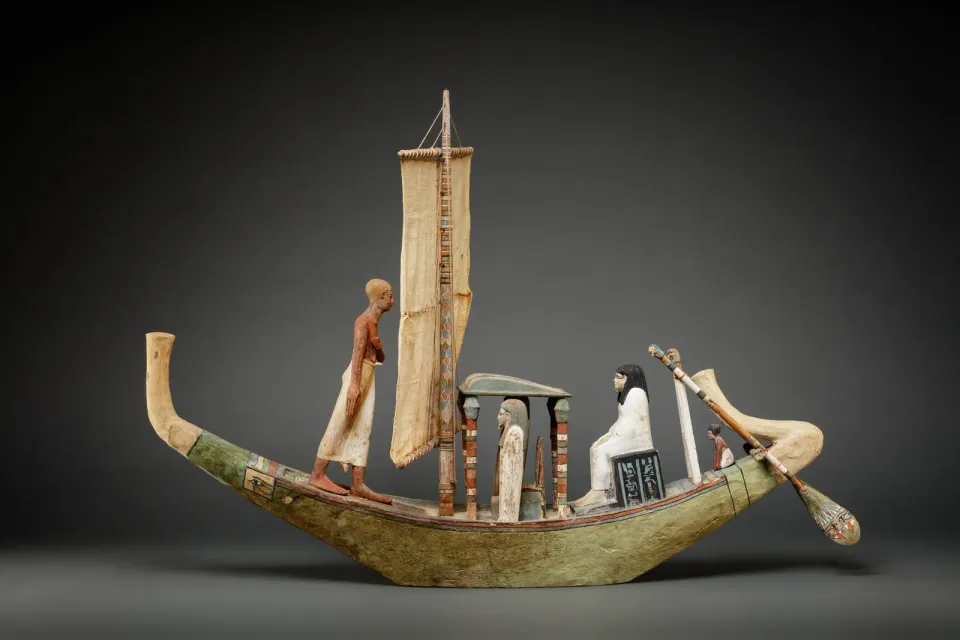
Solar Barque of Ra
Crossing the sky by day and the underworld by night, it makes the sun rise again.
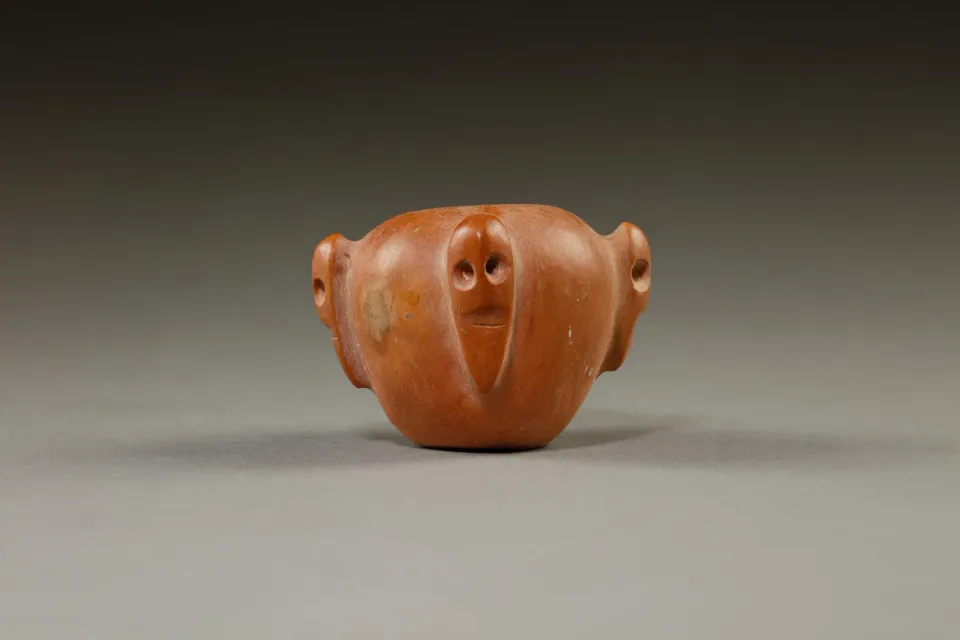
Šar-ur
It speaks, flies off on its own to spy on the enemy, and reports back to its master.
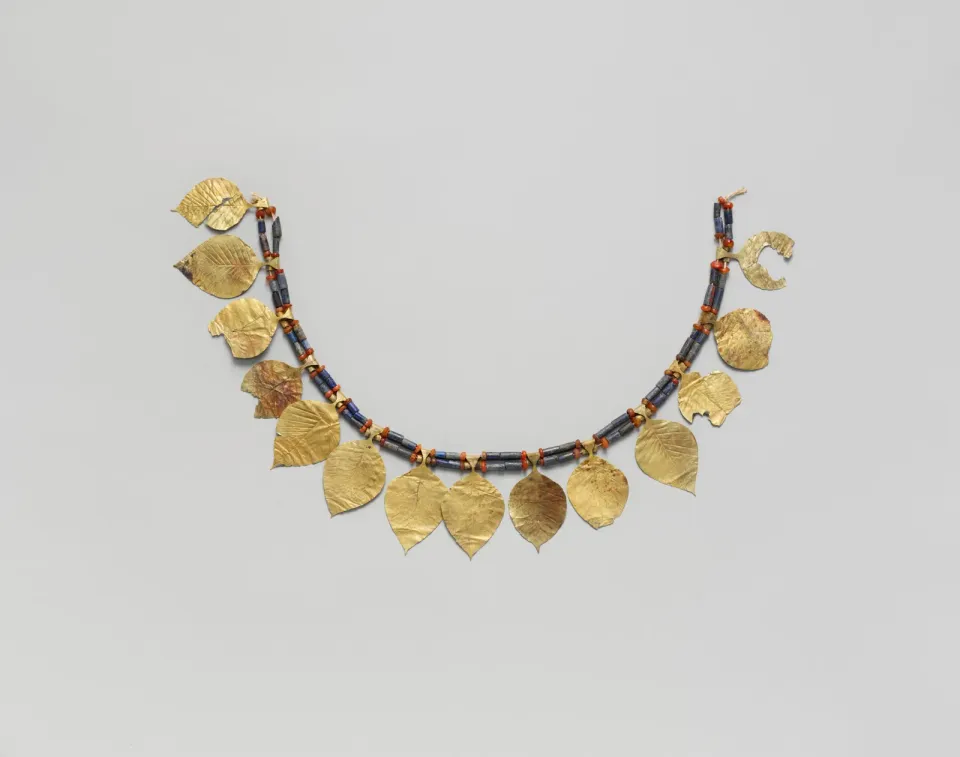
Seven Me of Inanna
Seven ornaments holding the goddess's powers. With each one she removes, she loses her strength.