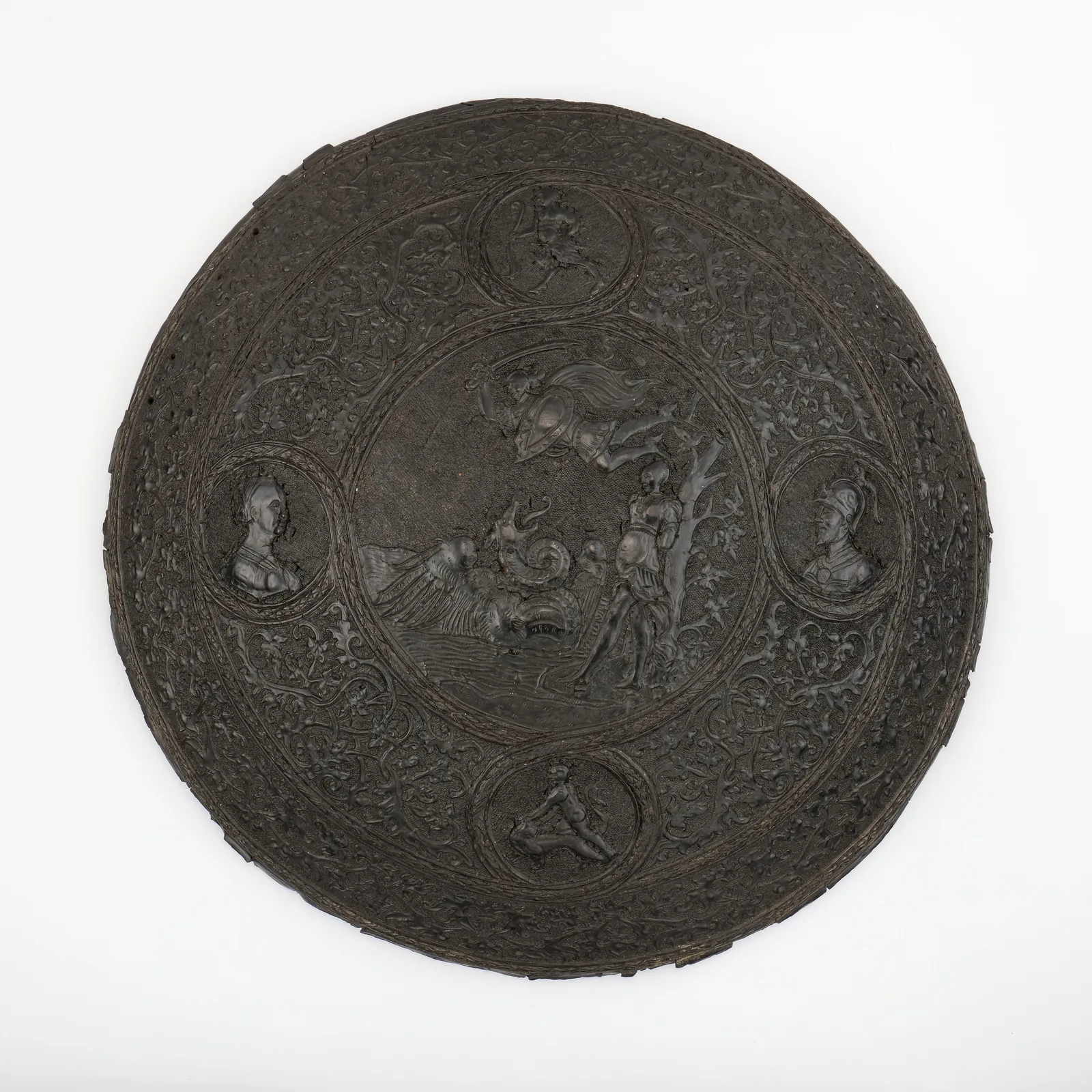
Greek
Aegis
Aegis (Αἰγίς)
Shaken, it raises storms and sends enemy armies fleeing in terror.
ArmorFirst recorded c. 750 BCE
Loading artifact…
Photograph: An Etruscan gold ring of the late fourth or early third century BCE. Letters are punched in dots across the front of the wide gold band.
Focus the photograph, then use the arrow keys to pan and the plus and minus keys to zoom. The buttons at the lower left also move it. Press a numbered button on the photograph to zoom to that note.
Ring of Gyges
Turning the bezel inward makes its wearer invisible.
In Plato's Republic, Glaucon tells the story of Gyges, a shepherd of Lydia. In a chasm opened by an earthquake, Gyges found the corpse of a giant lying in a bronze horse and took a gold ring from its finger.
Gyges discovered that when he turned the bezel of the ring toward his palm, he became invisible. With this power he entered the palace, seduced the queen, killed the king and became ruler of Lydia.
Glaucon asks: would not even a just man commit injustice if he owned such a ring? In reply Socrates argues for the value of justice itself.
The photograph shows Gold ring(Etruscan, late 4th or early 3rd century BCE), a real museum object that evokes the legendary artifact.
Aegis (Αἰγίς)
Shaken, it raises storms and sends enemy armies fleeing in terror.
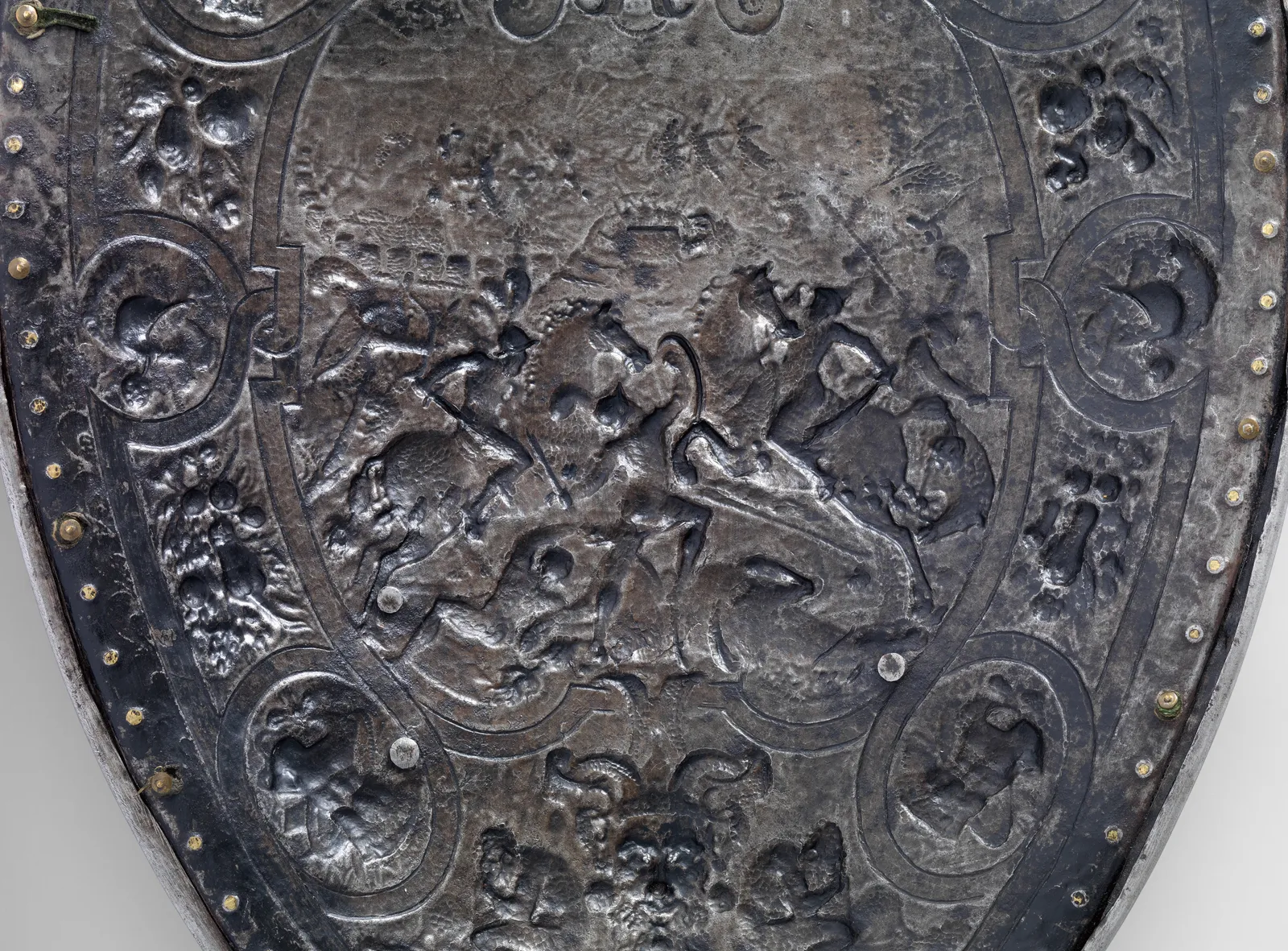
Shield of Achilles
A shield of five layers forged by a god, with the whole world engraved on its face.
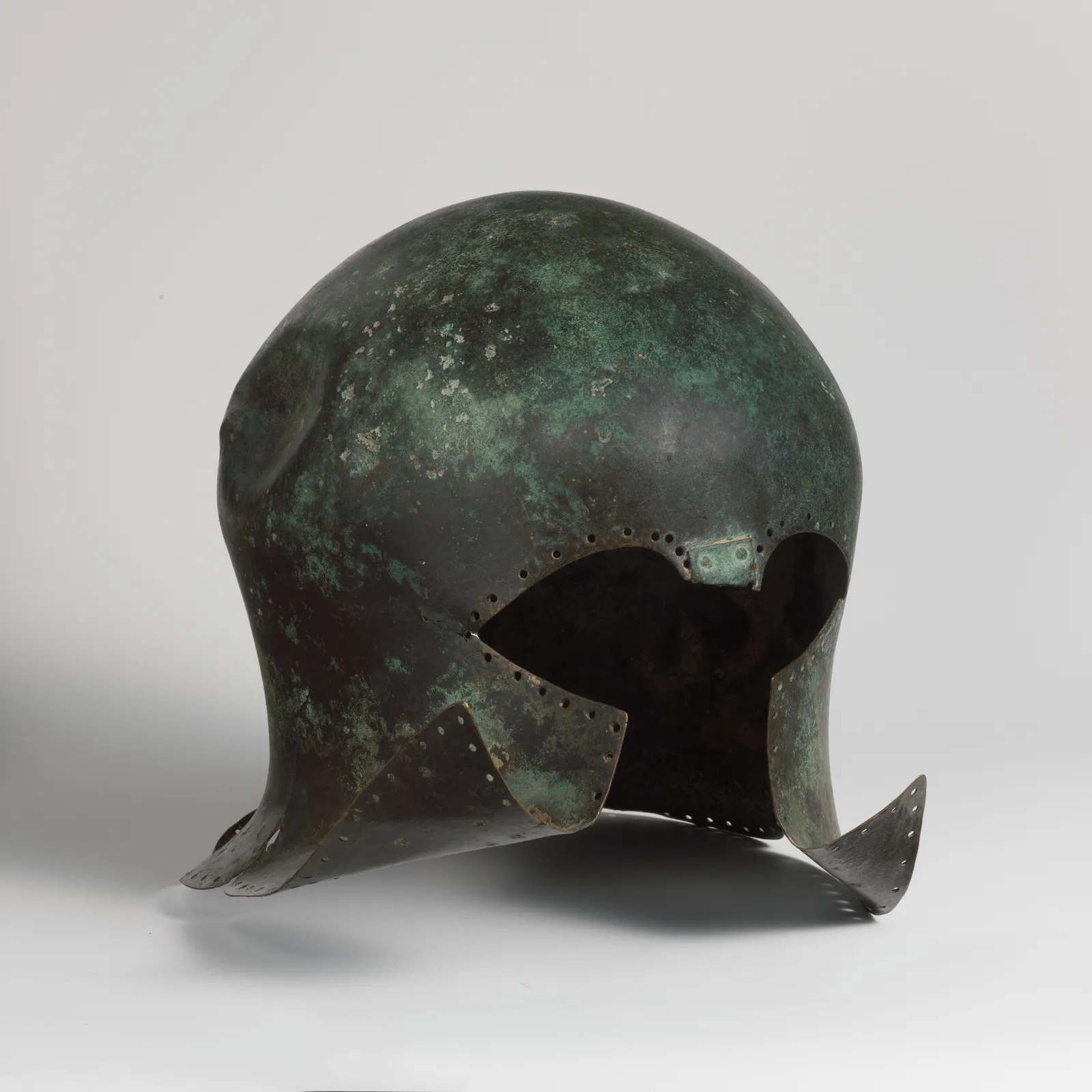
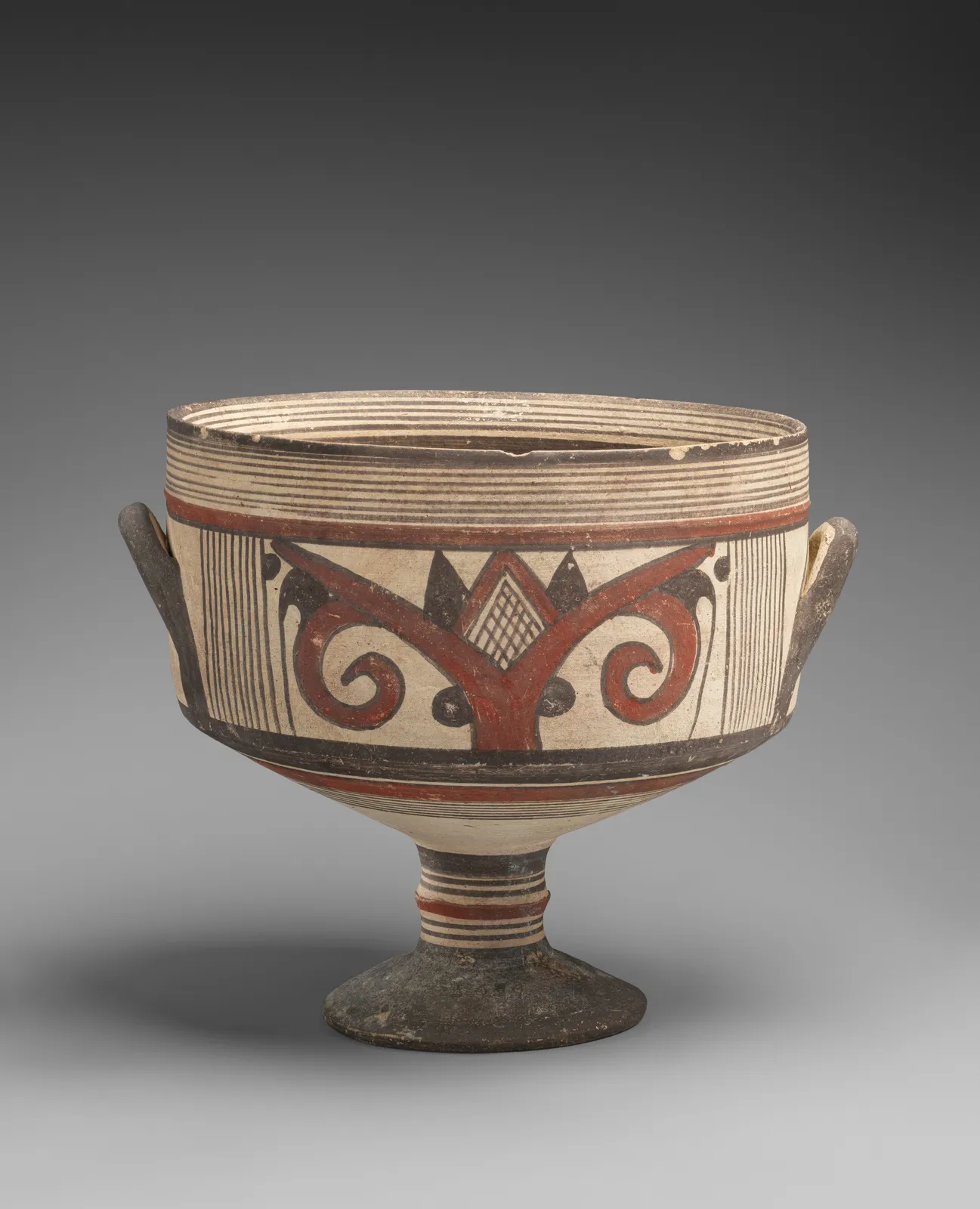
Ambrosia & Nectar
Keeps the gods ageless and deathless.