Greek
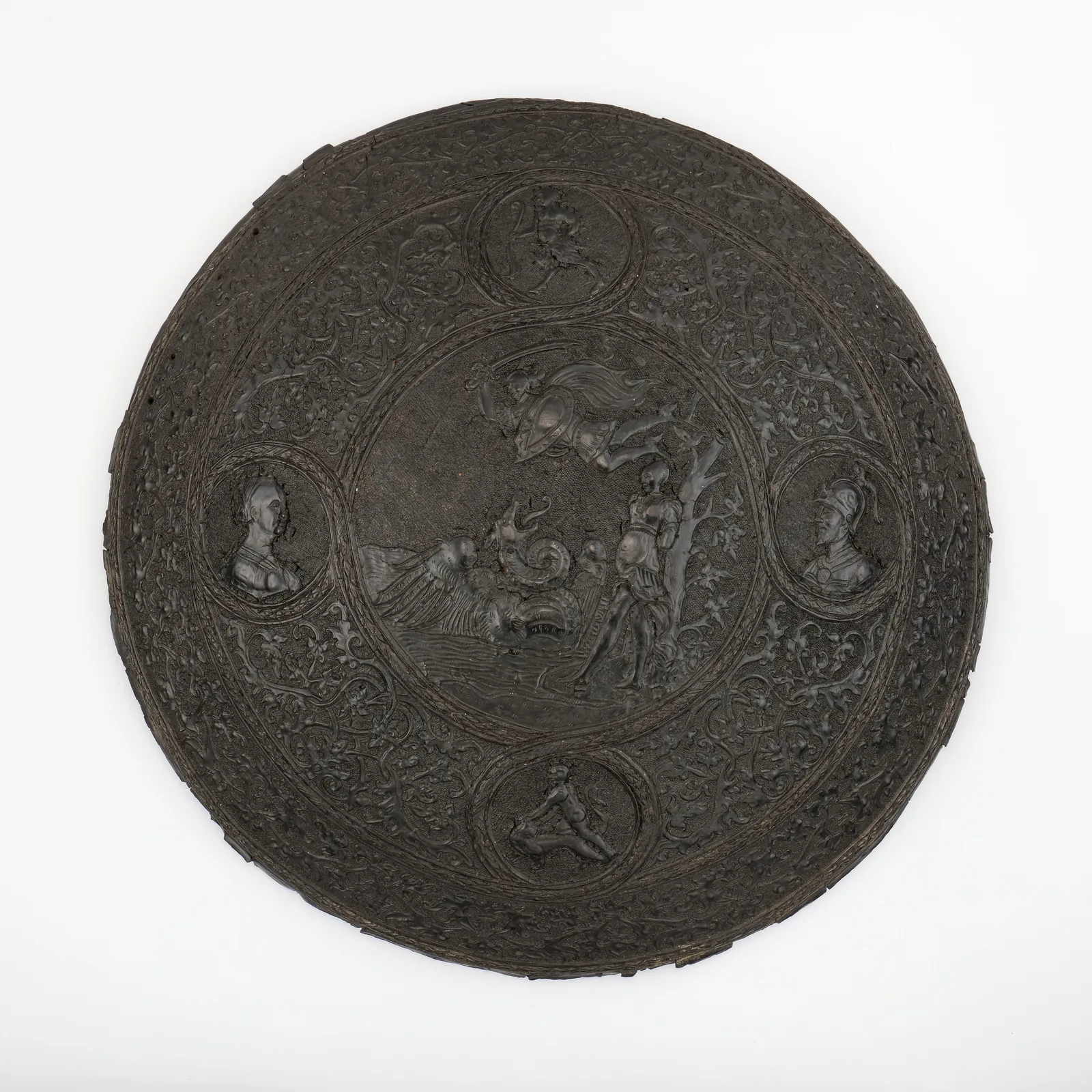
Aegis
Aegis (Αἰγίς)
Shaken, it raises storms and sends enemy armies fleeing in terror.
ArmorFirst recorded c. 750 BCE
Loading artifact…
Photograph: A marble head of Asclepius from the third to second century BCE, Roman. Blue glass eyes are set in a face framed by curly hair and beard.
Focus the photograph, then use the arrow keys to pan and the plus and minus keys to zoom. The buttons at the lower left also move it. Press a numbered button on the photograph to zoom to that note.
Rod of Asclepius
A staff wound with a serpent, symbolizing healing skill that could revive even the dead.
Asclepius, son of Apollo, learned medicine from the centaur Chiron. His skill was so great that he brought the dead back to life, and Zeus, fearing the order of the underworld would be overturned, struck him down with a thunderbolt.
He is portrayed leaning on a staff wound with a single serpent. The serpent, which sheds its skin, stood for rebirth and healing. At temples of Asclepius throughout Greece, such as Epidaurus, patients slept hoping for the god's cure in dreams, and harmless snakes were kept there.
This staff with one serpent is still used as a symbol of medicine, including on the flag of the World Health Organization.
The photograph shows Head of a marble statuette of Asklepios(Roman, 3rd–2nd century BCE), a real museum object that evokes the legendary artifact.
Aegis (Αἰγίς)
Shaken, it raises storms and sends enemy armies fleeing in terror.
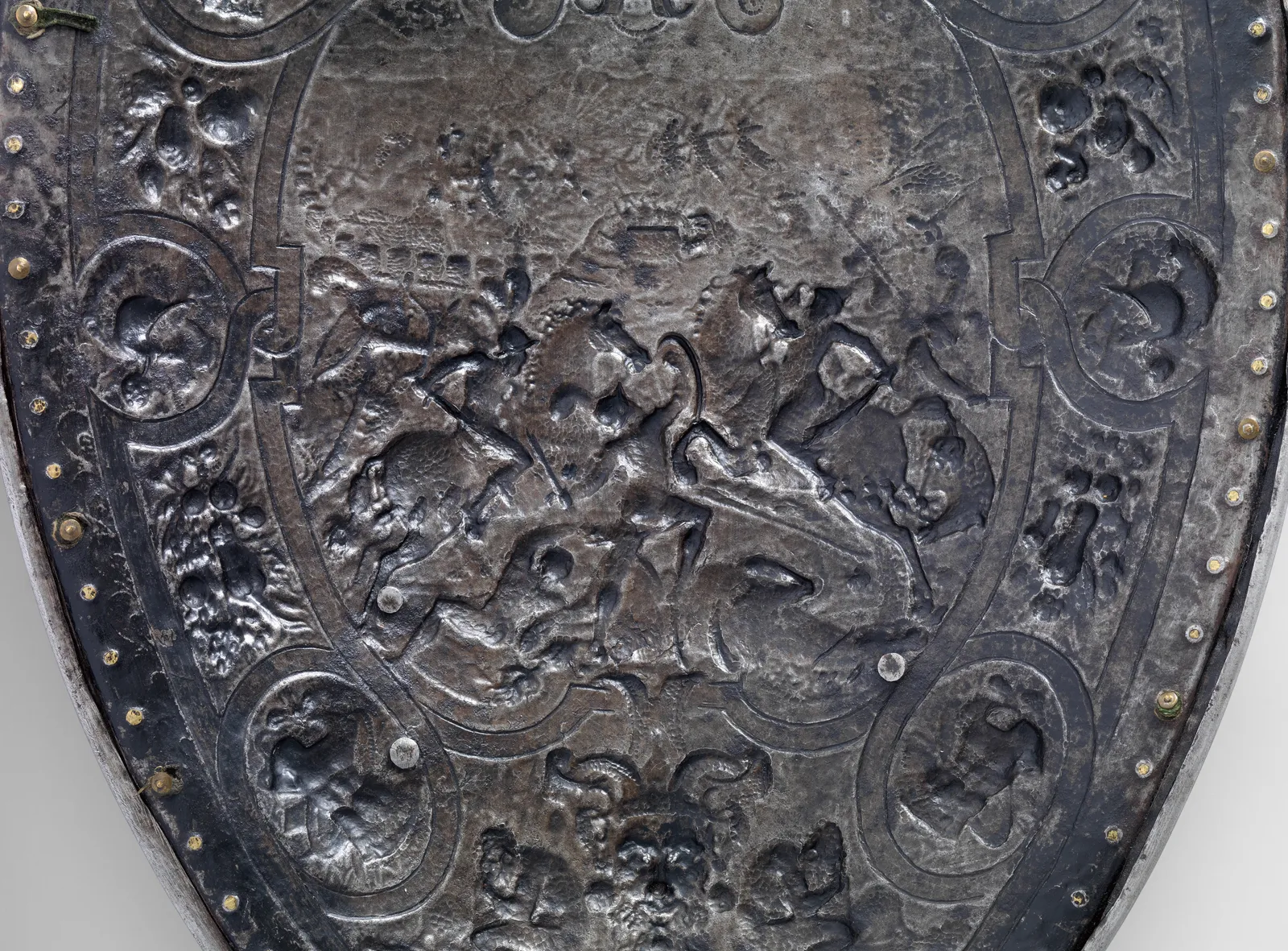
Shield of Achilles
A shield of five layers forged by a god, with the whole world engraved on its face.
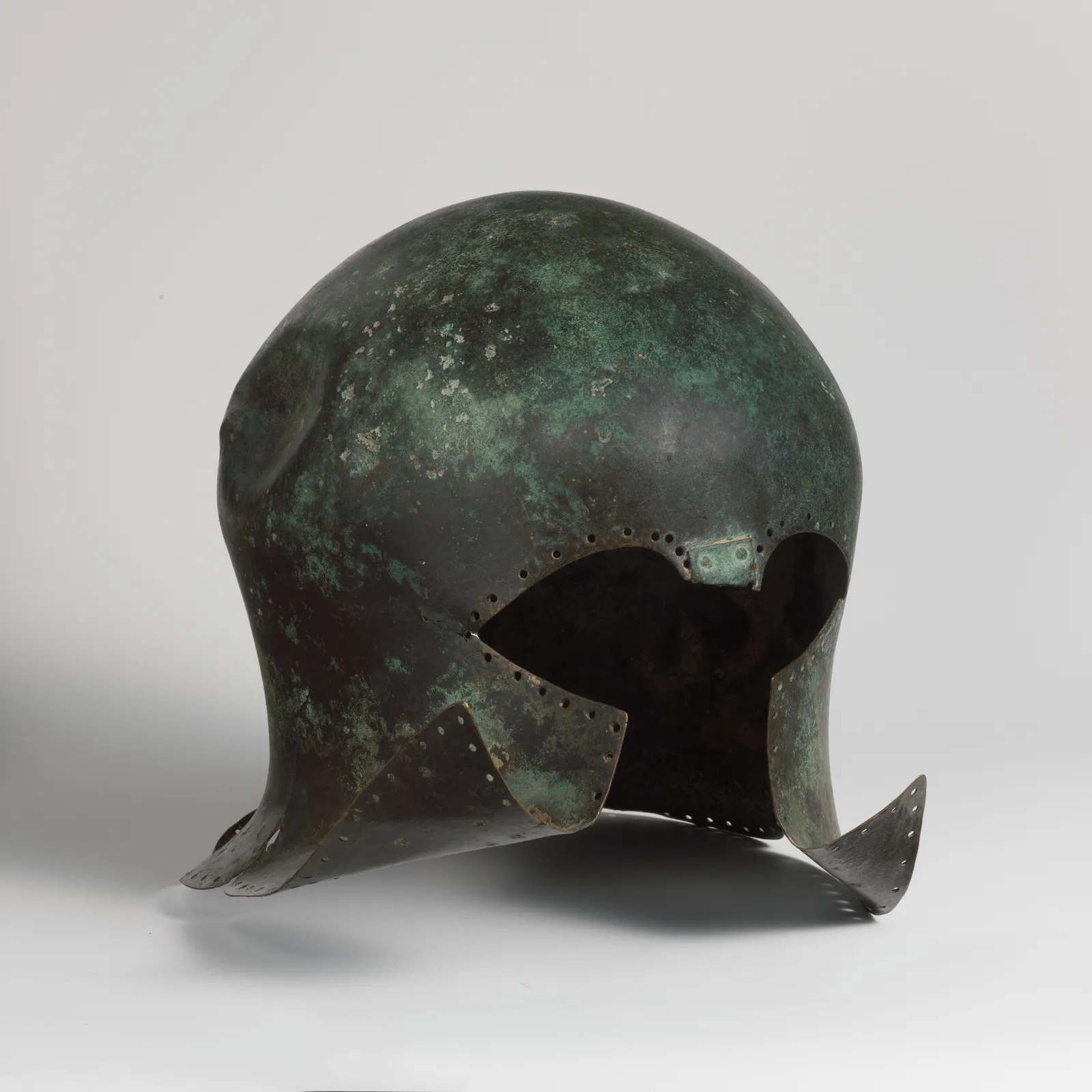
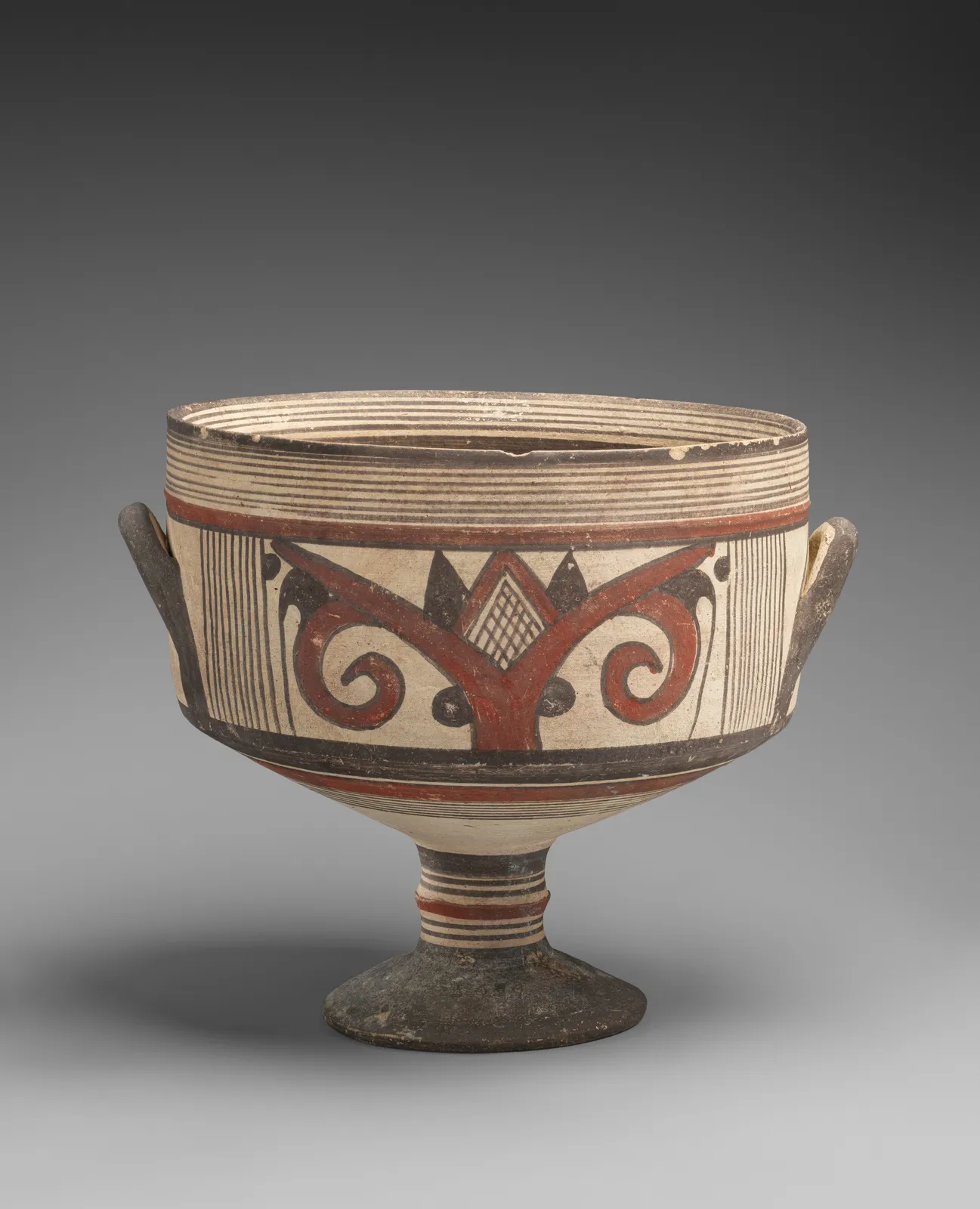
Ambrosia & Nectar
Keeps the gods ageless and deathless.