Greek
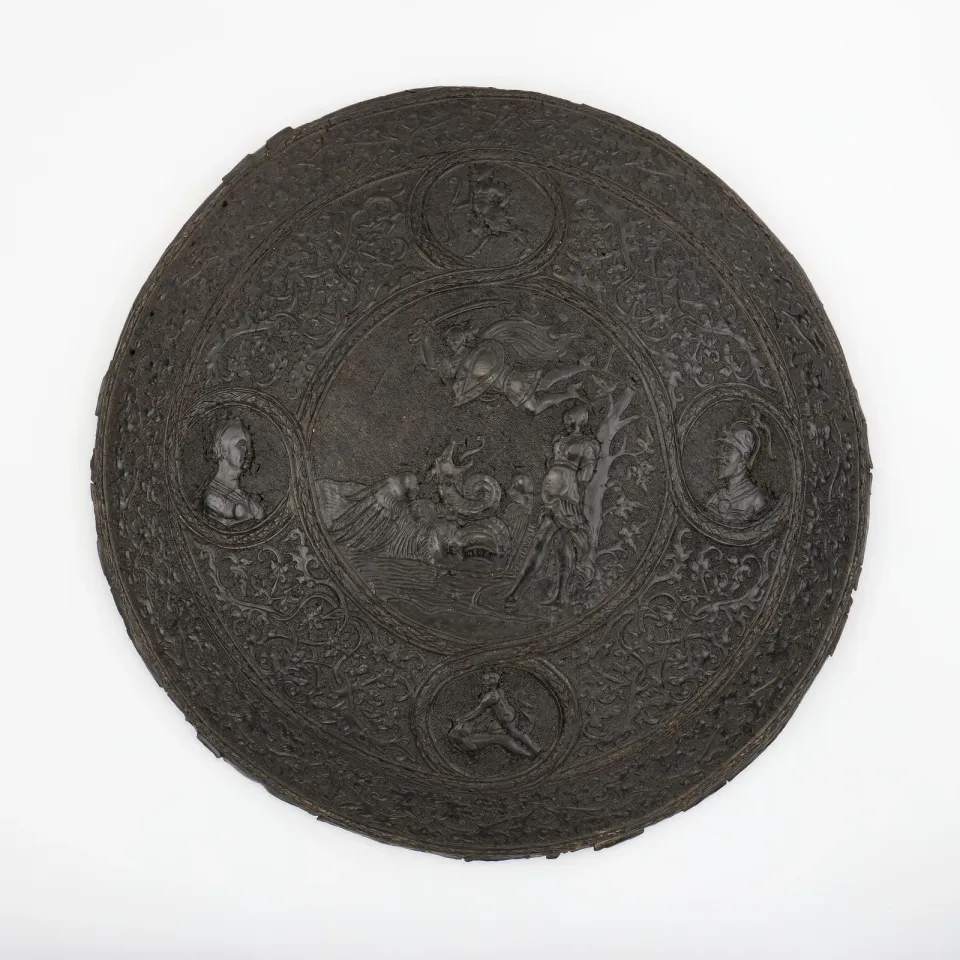
Aegis
Aegis (Αἰγίς)
Shaken, it raises storms and sends enemy armies fleeing in terror.
ArmorFirst recorded c. 750 BCE
Loading artifact…
Photograph: A tin-bronze scepter head made on Cyprus about 1450–1050 BCE. An animal head is attached to the end of a hollow tube, with red and blue inlays in its eyes and forehead. The surface is rough with corrosion.
Focus the photograph, then use the arrow keys to pan and the plus and minus keys to zoom. The buttons at the lower left also move it. Press a numbered button on the photograph to zoom to that note.
Skeptron Agamemnonos
The sign of kingship handed down from Zeus; whoever held it ruled many islands and all Argos.
In Book 2 of the Iliad, Agamemnon gathers the Greek army and rises, leaning on his scepter. The poem tells its history: Hephaestus made it and gave it to Zeus; Zeus gave it to his messenger Hermes, and Hermes to Pelops, driver of horses. Pelops gave it to Atreus; Atreus at his death left it to Thyestes, and Thyestes handed it on to Agamemnon, to rule many islands and all Argos.
In the same book Odysseus takes the scepter and with it turns back the soldiers who are about to scatter, and strikes Thersites, who mocks the kings, across the back with it.
The Roman-era traveler Pausanias wrote that the people of Chaeronea in Greece called this scepter 'the Spear,' worshipped it as a god and offered sacrifices to it every day.
The photograph shows Tin-bronze scepter head(Cypriot, ca. 1450–1050 BCE), a real museum object that evokes the legendary artifact.
Aegis (Αἰγίς)
Shaken, it raises storms and sends enemy armies fleeing in terror.
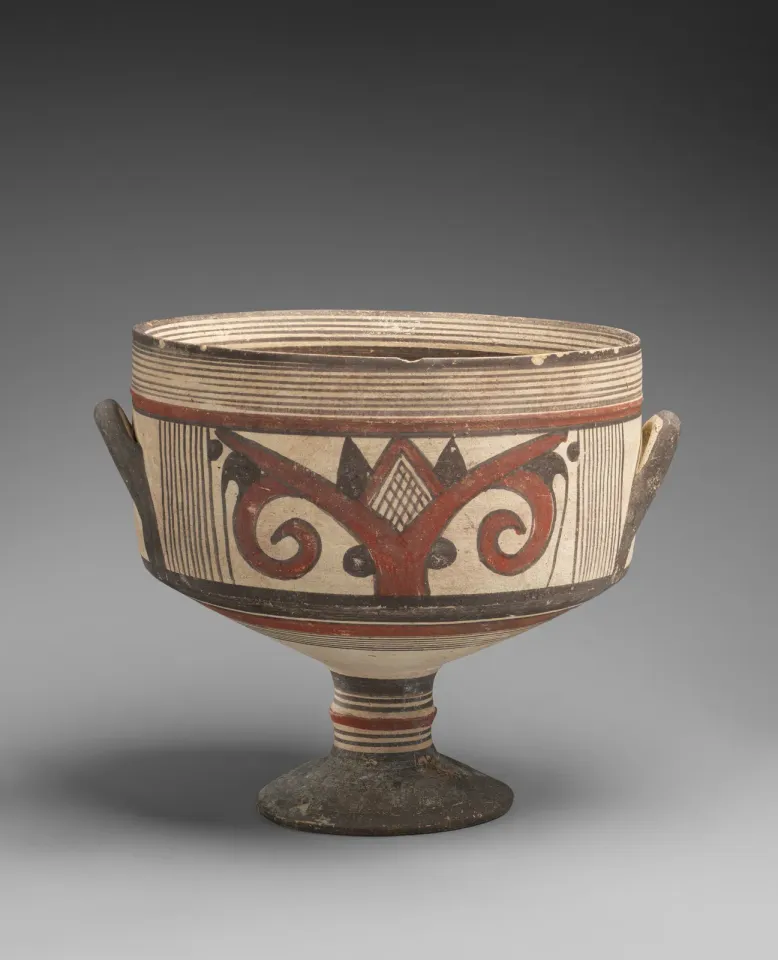
Ambrosia & Nectar
Keeps the gods ageless and deathless.
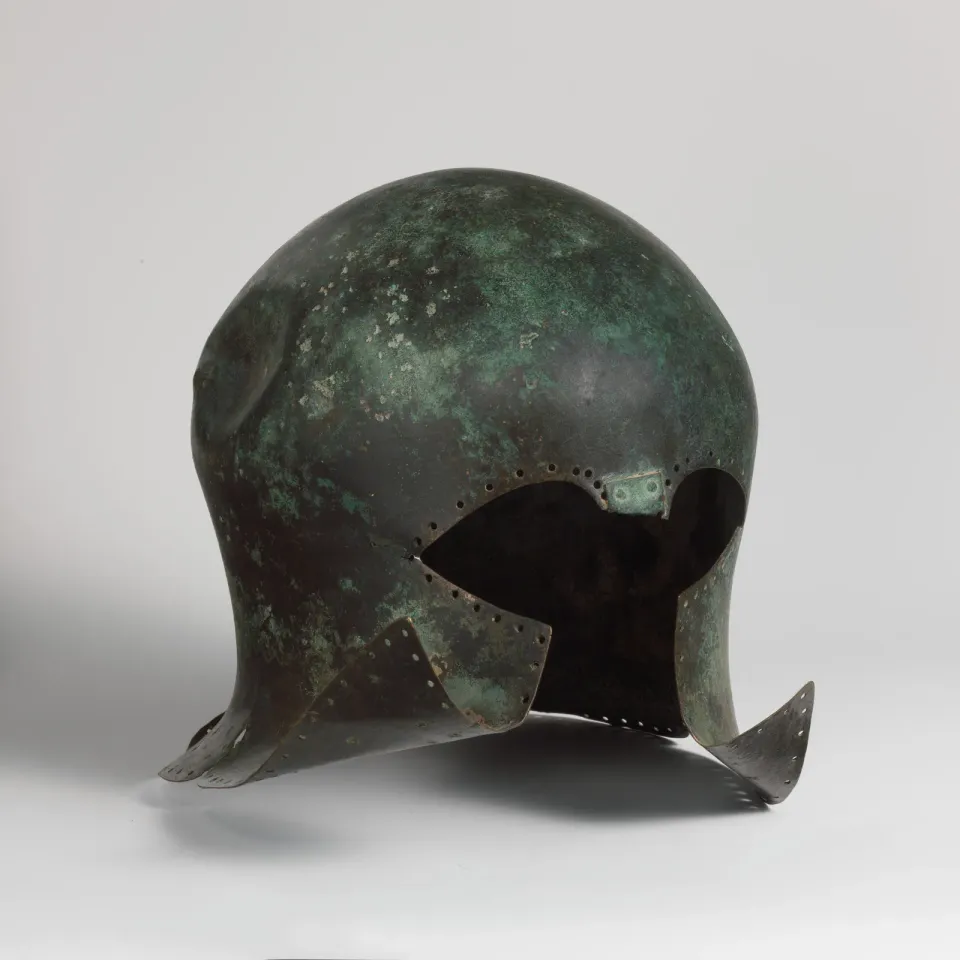
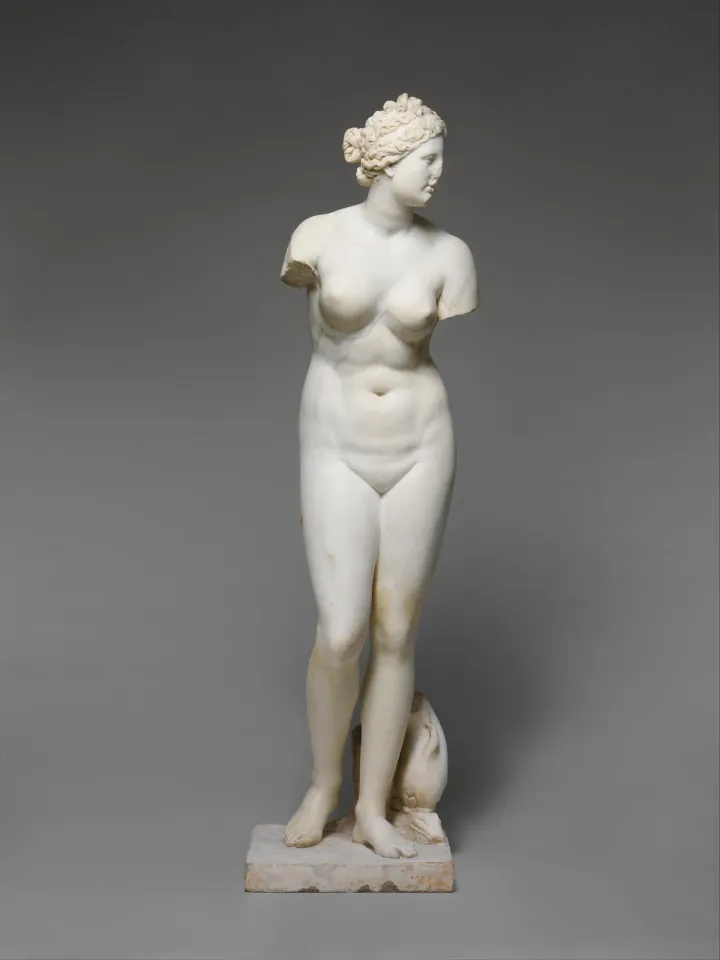
Kestos Himas (Κεστὸς ἱμάς)
Embroidered with love, longing and beguiling words, it makes anyone fall in love.