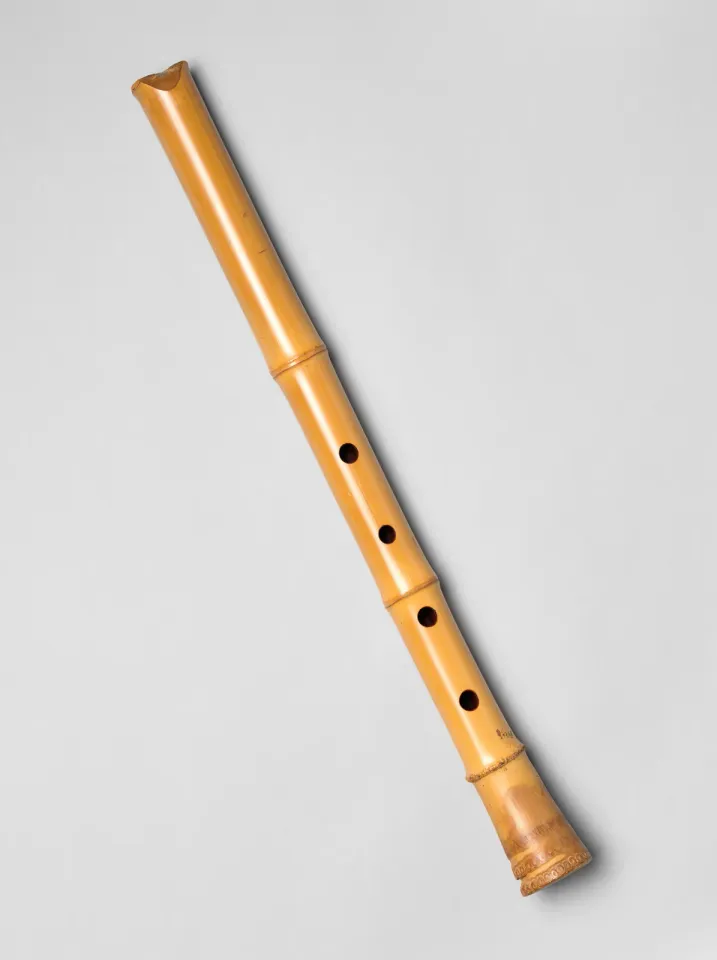
Korean
Manpasikjeok
萬波息笛
When played, enemy armies retreat, illness is cured, drought brings rain and rough waves grow calm.
TreasureFirst recorded 1281
Loading artifact…
Photograph: A Joseon bridal robe (hwarot) of the late nineteenth century. The red silk robe with outspread sleeves is lavishly embroidered with lotuses, peonies, birds and butterflies, with multicolored stripes on the sleeves and white cuffs at the ends.
Focus the photograph, then use the arrow keys to pan and the plus and minus keys to zoom. The buttons at the lower left also move it. Press a numbered button on the photograph to zoom to that note.
細綃 (延烏郞 細烏女)
When a sacrifice was offered to heaven with this silk, the lost light of Silla's sun and moon returned.
In the fourth year of King Adalla of Silla (157), Yeono-rang, who lived on the shore of the East Sea, was gathering seaweed on a rock when the rock carried him across to Japan. The people there thought him an extraordinary man and made him their king. His wife Seo-nyeo, searching for him, saw his shoes on the rock and stepped onto it, and the same rock carried her to Japan, where she became queen.
Then in Silla the sun and moon lost their light. The official who watched the sun and moon reported that their essence had gone away to Japan. When the king sent envoys to bring the couple back, Yeono-rang said it was the will of heaven and he could not return, but he gave them fine silk woven by Seo-nyeo, saying that a sacrifice offered to heaven with it would suffice.
When the sacrifice was offered with the silk the envoys brought, the sun and moon shone again. The king kept the silk in the royal storehouse as a national treasure, named the storehouse Gwibigo, and called the place of the sacrifice Yeongil-hyeon, "the county that welcomes the sun." It is today's Yeongil Bay in Pohang, North Gyeongsang Province.
The photograph shows Bridal Robe (Hwarot)(Korea, Joseon dynasty (1392–1910), late 1800s), a real museum object that evokes the legendary artifact.
萬波息笛
When played, enemy armies retreat, illness is cured, drought brings rain and rough waves grow calm.
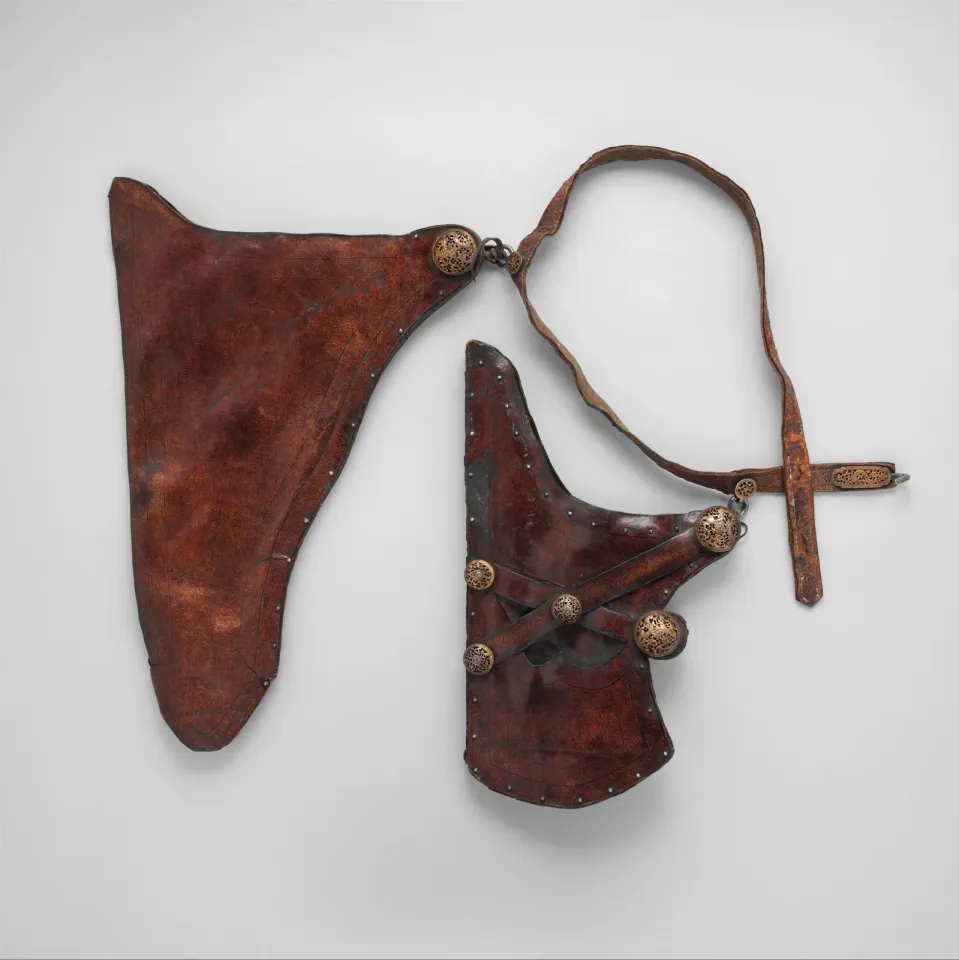
朱蒙之弓
Every arrow hit its mark, so that "jumong," meaning a fine archer, became his name.
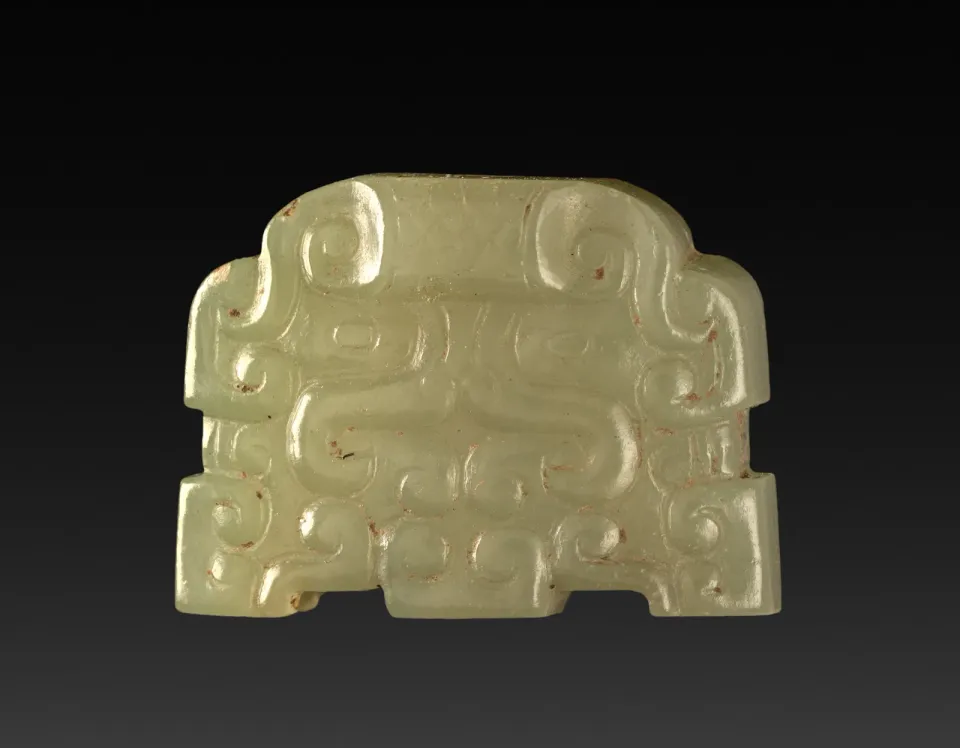
金錐子 (방이 설화)
Strike it, saying "Out with gold!", and whatever one wishes comes pouring out.
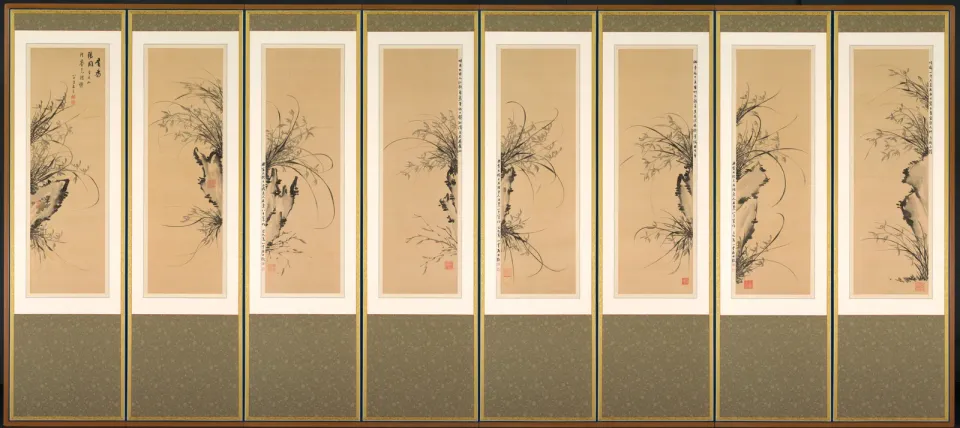
浮石
A great rock that Seonmyo became; it rose into the air and drove off the band that stood in Uisang's way.