Egypt & Near East
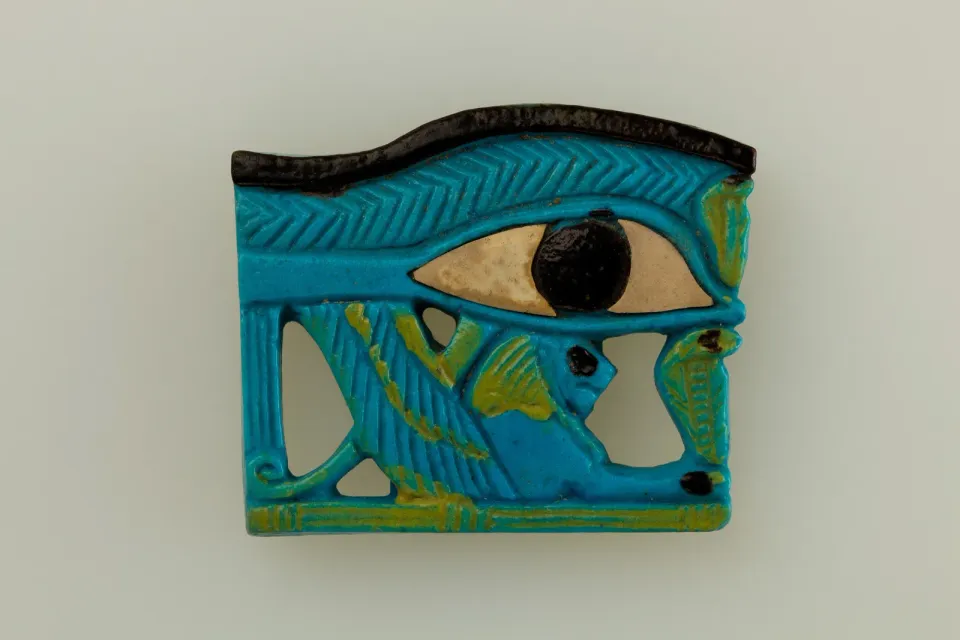
Eye of Horus
Wedjat (Eye of Horus)
An amulet that heals what is hurt and keeps the body whole.
JewelFirst recorded c. 2400 BCE
Loading artifact…
Photograph: A page from a Shahnameh made in Iran about 1330–40, "Zal in the Simurgh's Nest." Persian verses fill several columns at the top and right; a small painting at lower left shows the great red-headed Simurgh, the naked child Zal on a rocky mountain and two white animals.
Focus the photograph, then use the arrow keys to pan and the plus and minus keys to zoom. The buttons at the lower left also move it. Press a numbered button on the photograph to zoom to that note.
Par-e Simorgh
Burn it, and wherever you are, the Simurgh will fly to your aid.
A son was born to the Iranian hero Sam, but the baby's hair was white like an old man's. Thinking him the child of a demon, Sam abandoned him on Mount Alborz. The Simurgh, a divine bird that nested on the summit, carried the baby off and raised him with her own young, and he grew into the gallant young Zal.
When the repentant Sam came looking for his son, the Simurgh gave Zal some of her feathers as she let him go. If trouble came, she told him, he should burn a feather and she would fly to help him at once. Later, when Zal's wife Rudabeh was near death in childbirth, Zal burned a feather. The Simurgh came and showed how to deliver the child by cutting open her belly and how to heal the wound, and the child so born was Rostam, the greatest hero of Iran.
When Rostam was gravely wounded fighting the invincible prince Esfandiyar, Zal burned a feather again. The Simurgh healed Rostam's wounds and told him to make an arrow from a tamarisk branch and shoot Esfandiyar in the eyes.
The photograph shows "Zal in the Simurgh's Nest", Folio from a Shahnama (Book of Kings)(Iran, ca. 1330–40), a real museum object that evokes the legendary artifact.
Wedjat (Eye of Horus)
An amulet that heals what is hurt and keeps the body whole.
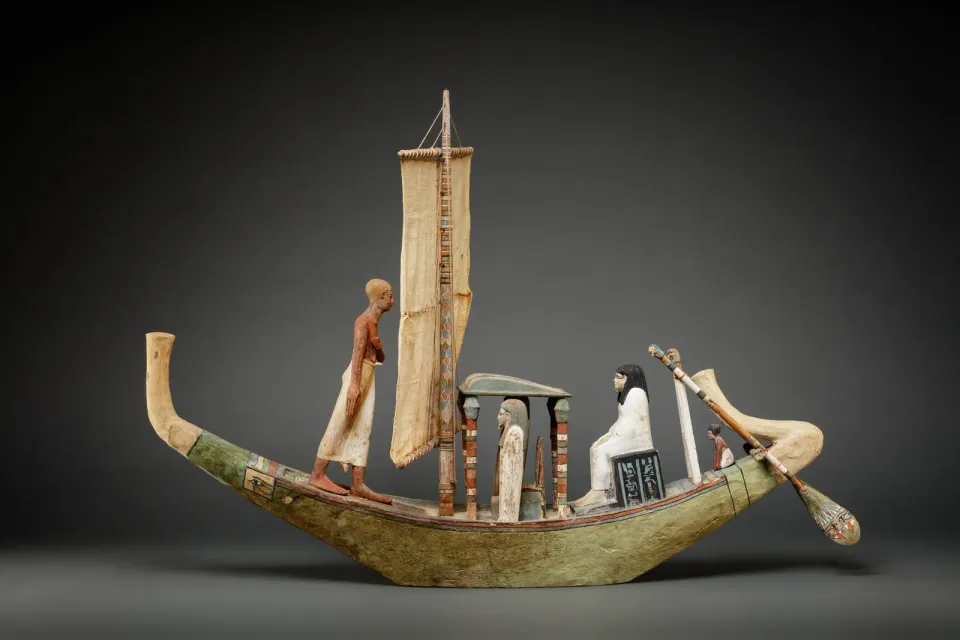
Solar Barque of Ra
Crossing the sky by day and the underworld by night, it makes the sun rise again.
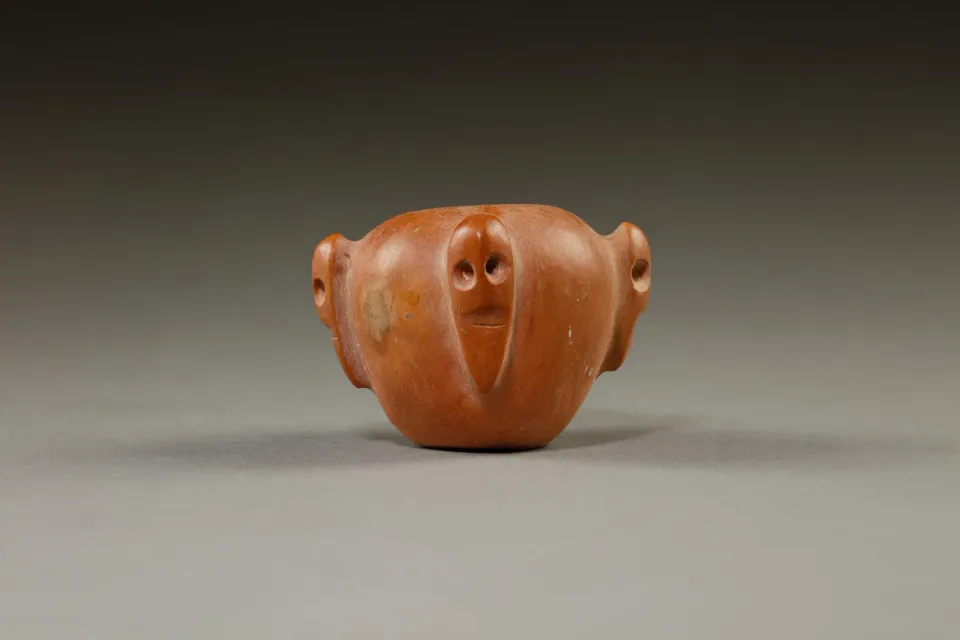
Šar-ur
It speaks, flies off on its own to spy on the enemy, and reports back to its master.
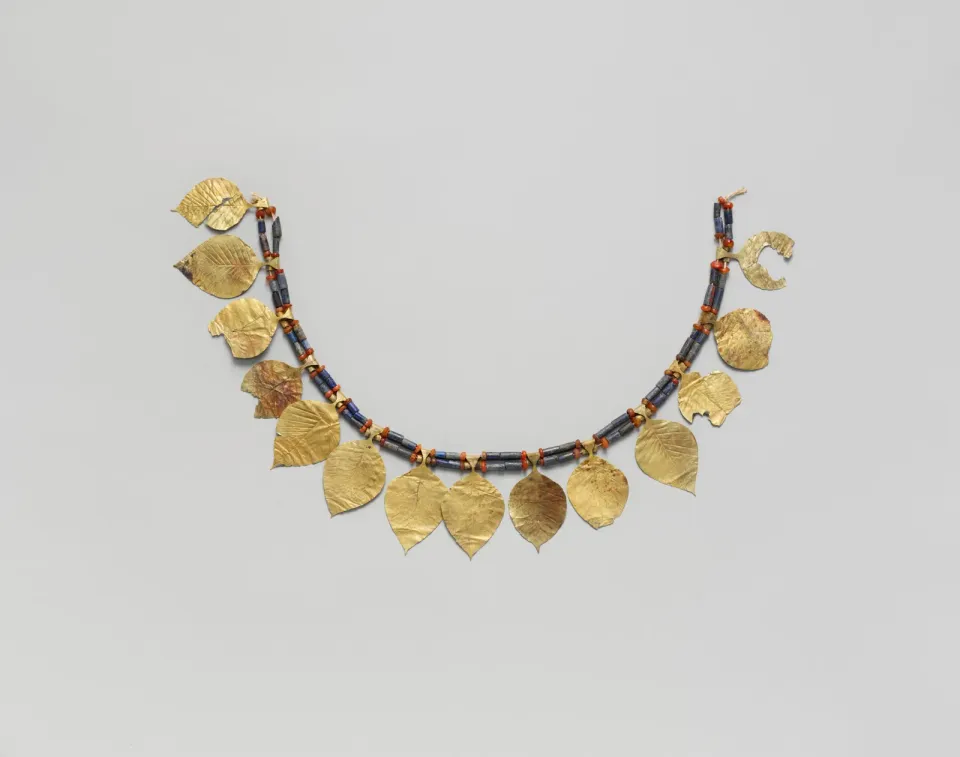
Seven Me of Inanna
Seven ornaments holding the goddess's powers. With each one she removes, she loses her strength.