Greek
Aegis
Aegis (Αἰγίς)
Shaken, it raises storms and sends enemy armies fleeing in terror.
ArmorFirst recorded c. 750 BCE
Loading artifact…
Photograph: A Roman bronze statuette of Mercury (Hermes) from the first century CE. A young god with small wings sprouting from his hair stands with a cloak over his left shoulder and sandals on his feet, holding a purse in his right hand.
Focus the photograph, then use the arrow keys to pan and the plus and minus keys to zoom. The buttons at the lower left also move it. Press a numbered button on the photograph to zoom to that note.
Talaria
Bound on the feet, they carried their wearer as swift as the wind over the sea and the boundless earth.
In Book 24 of Homer's Iliad, Zeus sends Hermes to guide Priam, the old king of Troy, to the tent of Achilles. At once Hermes binds beautiful sandals beneath his feet: immortal, golden sandals that carried him as swift as the wind over the sea and over the boundless earth.
In the Odyssey too, Hermes puts on the same sandals and crosses the sea to the island of the nymph Calypso to deliver Zeus's command to let Odysseus go. Homer never says the sandals had wings, but later painters and sculptors gave Hermes small wings on his sandals and cap. The Romans called these winged sandals talaria.
The hero Perseus also flew in winged sandals in search of Medusa. The Shield of Heracles, handed down under Hesiod's name, sings of winged sandals on Perseus's feet.
The photograph shows Bronze statuette of Mercury(Roman, 1st century CE), a real museum object that evokes the legendary artifact.
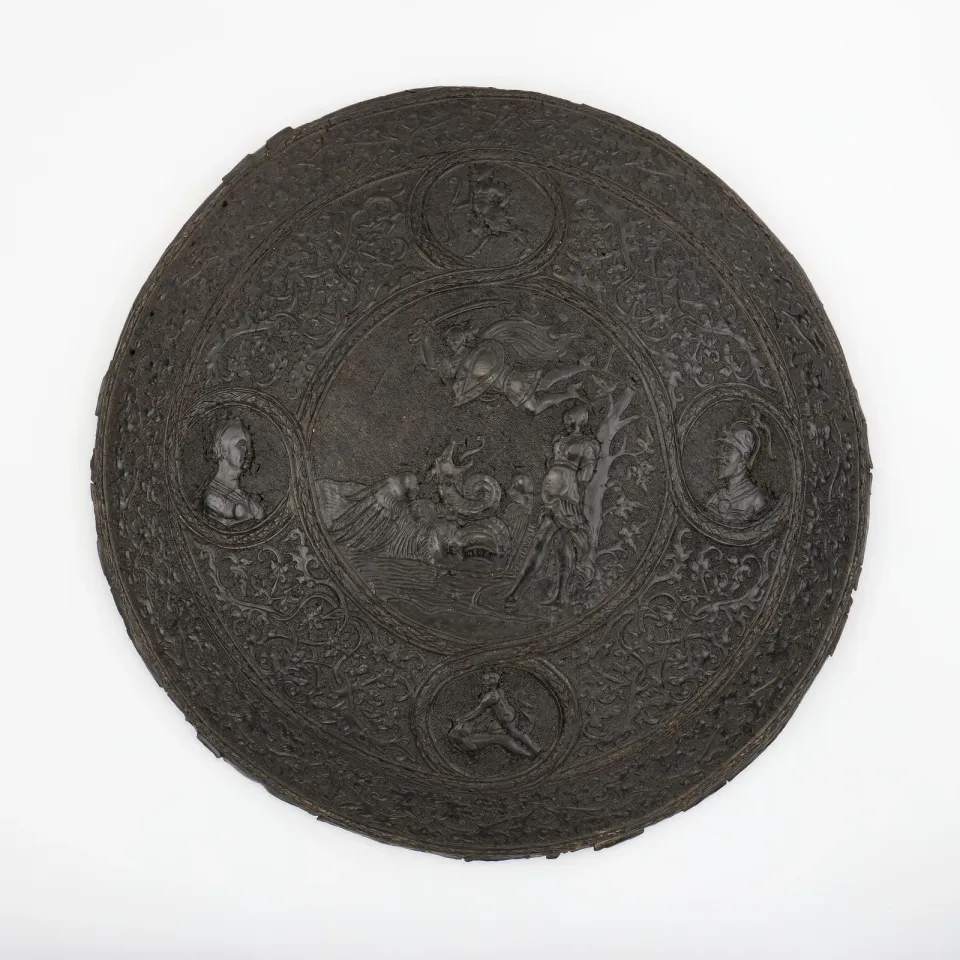
Aegis (Αἰγίς)
Shaken, it raises storms and sends enemy armies fleeing in terror.
Ambrosia & Nectar
Keeps the gods ageless and deathless.
Kestos Himas (Κεστὸς ἱμάς)
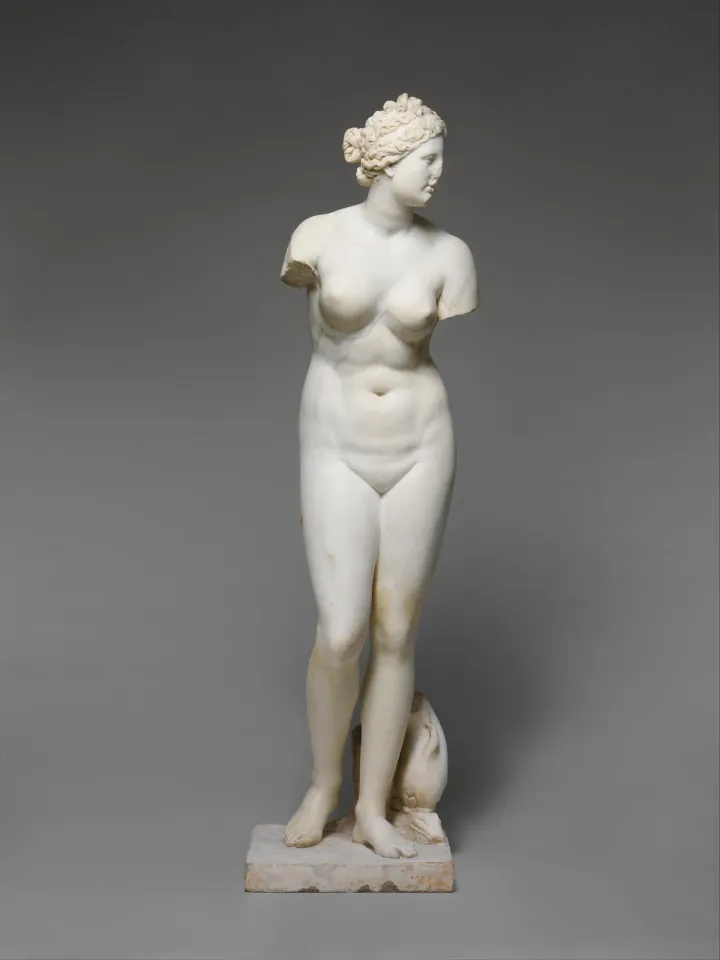
Embroidered with love, longing and beguiling words, it makes anyone fall in love.