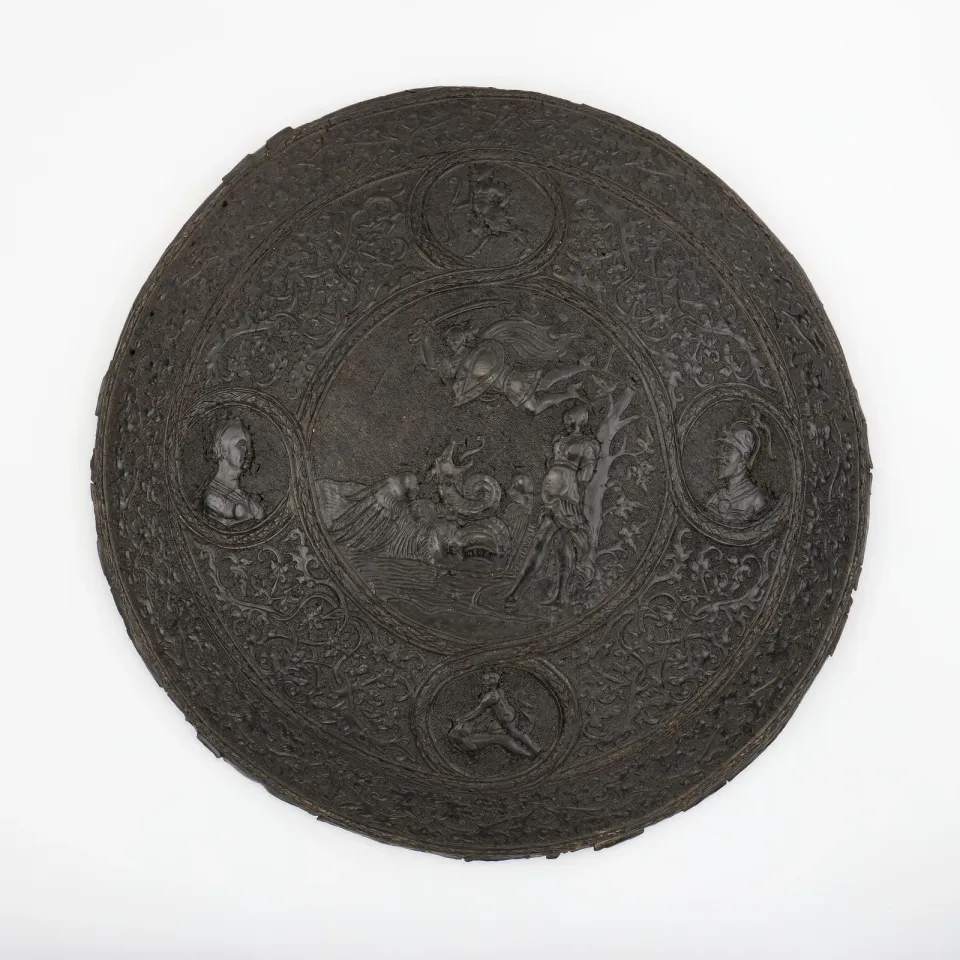
Greek
Aegis
Aegis (Αἰγίς)
Shaken, it raises storms and sends enemy armies fleeing in terror.
ArmorFirst recorded c. 750 BCE
Loading artifact…
Photograph: The Trojan Horse, a painted enamel plaque from Limoges, France, about 1530–40. Before Troy, lined with walls and towers, people pull a huge white horse into the city; the plaque is set in a red velvet frame.
Focus the photograph, then use the arrow keys to pan and the plus and minus keys to zoom. The buttons at the lower left also move it. Press a numbered button on the photograph to zoom to that note.
Trojan Horse
A huge hollow wooden horse. The heroes hidden in its belly got inside the walls of Troy.
After besieging Troy for ten years without victory, the Greeks devised a trick. The carpenter Epeius, with Athena's help, built a huge hollow wooden horse, and Odysseus and other heroes hid in its belly. The rest of the army pretended to sail away and hid behind a nearby island.
In the Odyssey, the Trojans drag the horse into the city and then argue over whether to cut open its belly, throw it from a cliff or keep it as an offering to the gods. Helen walks around the horse imitating the voices of the heroes' wives, but Odysseus stops the mouths of his comrades, who are about to leap out.
The Roman poet Virgil sang in the Aeneid that the priest Laocoon struck the horse with a spear, saying he feared the Greeks even when they bore gifts. That night the heroes came out of the horse and opened the gates, and Troy burned and fell.
The photograph shows Plaque Depicting the Trojan Horse from the Aeneid(France, Limoges, c. 1530–40), a real museum object that evokes the legendary artifact.
Aegis (Αἰγίς)
Shaken, it raises storms and sends enemy armies fleeing in terror.
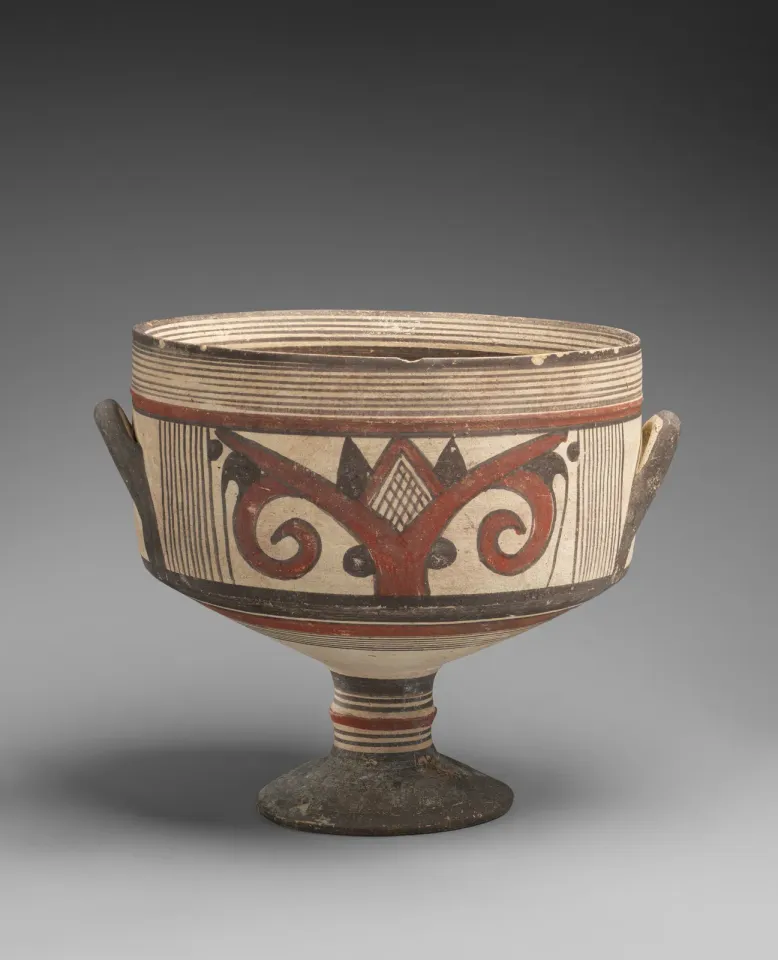
Ambrosia & Nectar
Keeps the gods ageless and deathless.
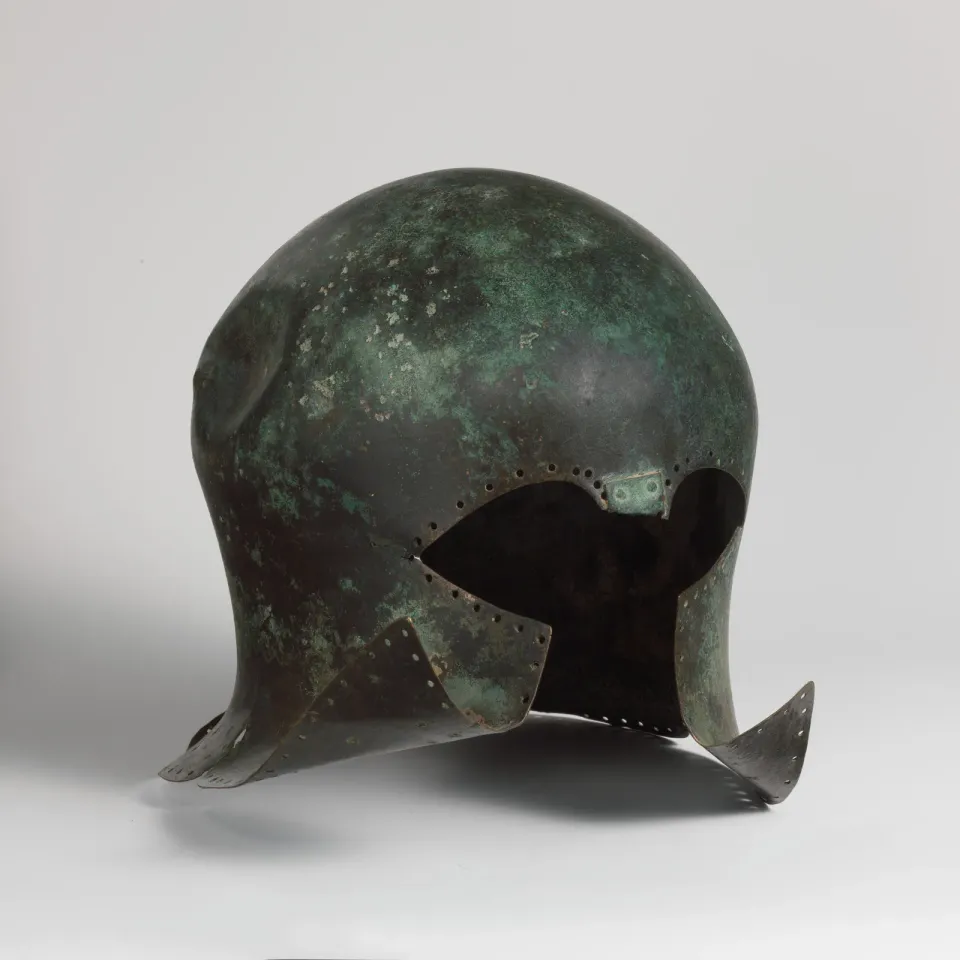
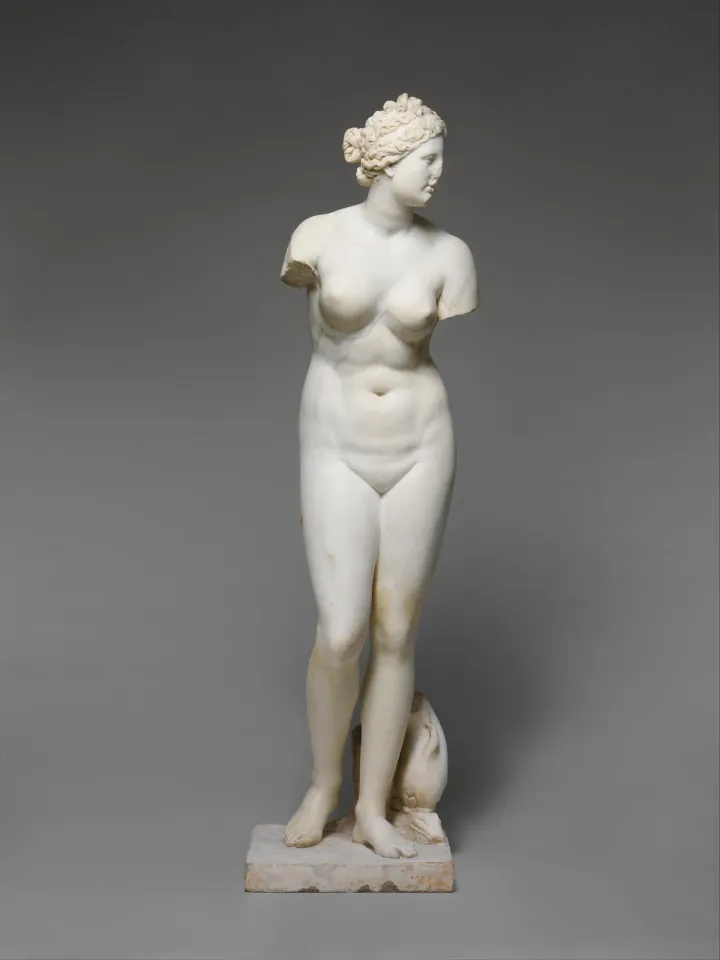
Kestos Himas (Κεστὸς ἱμάς)
Embroidered with love, longing and beguiling words, it makes anyone fall in love.