Egypt & Near East
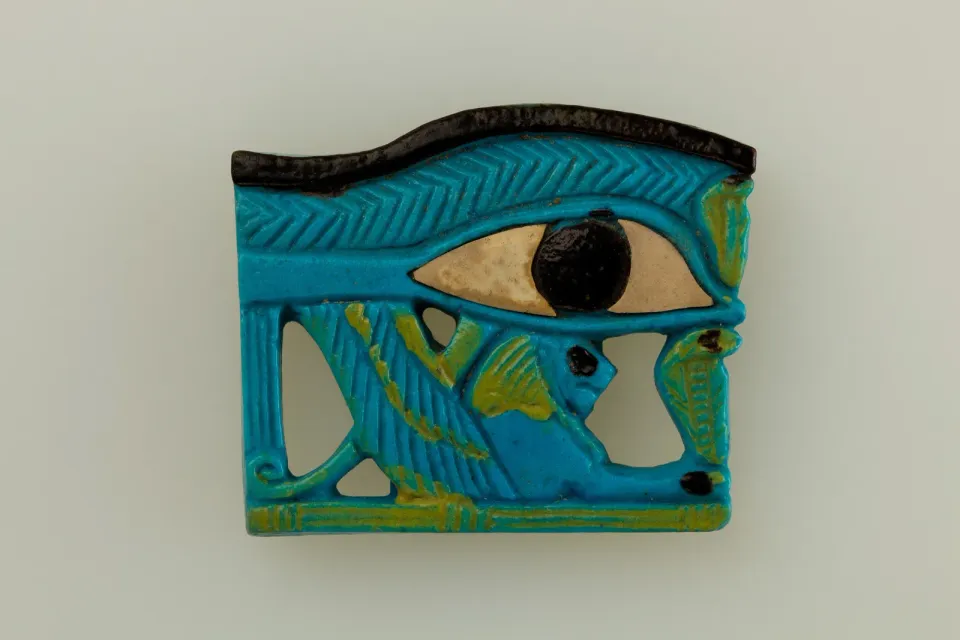
Eye of Horus
Wedjat (Eye of Horus)
An amulet that heals what is hurt and keeps the body whole.
JewelFirst recorded c. 2400 BCE
Loading artifact…
Photograph: A small crocodile figure made of Egyptian blue in the late Middle Kingdom of Egypt, about 1850–1700 BCE. The sky-blue crocodile lies flat on its belly with scales incised along its back. A museum number in red writing is visible at right.
Focus the photograph, then use the arrow keys to pan and the plus and minus keys to zoom. The buttons at the lower left also move it. Press a numbered button on the photograph to zoom to that note.
Webaoner's Wax Crocodile
Thrown into the water, a wax crocodile seven fingers long became a living crocodile seven cubits long.
The Westcar Papyrus contains tales in which the sons of King Khufu tell their father stories of the magicians of old. In one of them Webaoner, chief lector priest in the reign of King Nebka, learns that his wife is secretly meeting a commoner.
Webaoner took wax from an ebony chest, modeled a crocodile seven fingers long and recited a spell over it. Then he told his servant to throw the crocodile into the water when the man went to bathe in the garden pool. Thrown in, it became a great crocodile seven cubits long, seized the man and took him down into the water.
Seven days later Webaoner brought the king to the pool and called the crocodile out; when he picked it up in his hand, it turned back into wax. When the king gave the man over to the crocodile, it took him down to the bottom and vanished. The papyrus is a copy from about the seventeenth century BCE and is now in Berlin.
The photograph shows Crocodile figure(Late Middle Kingdom, ca. 1850–1700 B.C.), a real museum object that evokes the legendary artifact.
Wedjat (Eye of Horus)
An amulet that heals what is hurt and keeps the body whole.
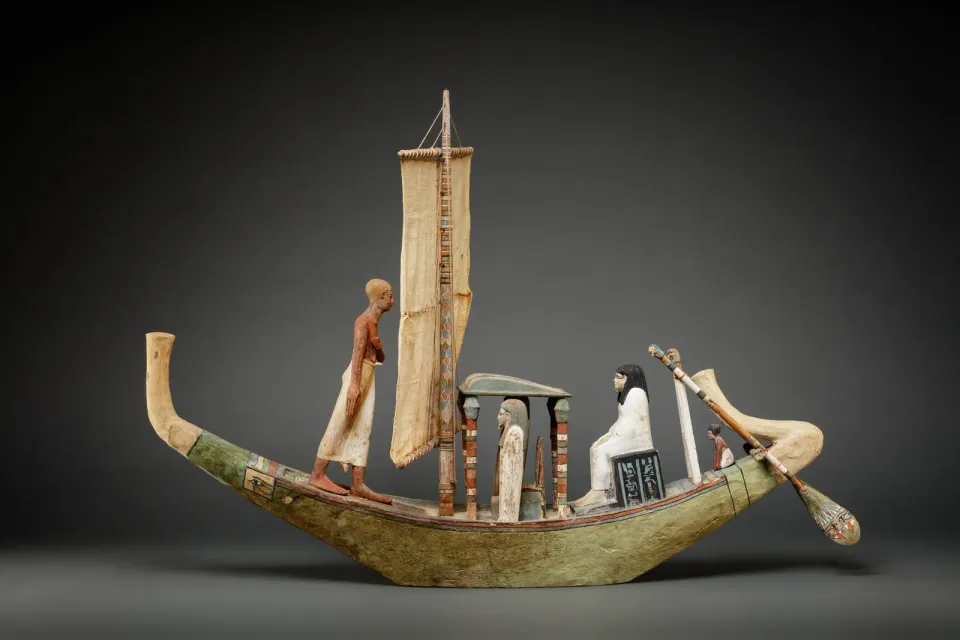
Solar Barque of Ra
Crossing the sky by day and the underworld by night, it makes the sun rise again.
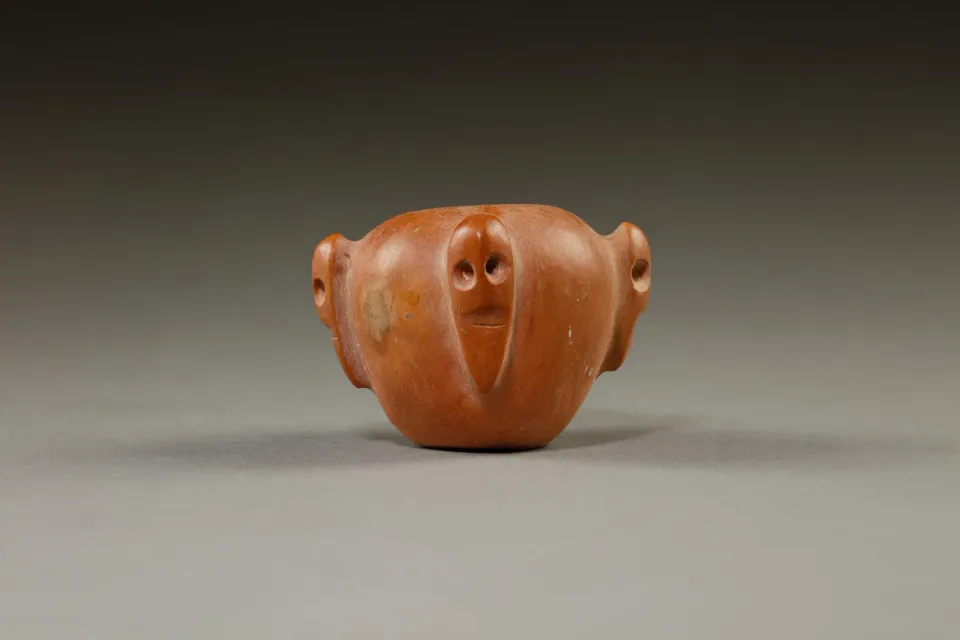
Šar-ur
It speaks, flies off on its own to spy on the enemy, and reports back to its master.
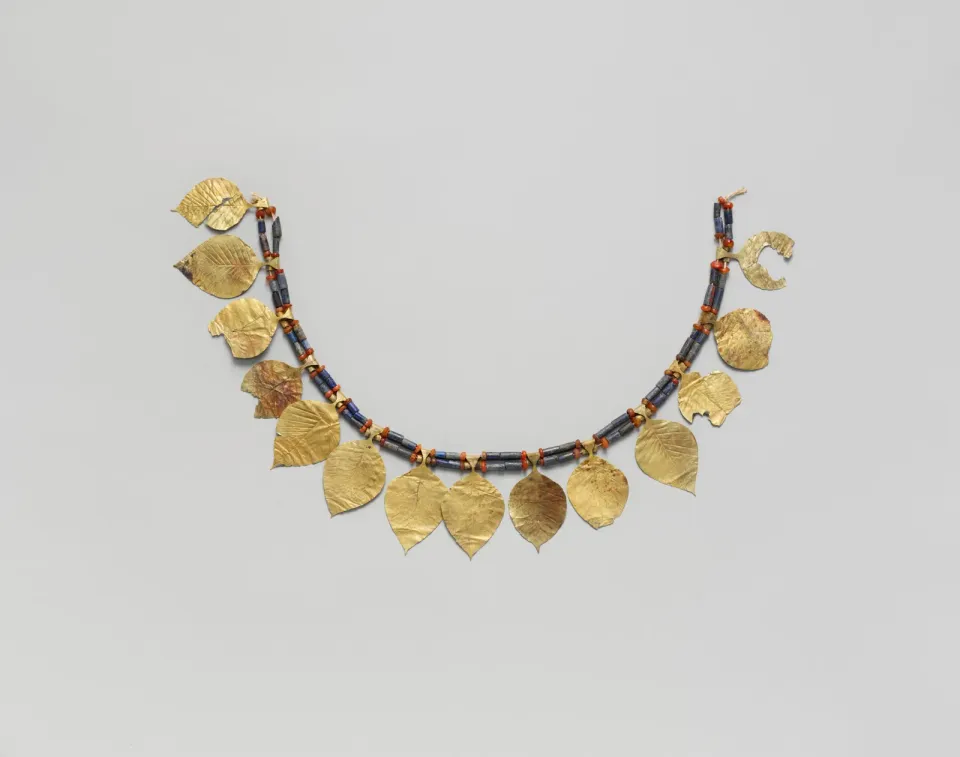
Seven Me of Inanna
Seven ornaments holding the goddess's powers. With each one she removes, she loses her strength.