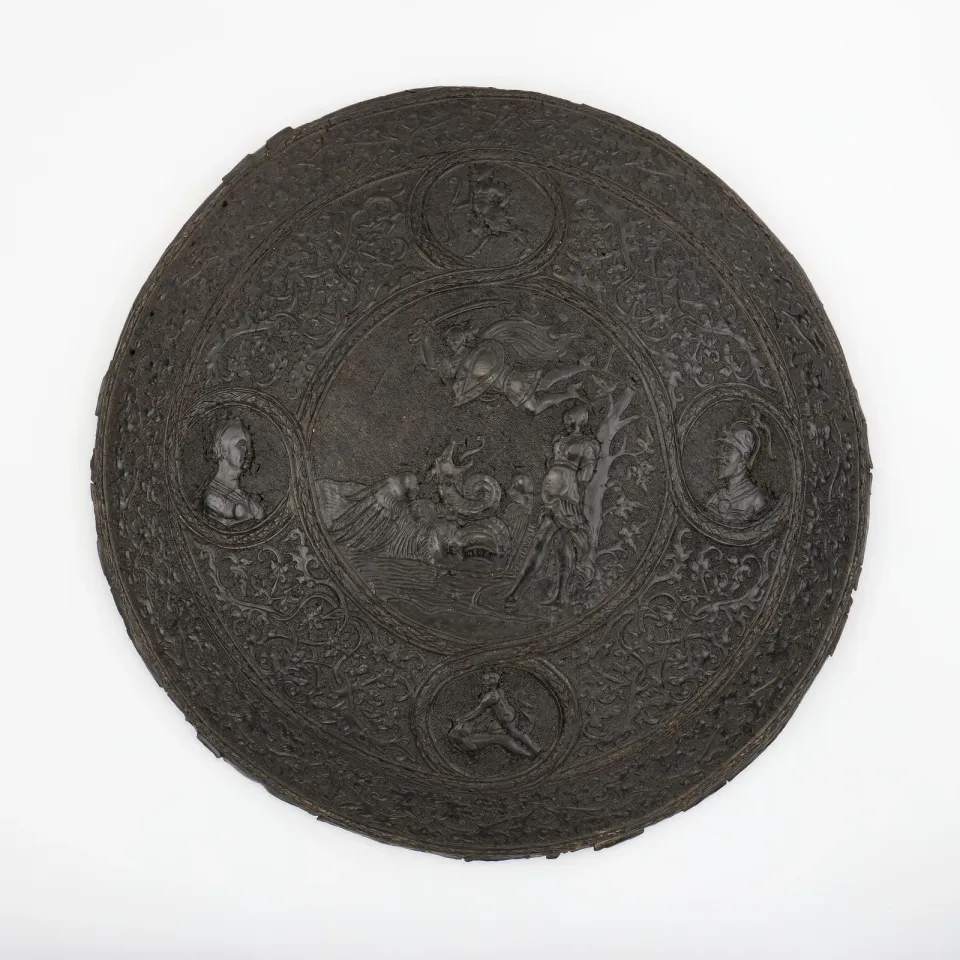
Greek
Aegis
Aegis (Αἰγίς)
Shaken, it raises storms and sends enemy armies fleeing in terror.
ArmorFirst recorded c. 750 BCE
Loading artifact…
Photograph: Hendrick Goltzius's engraving Icarus, 1588. Within a round frame, a young man who has lost his wings falls headfirst with the sun behind him; far below, Daedalus flies small over the sea, and a Latin inscription runs around the border.
Focus the photograph, then use the arrow keys to pan and the plus and minus keys to zoom. The buttons at the lower left also move it. Press a numbered button on the photograph to zoom to that note.
Wings of Daedalus and Icarus
Wings of feathers bound with thread and wax. Strapped to the arms, they let a person fly like a bird.
Daedalus, the master craftsman of Athens, built a labyrinth for King Minos of Crete to imprison the Minotaur. But after Theseus escaped from it, Daedalus was imprisoned with his son Icarus for having shown the way out. Land and sea alike were in Minos's hands.
Daedalus reasoned that the sky alone was open. He laid out feathers from small to large, bound them in the middle with thread and at the ends with wax, and curved them like a bird's wings. Fitting the wings on his son, he warned him: fly too low and the sea spray will weigh your wings down; fly too high and the sun's heat will melt them; keep to the middle.
Drunk with the joy of flight, Icarus climbed higher and higher. The sun melted the wax, the feathers scattered, and he fell into the sea. That sea is called the Icarian Sea, and the island nearby Icaria. Daedalus reached Sicily alone.
The photograph shows Icarus, from "The Four Disgracers"(Hendrick Goltzius, 1588), a real museum object that evokes the legendary artifact.
Aegis (Αἰγίς)
Shaken, it raises storms and sends enemy armies fleeing in terror.
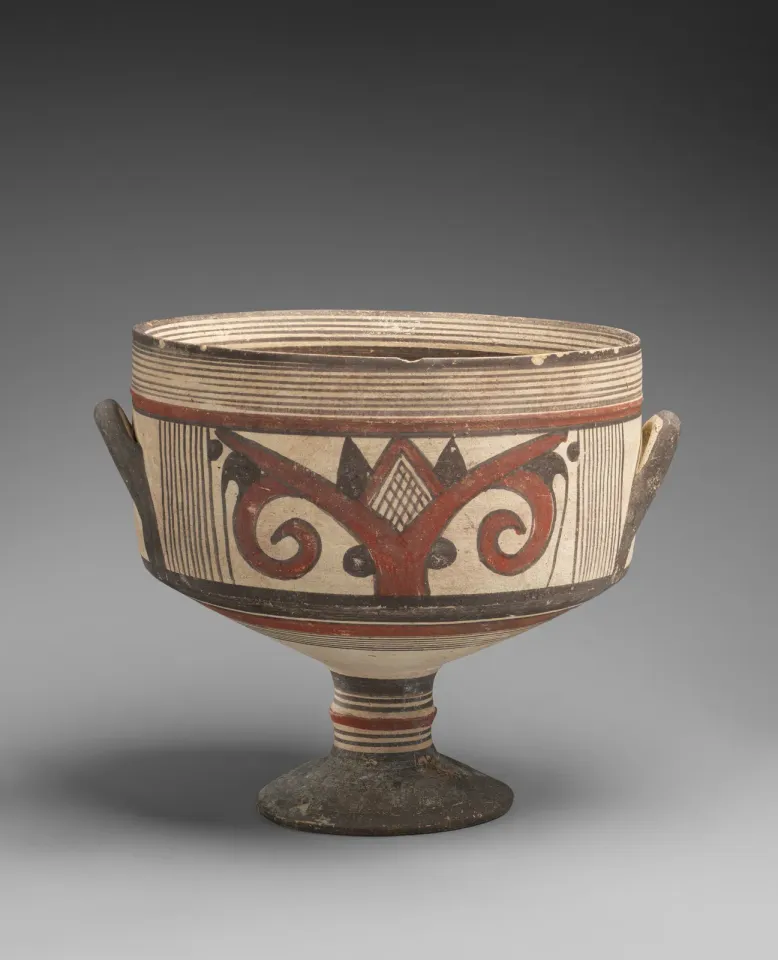
Ambrosia & Nectar
Keeps the gods ageless and deathless.
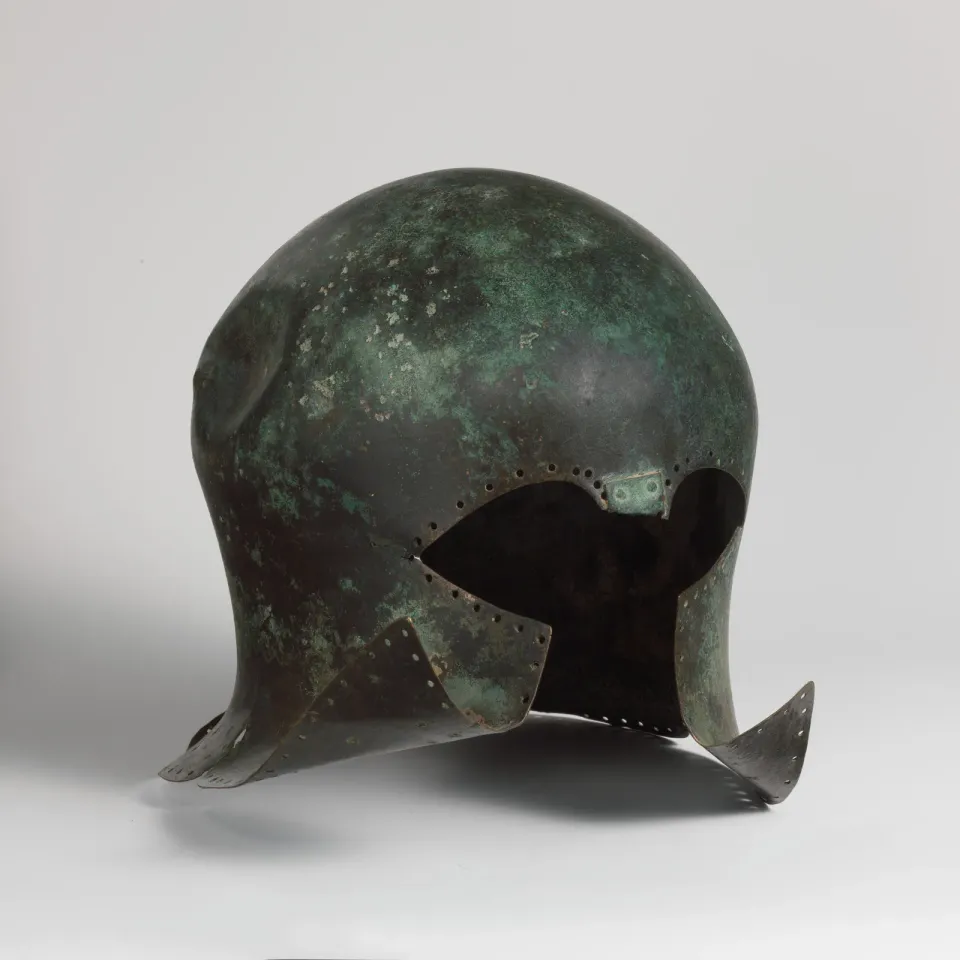
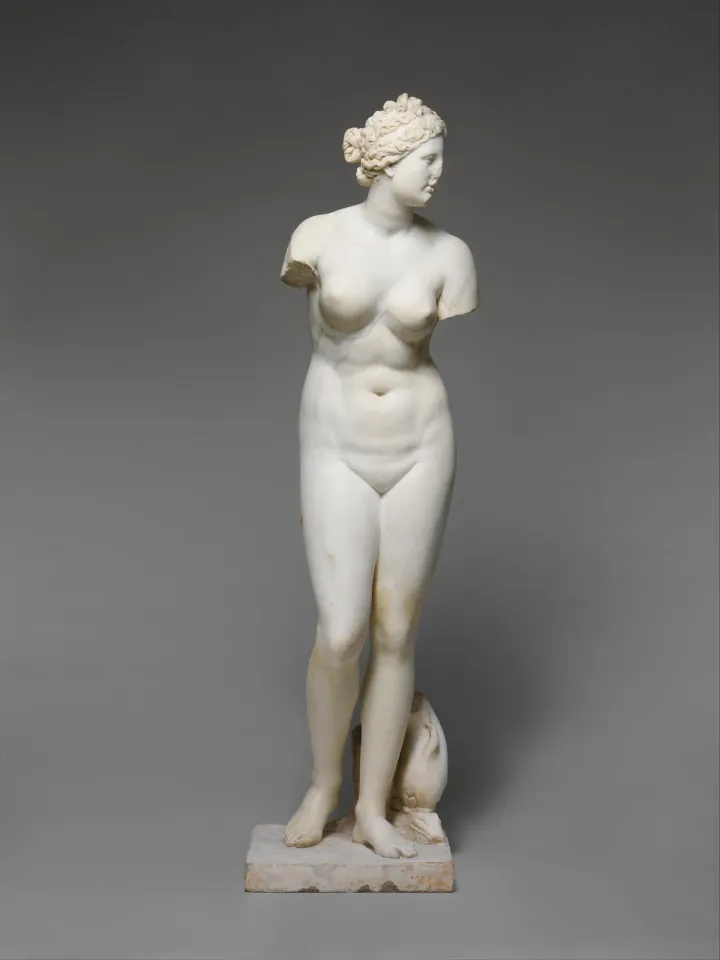
Kestos Himas (Κεστὸς ἱμάς)
Embroidered with love, longing and beguiling words, it makes anyone fall in love.