Greek
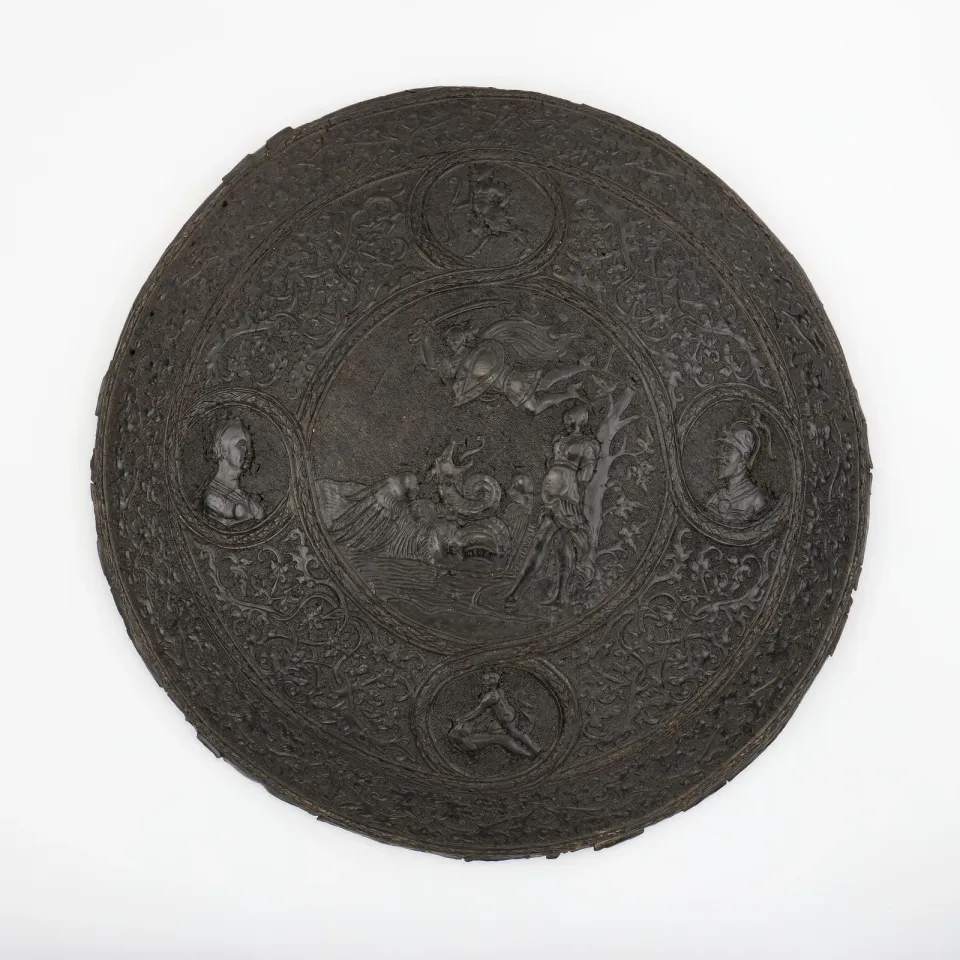
Aegis
Aegis (Αἰγίς)
Shaken, it raises storms and sends enemy armies fleeing in terror.
ArmorFirst recorded c. 750 BCE
Loading artifact…
Photograph: A black-figure neck-amphora made in Athens about 520–510 BCE. On the body a warrior departs for battle with a chariot drawn by four horses; below run bands of meander and bud patterns, and palmettes decorate the neck.
Focus the photograph, then use the arrow keys to pan and the plus and minus keys to zoom. The buttons at the lower left also move it. Press a numbered button on the photograph to zoom to that note.
Xanthos kai Balios
Horses swift as the wind that never aged or died. Xanthus foretold his master's death in a human voice.
In the Iliad the horses that draw Achilles' chariot are Xanthus and Balius. Born of Zephyrus, the west wind, and the Harpy Podarge, they were swift as the wind. The gods had given them to Peleus as a gift to celebrate his marriage to Thetis.
When Patroclus was killed by Hector, the two immortal horses stood still on the battlefield, heads bowed, shedding tears. Zeus pitied them, regretting that he had given horses that neither age nor die to a mortal man.
When Achilles returned to battle and rebuked his horses, the goddess Hera gave Xanthus a human voice. Xanthus foretold that this time they would bring their master back alive, but that the day of his death was near, and the Erinyes, goddesses of vengeance, soon took his voice away.
The photograph shows Black-Figure Neck-Amphora (Storage Vessel): Departing Warrior with Chariot (A); Battling Warriors (B)(Greek, Attic, c. 520–510 BCE), a real museum object that evokes the legendary artifact.
Aegis (Αἰγίς)
Shaken, it raises storms and sends enemy armies fleeing in terror.
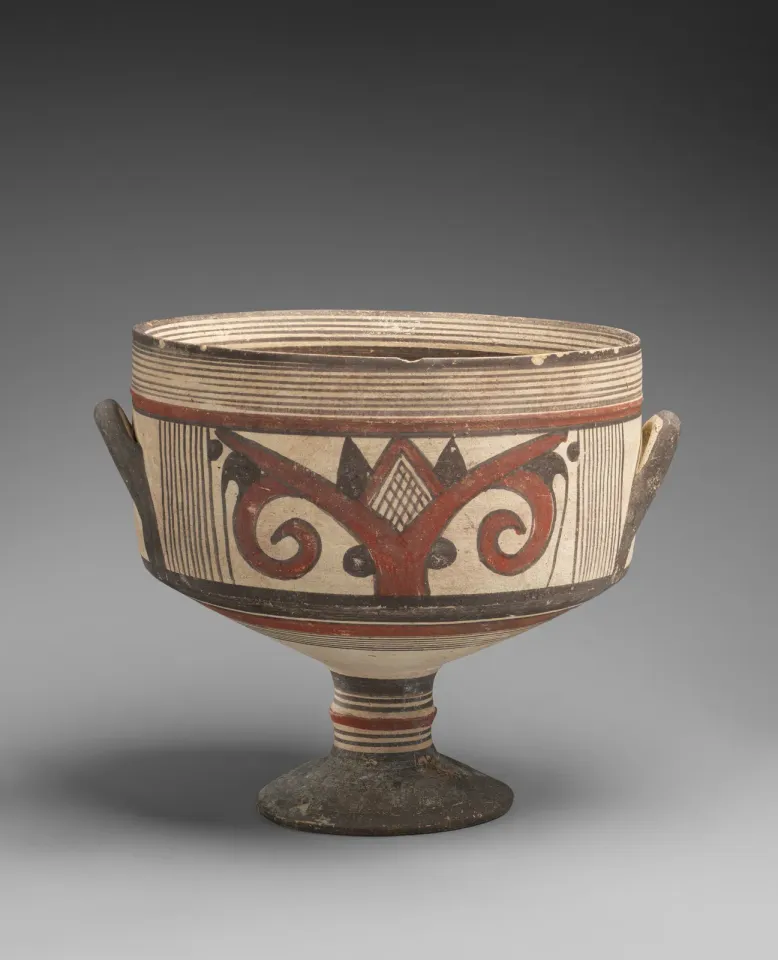
Ambrosia & Nectar
Keeps the gods ageless and deathless.
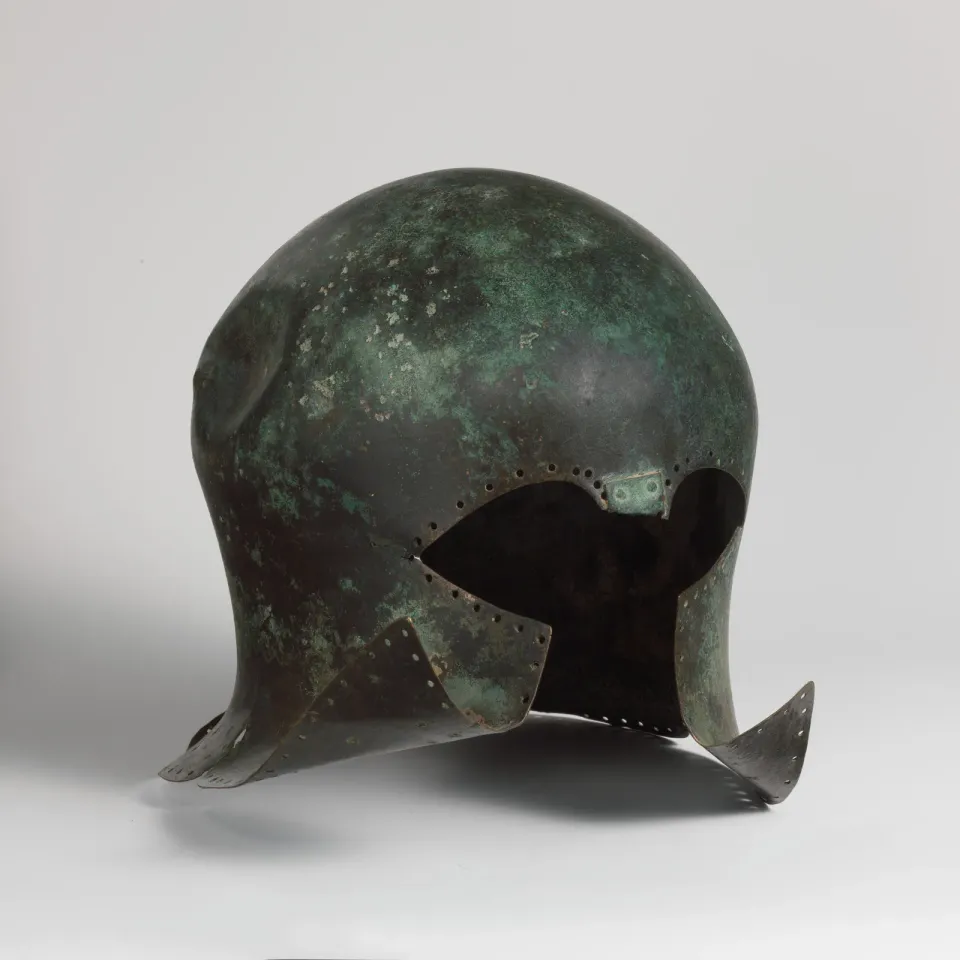
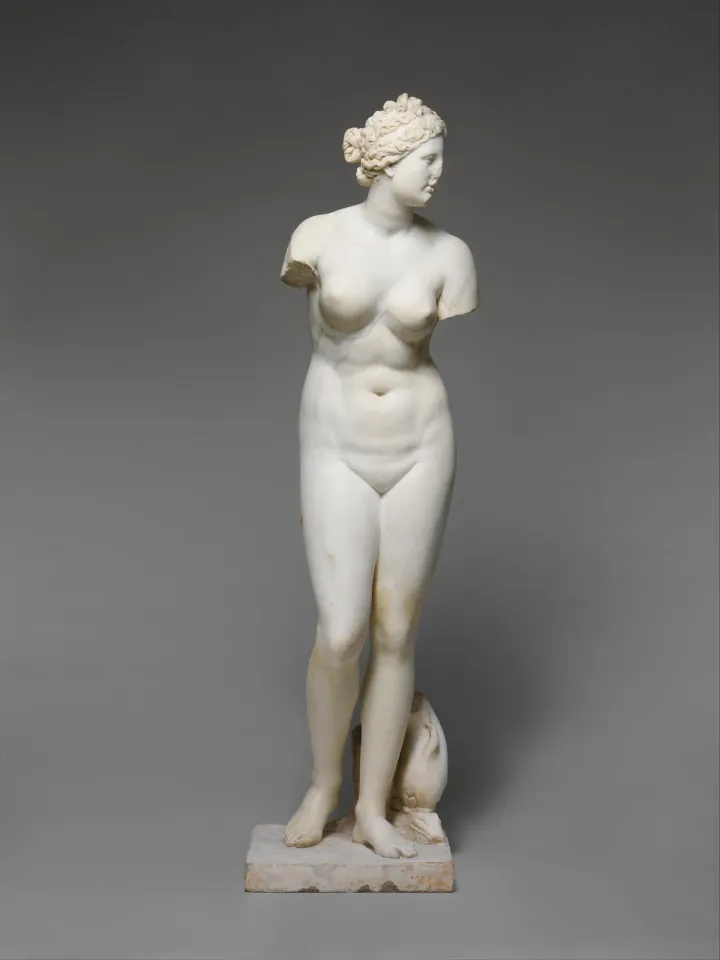
Kestos Himas (Κεστὸς ἱμάς)
Embroidered with love, longing and beguiling words, it makes anyone fall in love.