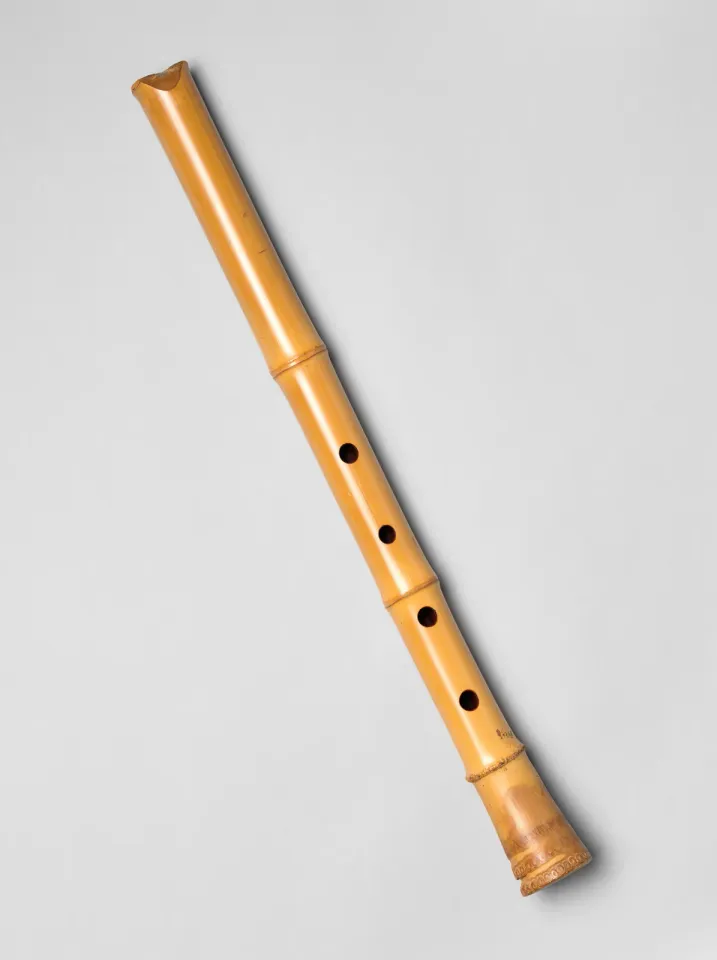
Korean
Manpasikjeok
萬波息笛
When played, enemy armies retreat, illness is cured, drought brings rain and rough waves grow calm.
TreasureFirst recorded 1281
Loading artifact…
Photograph: A Goryeo celadon bottle of the twelfth to thirteenth century. A slender, long neck rises from the round body, which is incised with a floral design in fine lines.
Focus the photograph, then use the arrow keys to pan and the plus and minus keys to zoom. The buttons at the lower left also move it. Press a numbered button on the photograph to zoom to that note.
藥藜水
A healing water from the underworld that brings back the breath of the dead when poured into their mouths.
Long ago King Ogu had six daughters, and when the seventh was also a girl, he angrily put the baby in a jade box and cast it into the river. Because she was thrown away she was called Baridegi, Princess Bari. Saved by a turtle and an immortal, the child grew up in the care of an old couple by the sea.
Years later the king and queen fell mortally ill. A diviner said only the healing water of the far western realm could save them, but the six pampered daughters all made excuses and refused. Only Princess Bari set out for the parents who had abandoned her. Crossing rugged mountains and the hells, she met Mujangseung, who guarded the healing water at the end of the underworld, and only after years of drawing water, gathering firewood and tending the fire as he bade, marrying him and bearing seven sons, did she obtain the water.
Returning with the water and the flowers that revive bones and flesh, Princess Bari met her parents' funeral bier. When she restored their bones and flesh with the flowers and poured the water into their mouths, the king and queen breathed again. Princess Bari became the goddess who guides the souls of the dead to the other world, and her story is still sung at shamanic rituals for the dead.
The photograph shows Long-necked Bottle with Incised Floral Design(Korea, Goryeo dynasty (918–1392), 1100s–1200s), a real museum object that evokes the legendary artifact.
萬波息笛
When played, enemy armies retreat, illness is cured, drought brings rain and rough waves grow calm.
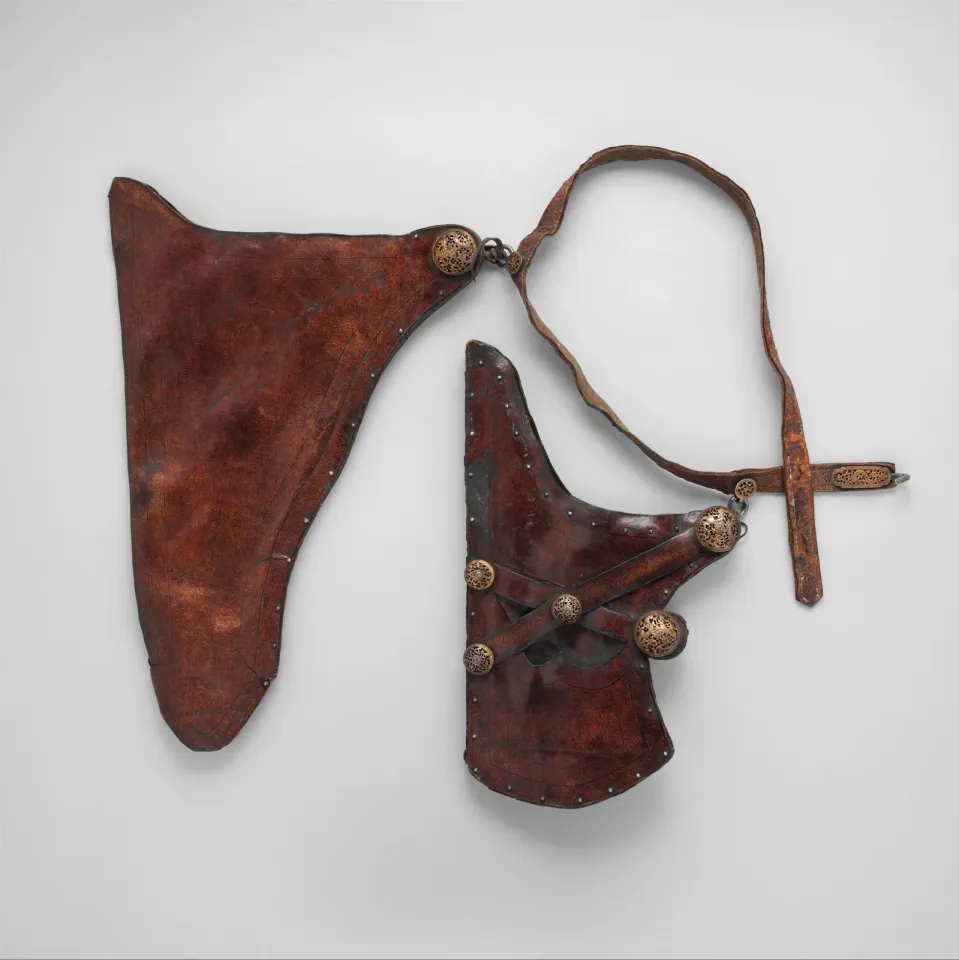
朱蒙之弓
Every arrow hit its mark, so that "jumong," meaning a fine archer, became his name.
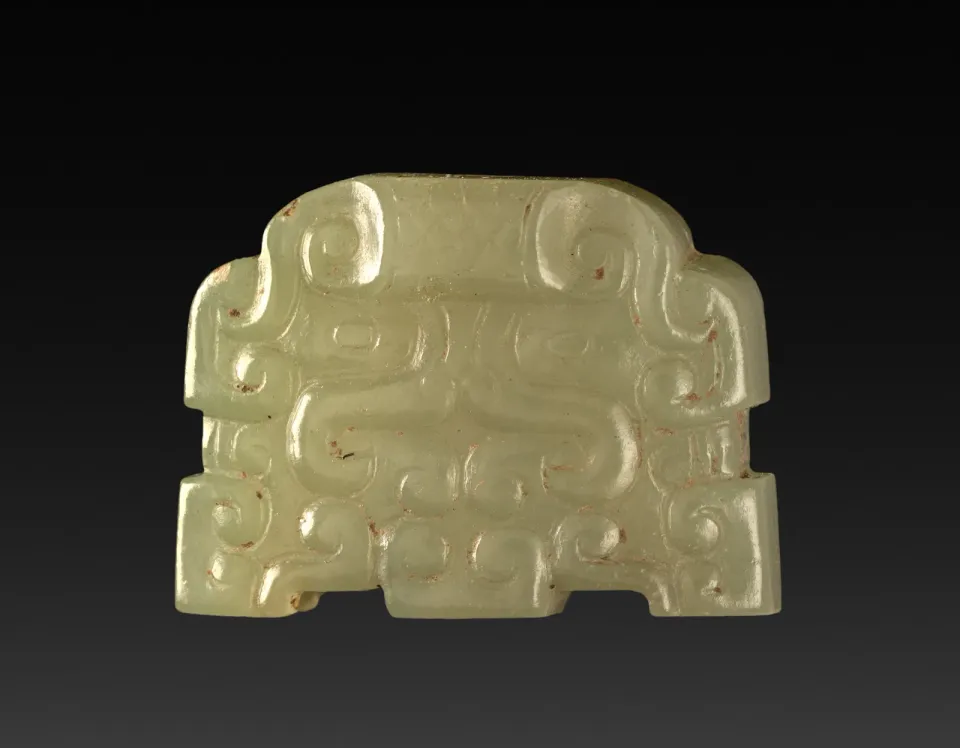
金錐子 (방이 설화)
Strike it, saying "Out with gold!", and whatever one wishes comes pouring out.
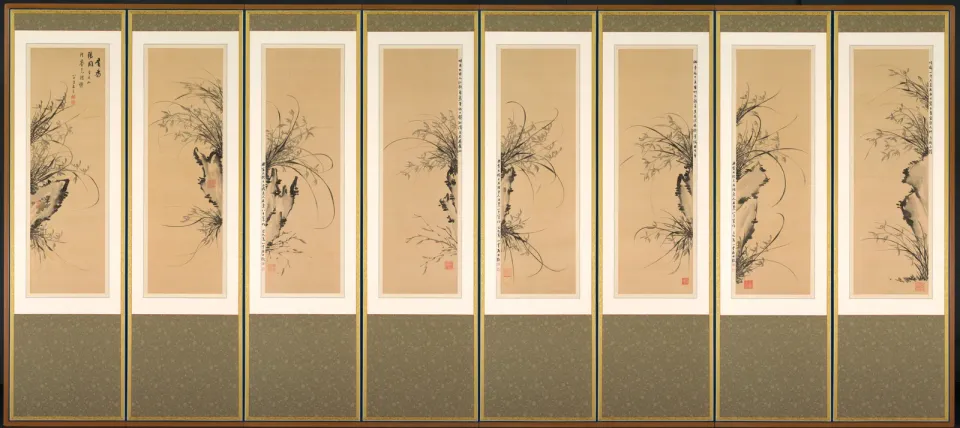
浮石
A great rock that Seonmyo became; it rose into the air and drove off the band that stood in Uisang's way.