Greek
Aegis
Aegis (Αἰγίς)
Shaken, it raises storms and sends enemy armies fleeing in terror.
ArmorFirst recorded c. 750 BCE
Loading artifact…
Photograph: A Greek bronze statuette of the early fifth century BCE. A bearded god, Zeus or Poseidon, spreads his arms as if about to throw something. The lower legs are lost and it stands on a rod.
Focus the photograph, then use the arrow keys to pan and the plus and minus keys to zoom. The buttons at the lower left also move it. Press a numbered button on the photograph to zoom to that note.
Keraunos (Κεραυνός)
Lightning that splits the sky. It felled the Titans and the monster Typhon.
In the Theogony Zeus frees the Cyclopes whom his father Cronus had imprisoned, and in gratitude they make him thunder and lightning. Holding this lightning, Zeus ended the ten-year war against the Titans.
When Typhon, the most terrible of monsters, attacked the gods, Zeus hurled bolt after bolt, burned Typhon and cast him into Tartarus.
Zeus in Greek sculpture grasps lightning shaped like a rod pointed at both ends. For thousands of years afterward that form was how people drew the bolt of a god.
The photograph shows Bronze statuette of Zeus or Poseidon(Greek, early 5th century BCE), a real museum object that evokes the legendary artifact.
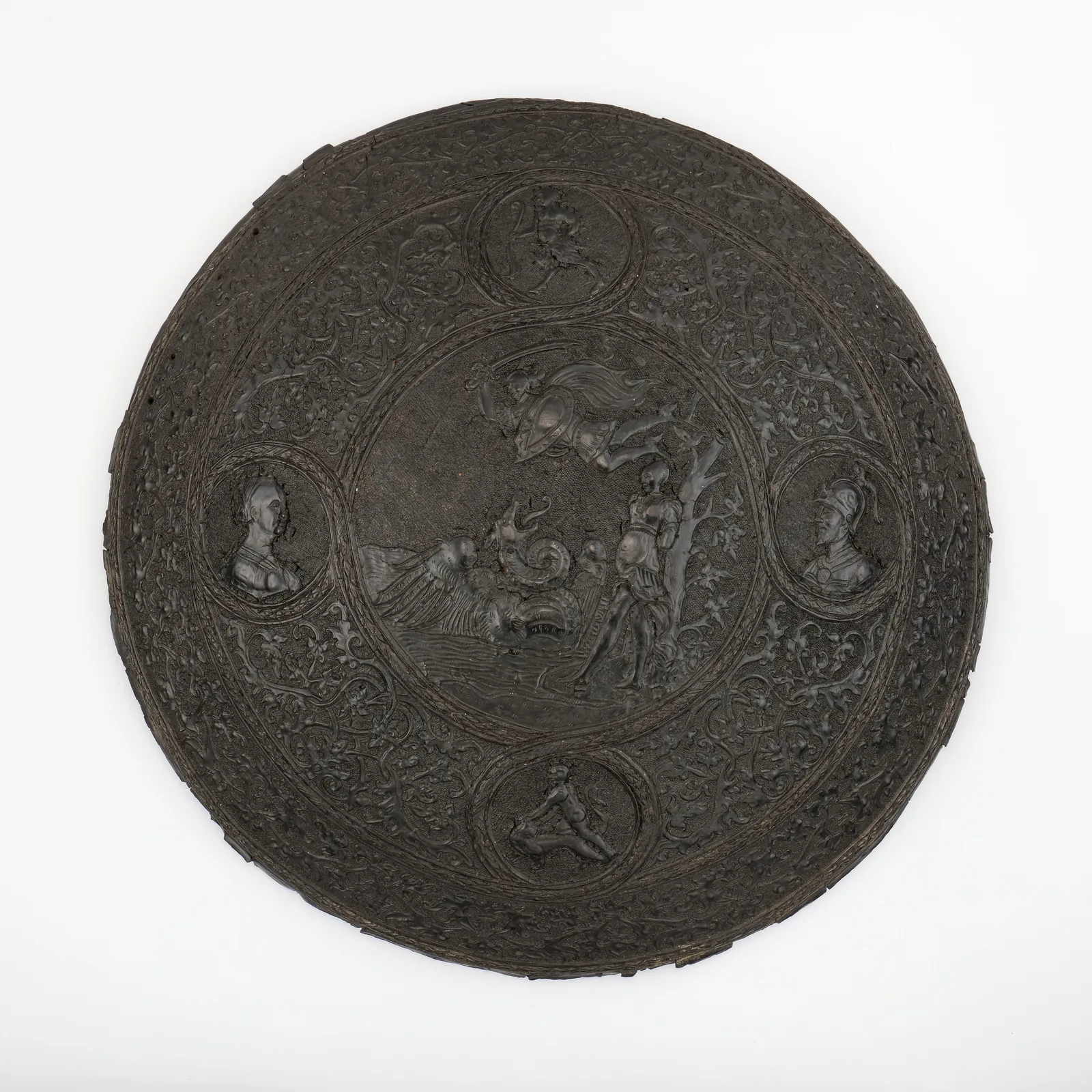
Aegis (Αἰγίς)
Shaken, it raises storms and sends enemy armies fleeing in terror.
Shield of Achilles
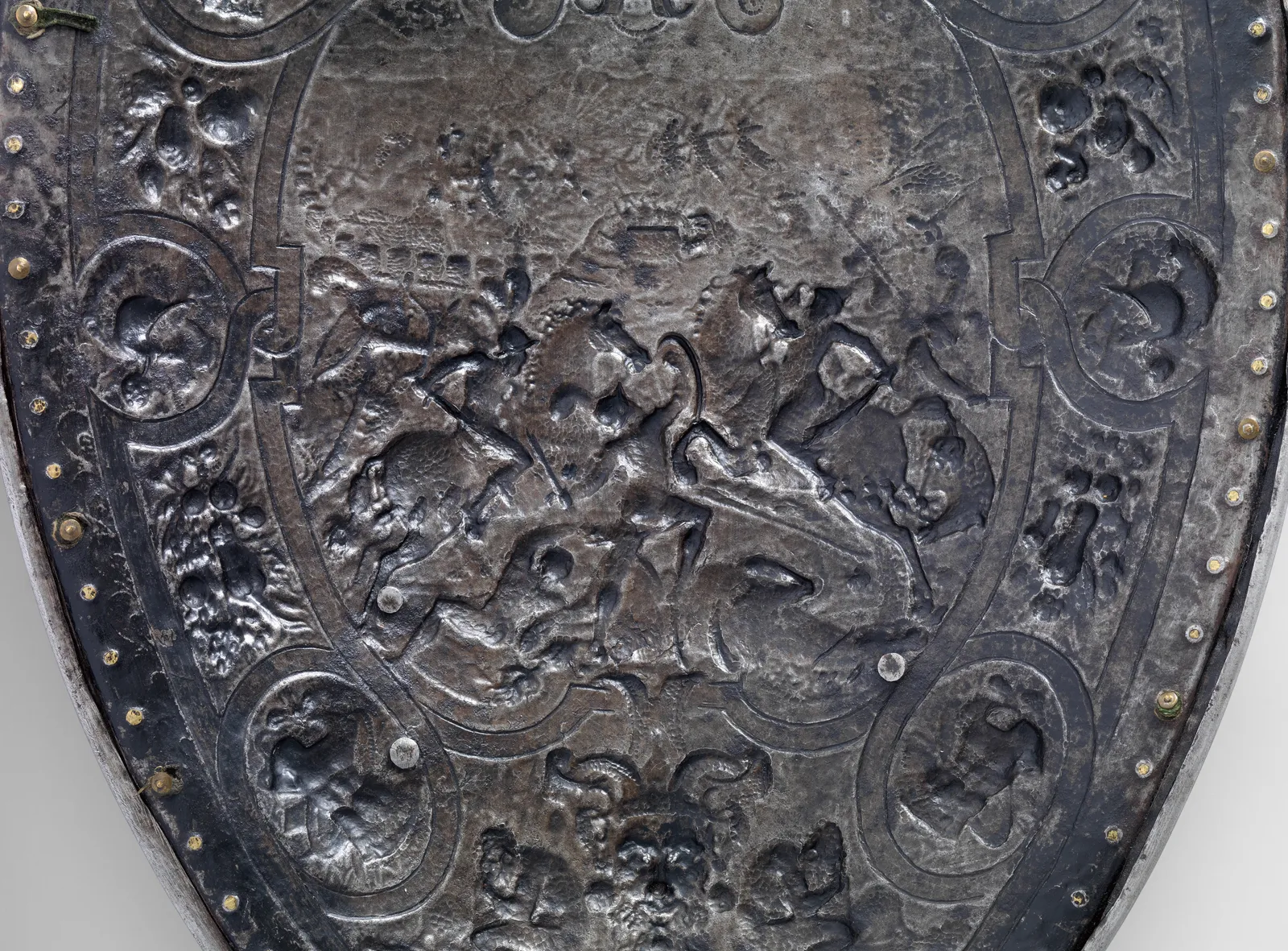
A shield of five layers forged by a god, with the whole world engraved on its face.
Ambrosia & Nectar
Keeps the gods ageless and deathless.