Greek
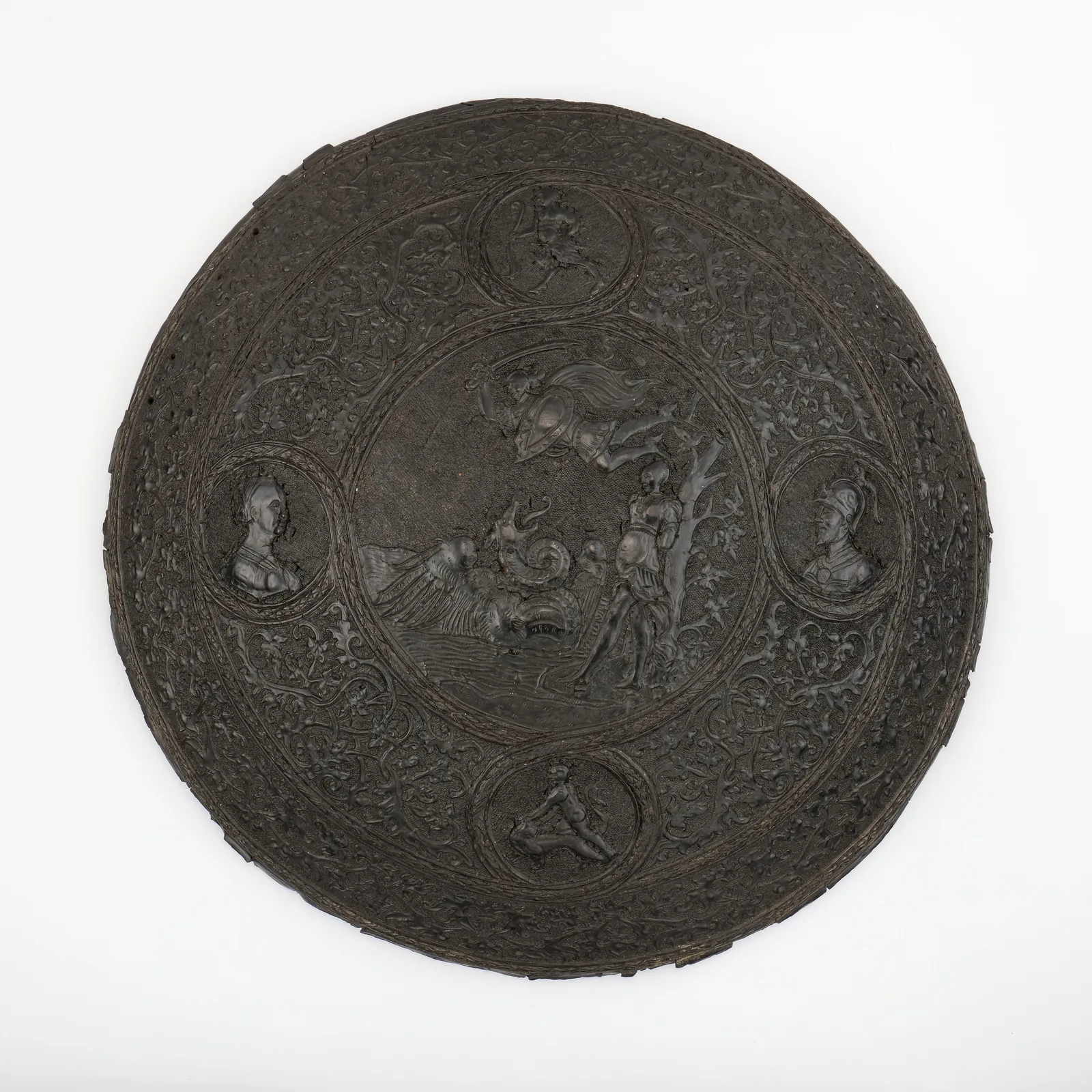
Aegis
Aegis (Αἰγίς)
Shaken, it raises storms and sends enemy armies fleeing in terror.
ArmorFirst recorded c. 750 BCE
Loading artifact…
Photograph: A Persian gold ornament of a ram's head from the sixth to fourth century BCE, with large curled horns, a long muzzle and patterned hair on the neck.
Focus the photograph, then use the arrow keys to pan and the plus and minus keys to zoom. The buttons at the lower left also move it. Press a numbered button on the photograph to zoom to that note.
Golden Fleece (Χρυσόμαλλον Δέρας)
Brings prosperity and legitimate kingship to the land that holds it.
Phrixus and Helle, a brother and sister about to be sacrificed by their stepmother, escaped on a flying golden ram. Helle fell into the sea, which became the Hellespont, the "sea of Helle." Reaching Colchis at the far end of the Black Sea, Phrixus sacrificed the ram and gave its fleece to King Aeëtes.
The king hung the fleece on an oak in the grove of Ares and set a sleepless dragon to guard it. Jason, seeking to regain his throne, was ordered to fetch it, and he gathered heroes such as Heracles and Orpheus and launched the Argo.
The trials of yoking fire-breathing bulls and defeating warriors sprung from dragon's teeth were passed with the magic of the king's daughter Medea. When Medea lulled the dragon with herbs, Jason took the fleece and fled into the night sea.
The photograph shows a wild ram's head made of gold in Achaemenid Persia in the sixth to fourth century BCE. Its curling horns and thick neck recall the golden ram Chrysomallos that flew through the sky.
The photograph shows Head of a wild ram(Achaemenid, ca. 6th–4th century BCE), a real museum object that evokes the legendary artifact.
Aegis (Αἰγίς)
Shaken, it raises storms and sends enemy armies fleeing in terror.
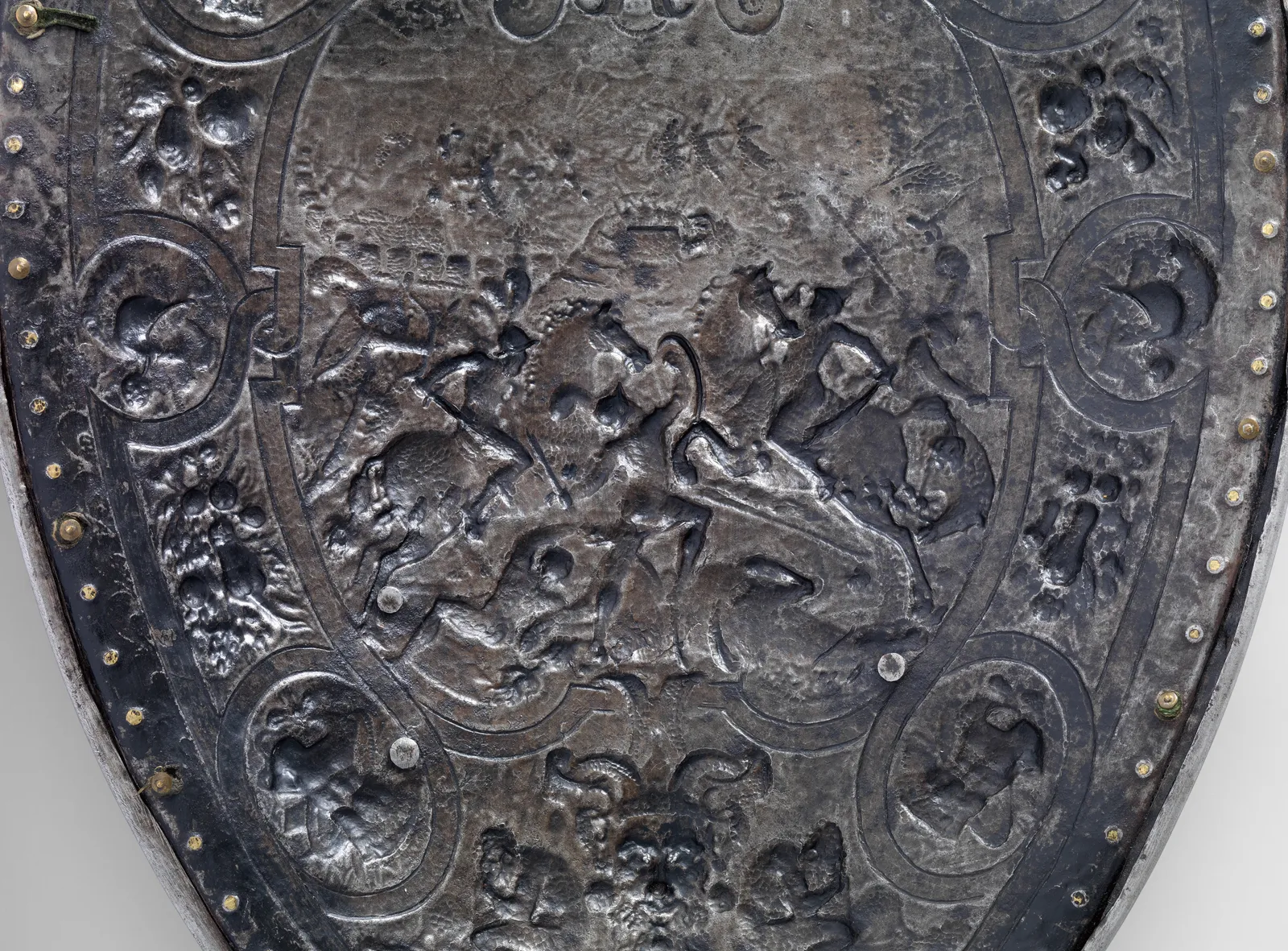
Shield of Achilles
A shield of five layers forged by a god, with the whole world engraved on its face.
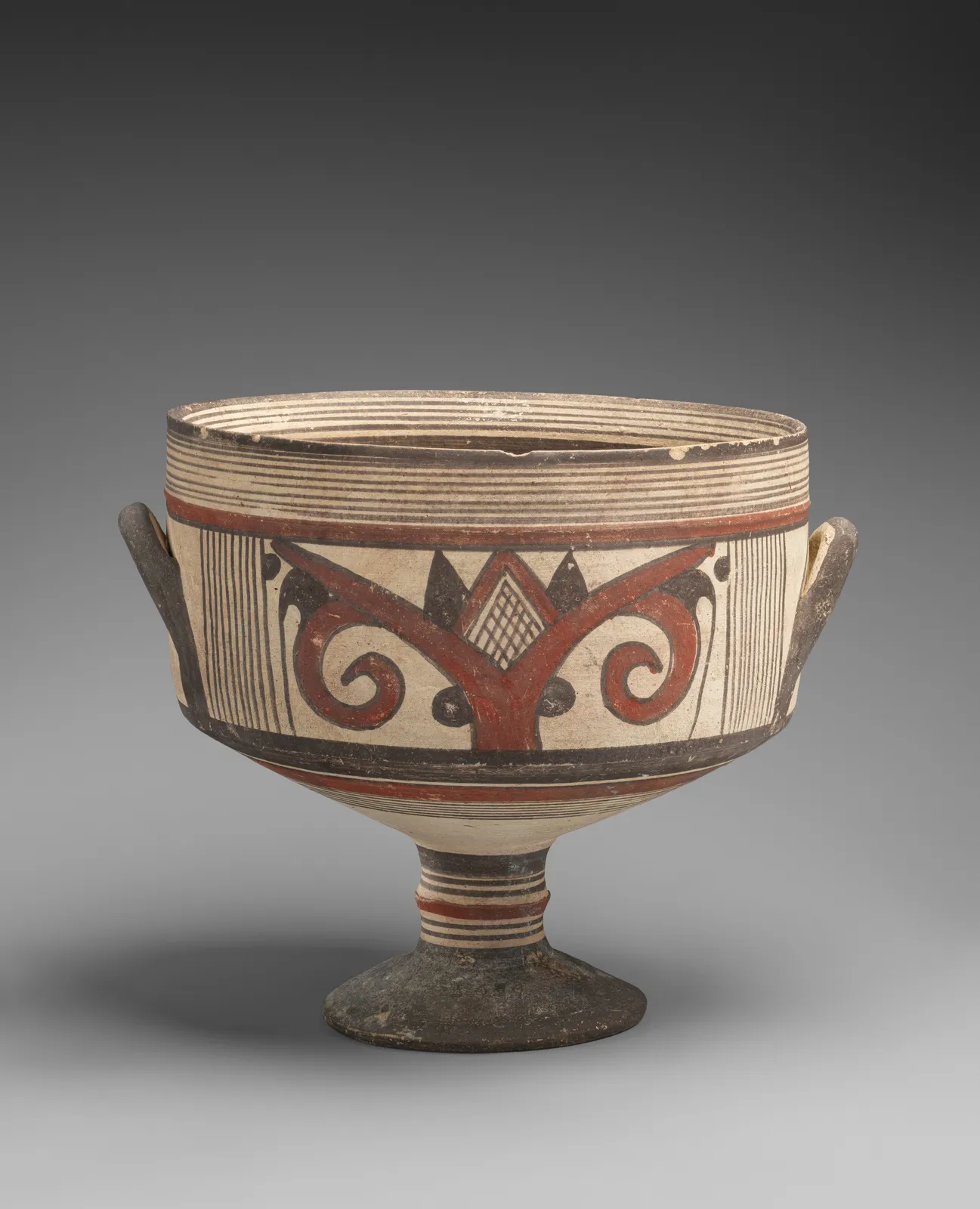
Ambrosia & Nectar
Keeps the gods ageless and deathless.