Greek
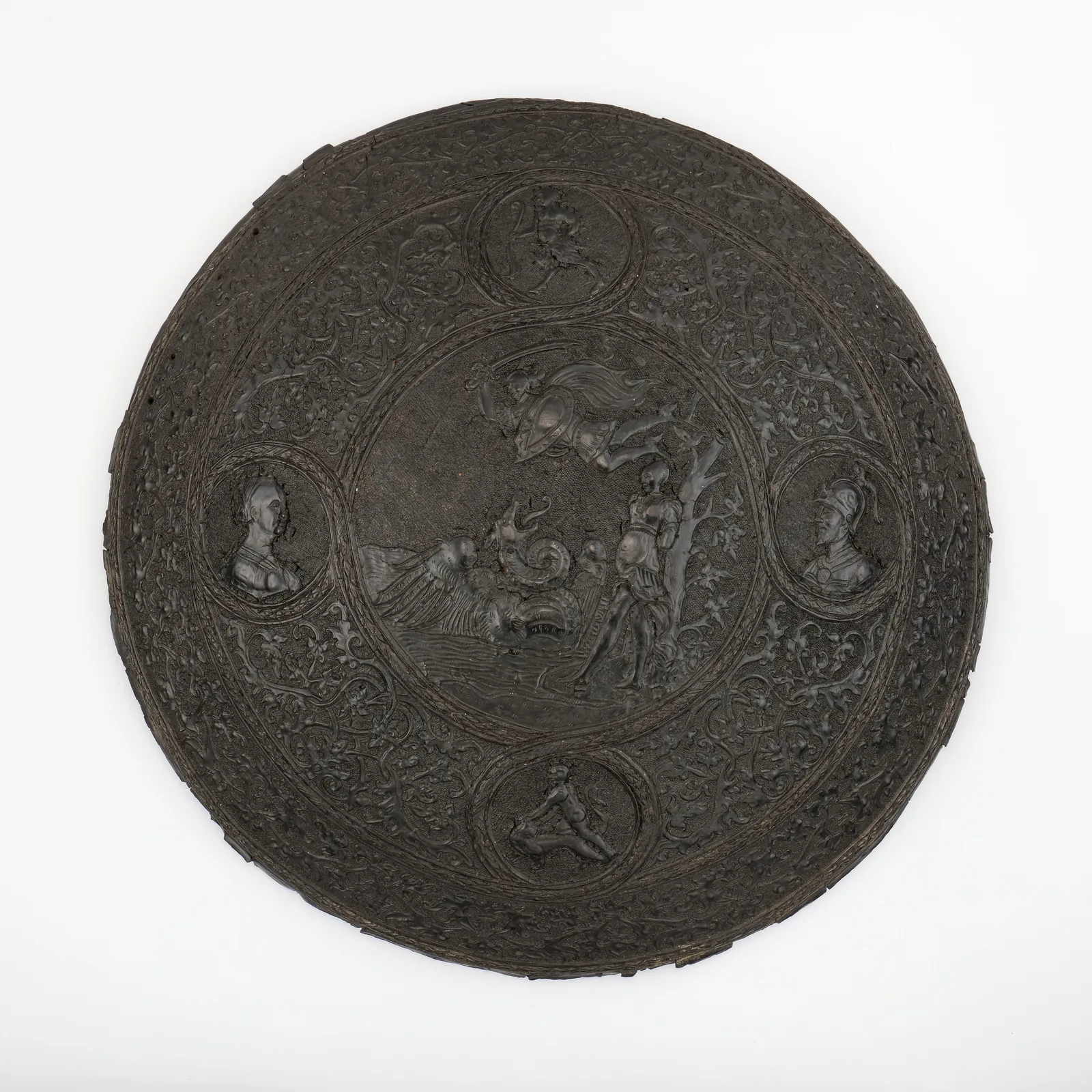
Aegis
Aegis (Αἰγίς)
Shaken, it raises storms and sends enemy armies fleeing in terror.
ArmorFirst recorded c. 750 BCE
Loading artifact…
Photograph: A lidded pottery container (pyxis) from Apulia in southern Italy, about 300 BCE. The round body has red spirals on a black ground and is topped by a knobbed lid.
Focus the photograph, then use the arrow keys to pan and the plus and minus keys to zoom. The buttons at the lower left also move it. Press a numbered button on the photograph to zoom to that note.
Pandora's Box (πίθος)
Opened, it scatters every evil into the world, leaving only hope within.
When Prometheus stole the fire of the gods and gave it to humankind, Zeus decided to punish them with evil in return. Hephaestus shaped a woman from earth, and each of the gods gave her a gift, so that she became Pandora, "she who received all gifts."
In Hesiod's Works and Days, Pandora opens the lid of a great jar (pithos). Sickness and suffering scatter across the world, and only hope remains beneath the jar's rim. Before that, it is said, people knew neither disease nor hard labor.
The jar became a "box" only when Erasmus retold the story in Latin in the sixteenth century, using pyxis, a word for a small casket. Since then "Pandora's box" has meant a source of trouble best left alone.
The photograph shows Pyxis(Greek, South Italian, Apulian, ca. 300 BCE), a real museum object that evokes the legendary artifact.
Aegis (Αἰγίς)
Shaken, it raises storms and sends enemy armies fleeing in terror.
Shield of Achilles
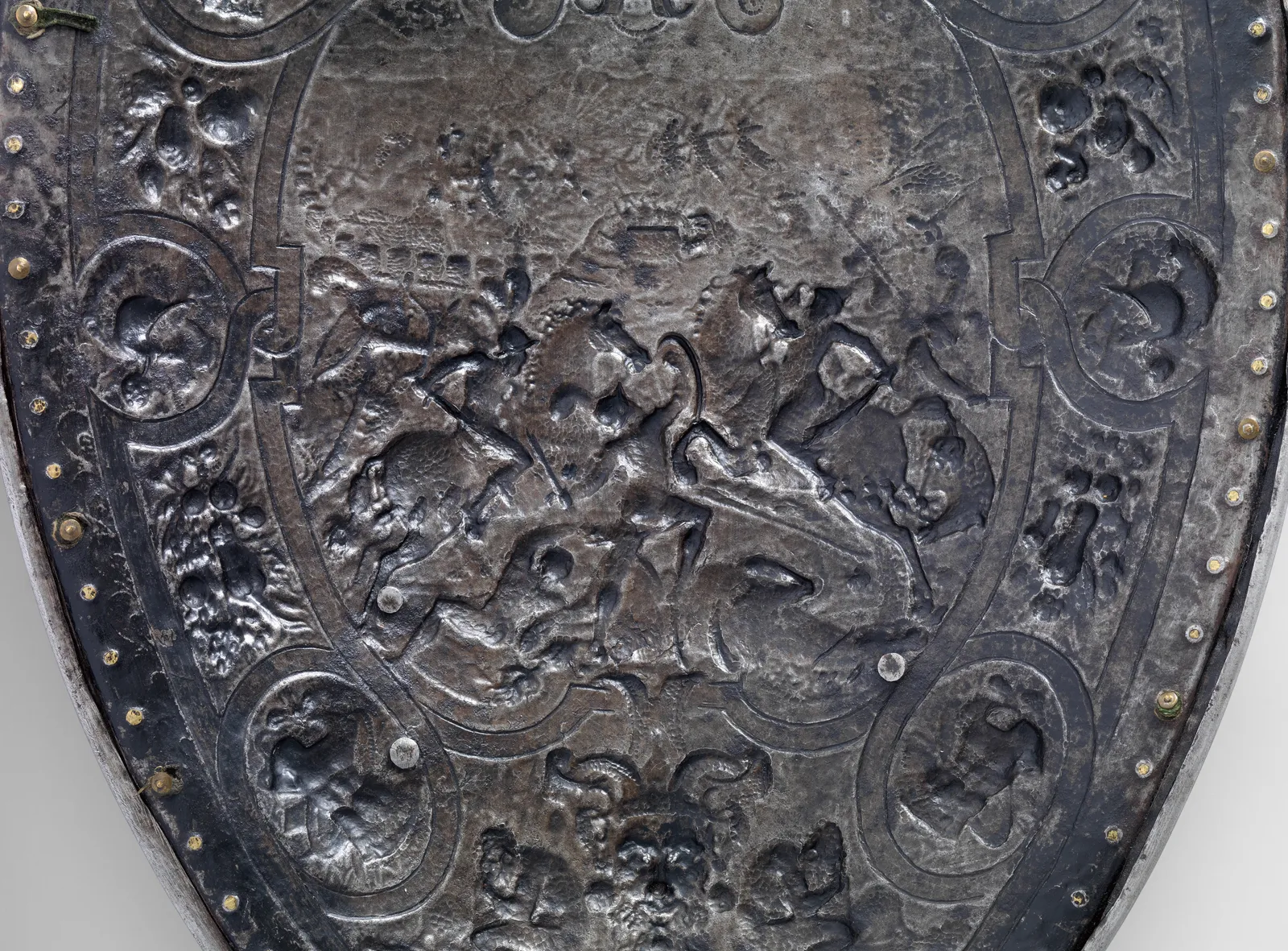
A shield of five layers forged by a god, with the whole world engraved on its face.
Ambrosia & Nectar
Keeps the gods ageless and deathless.